Spinone Italiano vs Wirehaired Vizsla
Side-by-side comparison across all 14 AKC trait ratings, with a clear verdict on which breed fits which kind of household.

Not sure which breed fits your life?
Answer five questions about your home, your schedule, and your tolerance for shedding. We’ll match you to your top three breeds from over 200.
Spinone Italiano vs Wirehaired Vizsla
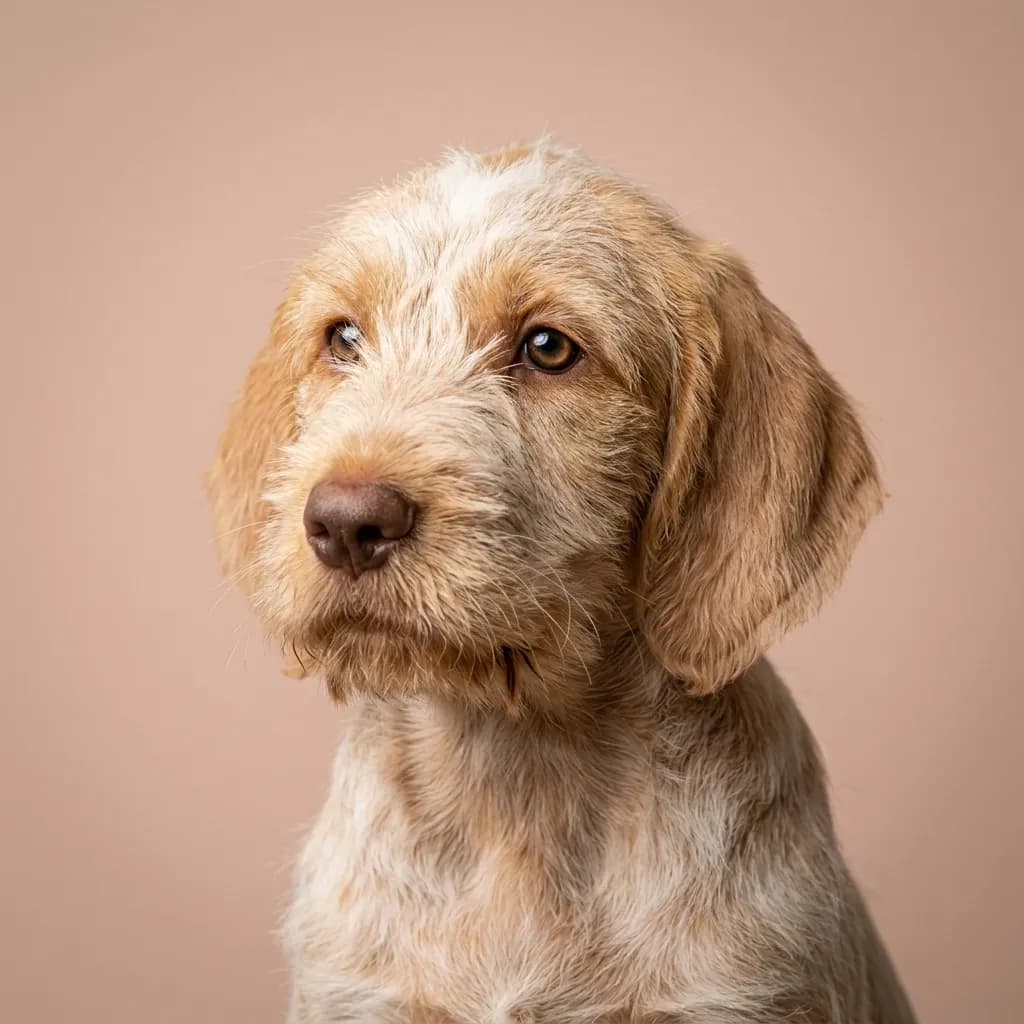
You don’t see a lot of Wirehaired Vizslas or Spinoni walking around the dog park, so when someone’s researching both, it’s usually because they’ve done their homework and want a rugged, affectionate hunting dog that still melts into the family couch. They’re comparing them for good reason—both are wire-coated, bird-dog types with soft eyes and big hearts. But under the surface, they’re very different companions. The Spinone is the laid-back philosopher of the two. He’s not going to drag you out of bed at 5 a.m. for a run, but he will patiently wait by the door, tail thumping, ready for a long walk or a day in the field. He’s deeply affectionate, almost bovine in his calm, and tends to slobber a little. He fits well in a family with younger kids because he won’t knock them over—emotionally or physically. But he needs space and a yard, and if you hate cleaning ears, skip him. He’s prone to infections. The Wirehaired Vizsla? He’s a live wire with a mission. Bred for tough Hungarian terrain, he’s leaner, faster, and needs serious daily exercise—think jogging, hiking, advanced training. He bonds tightly to one person, can be anxious if left alone too long, and thrives with experienced owners who are home often. He’s fantastic with older kids who can keep up, but too intense for a sedentary home. Here’s the real difference: the Spinone will adapt to your pace. The Wirehaired Vizsla will demand you adapt to his. Pick the Spinone if you want a gentle, steady partner. Choose the Vizsla if you’re ready for a high-performance relationship.
Trait-by-trait
Higher bar = more of that trait. Shedding, barking, drooling, grooming flipped for readability.Where they diverge
Choose the Spinone Italiano if…
- Active hunting families
- Those wanting a gentle, patient breed
- Families with children
- You value good with other dogs — Spinone Italiano scores noticeably higher.
Choose the Wirehaired Vizsla if…
- Active hunters
- Outdoor enthusiasts
- Experienced dog owners
- You value good with young children — Wirehaired Vizsla scores higher here.