Australian Terrier vs Russian Toy
Side-by-side comparison across all 14 AKC trait ratings, with a clear verdict on which breed fits which kind of household.

Not sure which breed fits your life?
Answer five questions about your home, your schedule, and your tolerance for shedding. We’ll match you to your top three breeds from over 200.
Australian Terrier vs Russian Toy
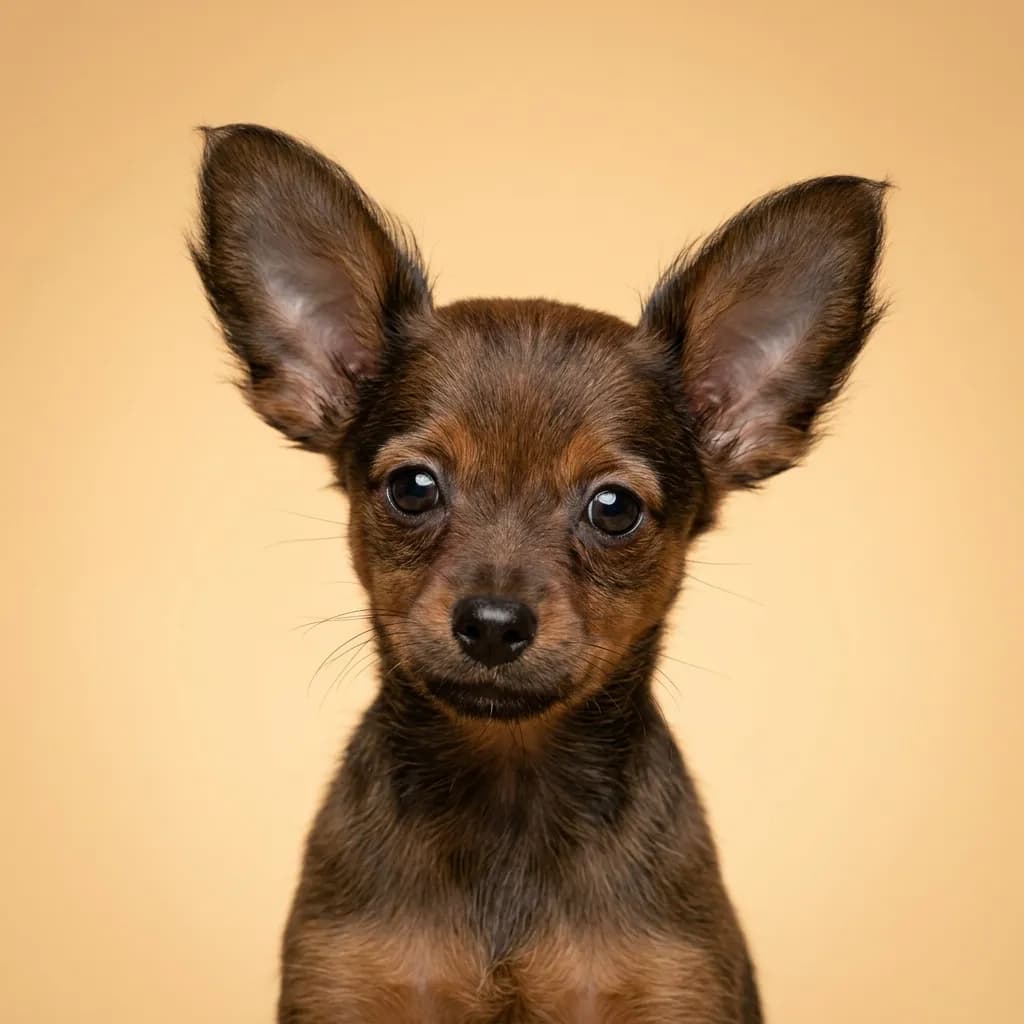
People compare Australian Terriers and Russian Toys because they’re both small, lively, and rare enough that if you’re considering one, you’re probably hunting for something unusual but manageable in size. But that’s where the surface similarity ends. These dogs solve very different problems. The Aussie Terrier is a tough little farmhand with a motor that won’t quit. It was bred to kill snakes and rats in the Australian outback, and it still carries that bold, alert spirit. You’ll need time to train it, yes, and you’ll definitely get the neighborhood’s attention with its frequent barking. But it’s surprisingly good with kids and thrives with active families who’ll give it jobs or hikes or puzzles to solve. It’s not the easiest with other small pets though. its prey drive is real and non-negotiable. The Russian Toy, in contrast, is elegance on tiny legs. It’s not built for work but for companionship, curled in a lap or trotting beside a dapper city dweller. It bonds fiercely to one or two people, can be shy with strangers, and doesn’t do well left alone for hours. It’s more fragile too. those delicate bones can snap if a toddler drops it, so households with roughhousing kids are out. Here’s the insight no chart tells you: the Australian Terrier will adapt to you, but the Russian Toy needs you to adapt to it. One is a participant in your life. The other is a co-star in its own intimate drama. Pick the Aussie if you want a sturdy, engaging dog that can keep up. Choose the Toy if you want a velcro companion who’ll mirror your emotions and live softly. And no, neither will ever truly be quiet. but the Aussie will at least have a reason.
Trait-by-trait
Higher bar = more of that trait. Shedding, barking, drooling, grooming flipped for readability.Where they diverge
Choose the Australian Terrier if…
- Apartments
- Families
- Seniors
- You value good with young children — Australian Terrier scores noticeably higher.
Choose the Russian Toy if…
- Apartment living
- Seniors
- Owners wanting a devoted companion
- You value affectionate w/ family — Russian Toy scores higher here.