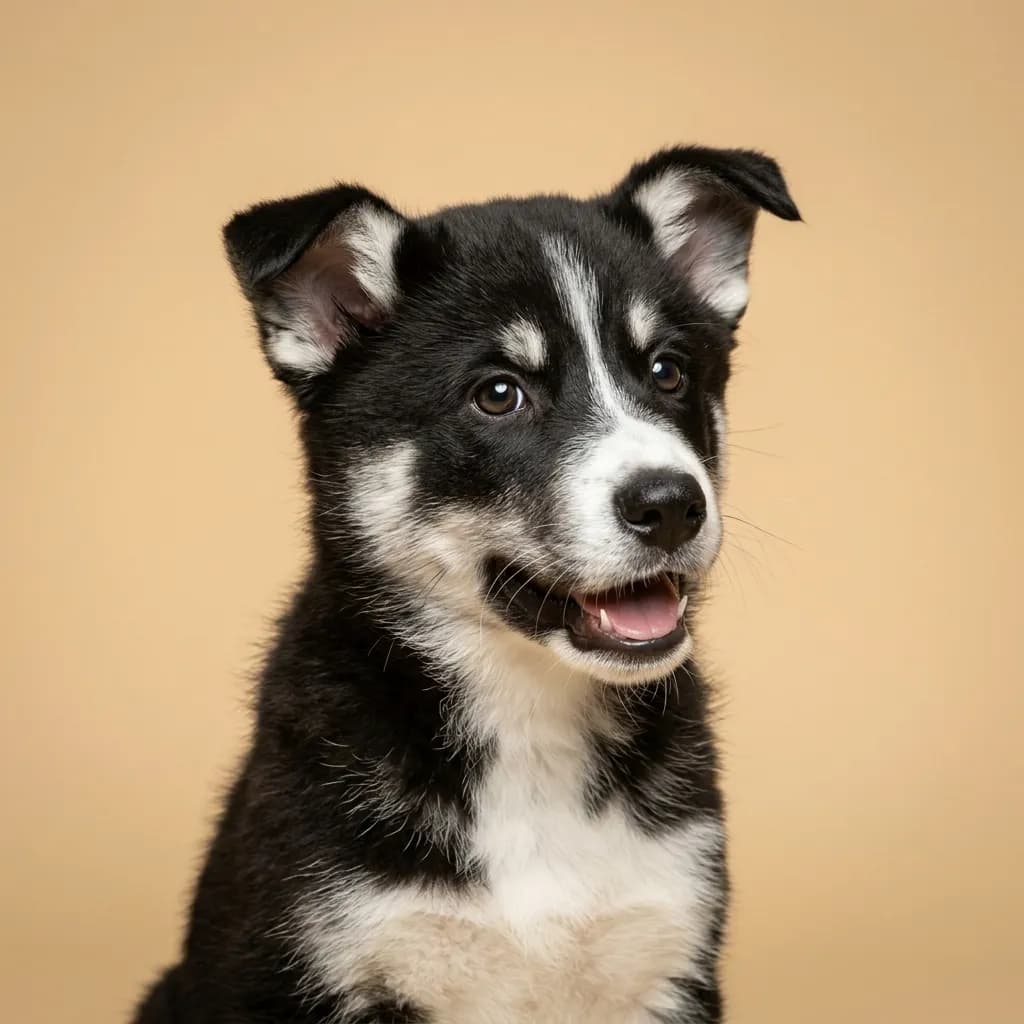
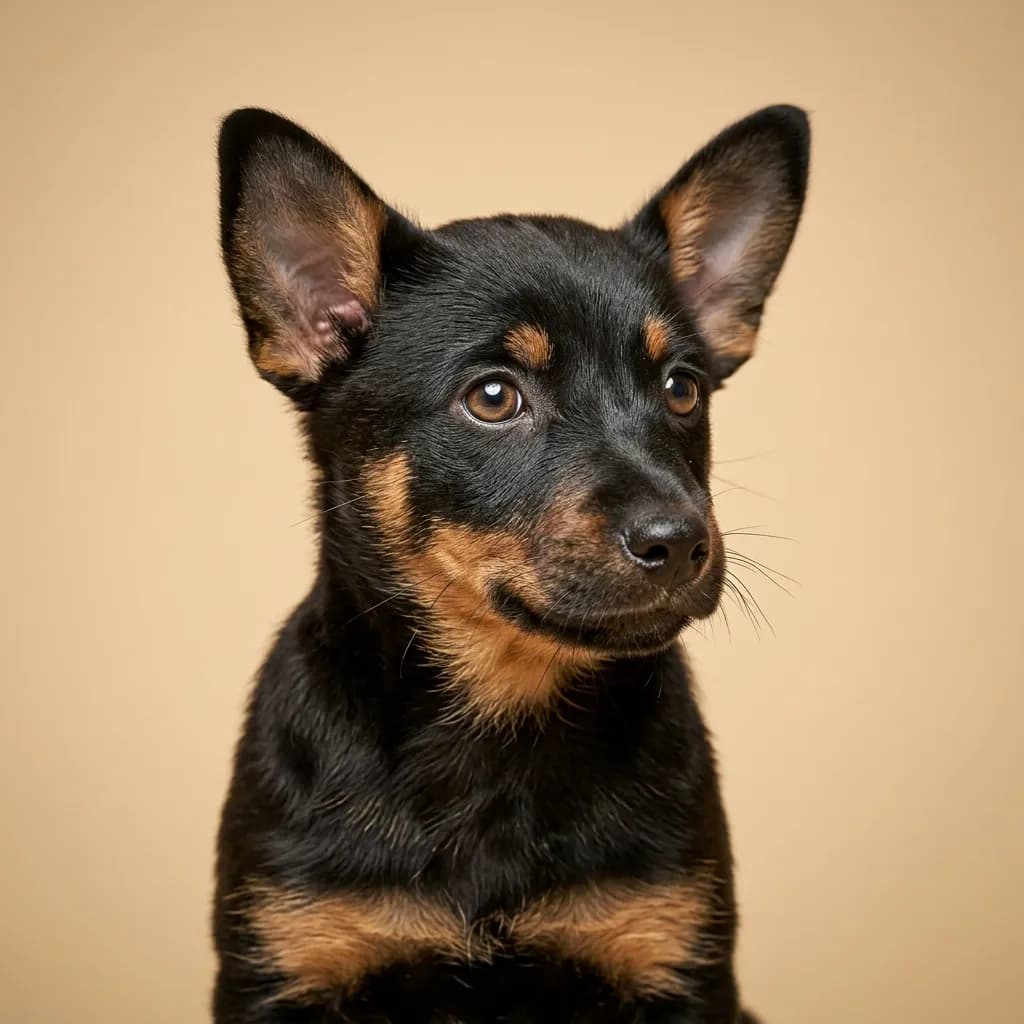
Karelian Bear Dog vs Lancashire Heeler
Side-by-side comparison across all 14 AKC trait ratings, with a clear verdict on which breed fits which kind of household.
Not sure which breed fits your life?
Answer five questions about your home, your schedule, and your tolerance for shedding. We’ll match you to your top three breeds from over 200.
Karelian Bear Dog vs Lancashire Heeler
You’re not going to see a Karelian Bear Dog at a dog park and you’ll probably never spot a Lancashire Heeler holding off a moose. But here’s why people end up comparing them: both are rare, both are serious working dogs in compact(ish) packages, and both demand owners who speak fluent “dog.” They’re not casual pets. They’re partners. The Karelian is a force of nature forged in the Finnish wilderness. This 45-pound black-and-white firecracker was bred to bark, charge, and stand its ground against bears. It’s smart, bold, and deeply loyal. but that loyalty is selective. It won’t warm up to kids or strange dogs and it absolutely will not tolerate incompetence. It needs space, cold weather, and a job that challenges it mentally. You don’t own a Karelian. You earn it. The Lancashire Heeler, under 17 pounds and barely knee-high, is the scrappy farmhand from northern England. Quick, alert, and endlessly clever, it herded cattle and killed rats with equal enthusiasm. It’s more adaptable, loves kids, and fits in a suburban yard. so long as you’re out there with it. But don’t be fooled by the size. This dog has opinions, a loud voice, and zero fear. It’ll boss around pets ten times its size. Here’s the real talk: if you’re looking for a dog to include in your family life, the Heeler might work. If you want a dog that lives for a mission and views you as its entire world. but only on its terms. then the Karelian might call to you. Just know this: neither will suffer a boring home. One honest insight? Both breeds expose lazy owners. They don’t need coddling. They need purpose.
Trait-by-trait
Higher bar = more of that trait. Shedding, barking, drooling, grooming flipped for readability.Where they diverge
Choose the Karelian Bear Dog if…
- Experienced dog owners
- Hunters of large game
- Cold climates
- You value coat grooming — Karelian Bear Dog scores noticeably higher.
Choose the Lancashire Heeler if…
- Active families
- Experienced dog owners
- Rural or farm settings
- You value good with young children — Lancashire Heeler scores higher here.