Keeshond vs Miniature Poodle
Side-by-side comparison across all 14 AKC trait ratings, with a clear verdict on which breed fits which kind of household.

Not sure which breed fits your life?
Answer five questions about your home, your schedule, and your tolerance for shedding. We’ll match you to your top three breeds from over 200.
Keeshond vs Miniature Poodle
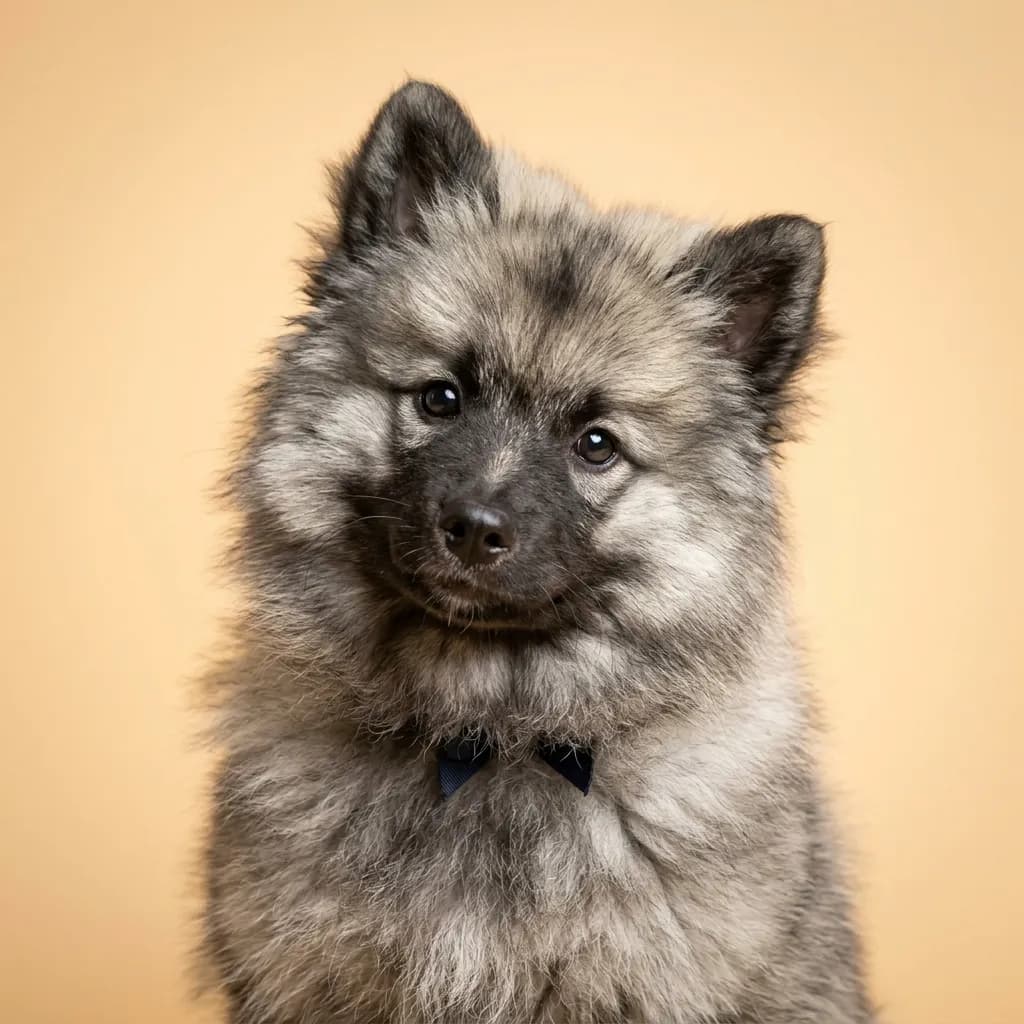
People compare Keeshonds and Miniature Poodles because both are smart, friendly, and great with kids, but they’re really solving different problems. You’re not just picking a dog. you’re picking a lifestyle. The Keeshond is the fluffy, expressive companion who wants to be part of everything. At 35 to 45 pounds, he’s no lap dog, but he’ll still curl up beside you like a well-sized throw pillow with feelings. He was bred to bark on Dutch barges, so yes, he’ll alert you when the mail arrives, the neighbor sneezes, or a leaf blows past the window. If you live in a cold climate or have a yard he can patrol, he’ll thrive. But if you’re heat-sensitive or hate dog hair on your sweater, he’s not your guy. He sheds moderately and needs brushing every few days. less about grooming, more about commitment. The Miniature Poodle is sleeker, lighter at 10 to 15 pounds, and famously low-shedding, making her a go-to for allergy sufferers. She’s just as trainable, maybe sharper, and needs mental puzzles like crossword addicts need coffee. She doesn’t just adapt to apartments. she owns them. But don’t be fooled by her size. She’s not a purse accessory. She needs walks, training, games. Skip the stimulation and she’ll rewire your Wi-Fi out of boredom. Here’s the real difference: the Keeshond wants to be your family archivist, chronicling every moment with barks and cuddles. The Poodle wants to be your co-pilot, learning tricks, competing, excelling. If you want a dog who feels like a warm, woolly citizen of your home, go Keeshond. If you want a compact genius who thrives on achievement and grooming appointments, the Miniature Poodle’s your match. Grooming isn’t a chore with her. it’s part of the relationship. Skip it, and she’ll let you know.
Trait-by-trait
Higher bar = more of that trait. Shedding, barking, drooling, grooming flipped for readability.Where they diverge
Choose the Keeshond if…
- Families with children
- Active owners
- Cold climates
- You value good with other dogs — Keeshond scores noticeably higher.
Choose the Miniature Poodle if…
- Allergy sufferers
- Apartment living
- Active families
- You value coat grooming — Miniature Poodle scores higher here.