Plott Hound vs Russian Toy
Side-by-side comparison across all 14 AKC trait ratings, with a clear verdict on which breed fits which kind of household.

Not sure which breed fits your life?
Answer five questions about your home, your schedule, and your tolerance for shedding. We’ll match you to your top three breeds from over 200.
Plott Hound vs Russian Toy
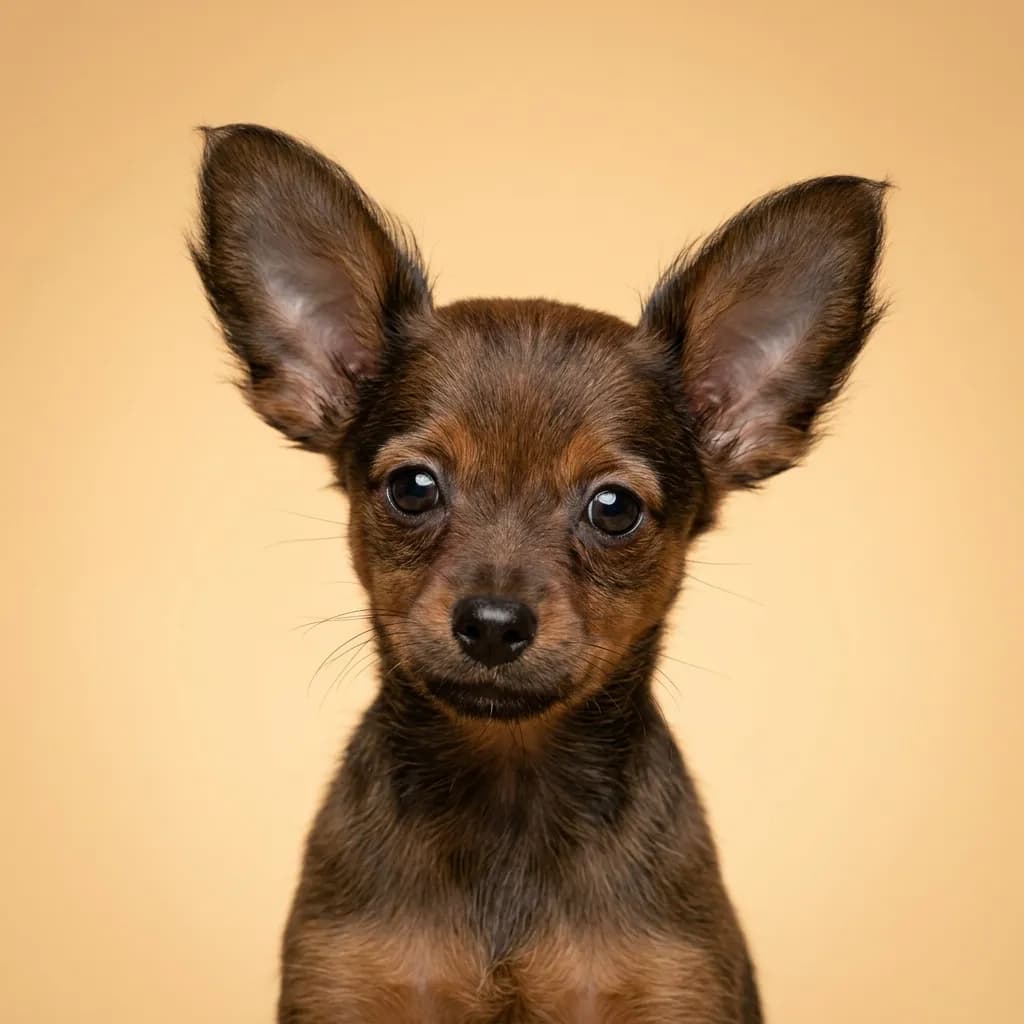
You’re not really comparing a Plott Hound and a Russian Toy because you want two dogs. You’re doing it because you’re torn between two ideas of loyalty. one that follows you into the woods for miles and another that follows you from room to room in a city apartment. These breeds share a surprising amount of paper stats; both are loyal, barky, moderately trainable, and live around 12 to 14 years. But that’s where the illusion of similarity ends. The Plott Hound is a working machine built for rugged terrain, bred to trail bear and boar through the Appalachians. At 40 to 60 pounds, it’s got muscle, drive, and a nose that never quits. You’ll need space, routine exercise, and patience for its loud, resonant bay that can carry for acres. It’s affectionate but on its own terms. deeply bonded, yet independent when tracking. Not ideal for apartments or quiet neighborhoods. The Russian Toy, barely tipping the scales at 6.5 pounds, was made for silk gloves and drawing rooms. It’s a tiny, sprightly companion with big-dog personality packed into a fragile frame. It bonds fiercely to one or two people and thrives on attention. While energetic in bursts, it won’t hike all day. just your evening stroll around the block. Its fragility means it’s not for homes with rambunctious kids or clumsy toddlers. Here’s the real talk: the Plott needs a job, even if that job is just a long daily trail run. Without it, you’ll get destructive behavior and nonstop barking. The Russian Toy doesn’t need physical work, but it will develop separation anxiety if left alone too often. it’s not just small, it’s emotionally high-maintenance. Pick the Plott if your life moves outside and you want a rugged partner. Pick the Russian Toy if your world revolves around home and you want a pocket-sized shadow. One’s a co-pilot for adventure. The other’s a living lap warmer with opinions.
Trait-by-trait
Higher bar = more of that trait. Shedding, barking, drooling, grooming flipped for readability.Where they diverge
Choose the Plott Hound if…
- Hunters
- Active outdoor owners
- Rural settings
- You value good with other dogs — Plott Hound scores noticeably higher.
Choose the Russian Toy if…
- Apartment living
- Seniors
- Owners wanting a devoted companion
- You value shedding level — Russian Toy scores higher here.