Saint Bernard vs Slovensky Kopov
Side-by-side comparison across all 14 AKC trait ratings, with a clear verdict on which breed fits which kind of household.

Not sure which breed fits your life?
Answer five questions about your home, your schedule, and your tolerance for shedding. We’ll match you to your top three breeds from over 200.
Saint Bernard vs Slovensky Kopov
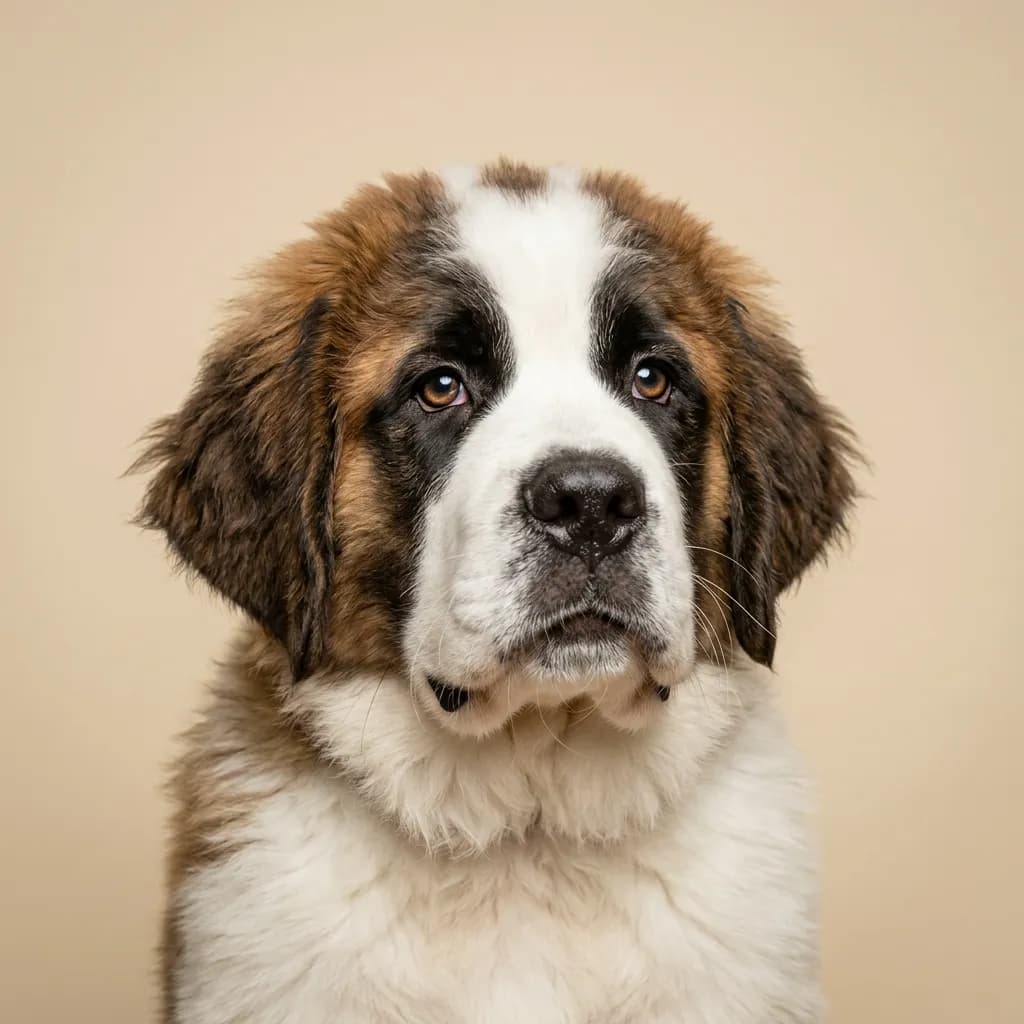
You don’t often see people stacking a Saint Bernard against a Slovensky Kopov, but if you’re drawn to rugged, cold-weather dogs with deep roots in mountainous terrain, the comparison makes sense. One is a gentle giant built for saving lives in snowdrifts, the other a lean, tenacious hunter bred to track wild boar through dense Eastern European forests. They’re both tough, weather-resistant breeds, but what they ask of you—and what they give back—couldn't be more different. The Saint Bernard is the dog you imagine curled beside a fireplace in a cabin, drooling on the rug while kids climb on him. He’s tolerant, deeply affectionate, and surprisingly low-key for his size. You’ll need space—this isn’t a dog for upstairs living—and you’ll need to accept the slobber and the shedding. But in return, you get a calm, loyal family anchor with a lifespan on the shorter side, around 8 to 10 years. The Slovensky Kopov, on the other hand, is a specialist. He’s alert, driven, and happiest when he’s working. He won’t lounge like a Saint Bernard. He’ll bark more, need more mental engagement, and require a yard that’s truly escape-proof. He’s not naturally cuddly with kids, and he’s not bred to sit politely in a suburban backyard. He’s for someone who hunts, or at least lives like a hunter—active, rural, and disciplined. Here’s the truth beyond the data: the Saint Bernard will love everyone in your home equally, maybe even the cat. The Slovensky Kopov? He’ll pick one person and lock in. Choose based on who you are, not just who you want to be. If you crave companionship, go Saint Bernard. If you want a partner in purpose, the Kopov might just surprise you.
Trait-by-trait
Higher bar = more of that trait. Shedding, barking, drooling, grooming flipped for readability.Where they diverge
Choose the Saint Bernard if…
- Families with children
- Those wanting a gentle giant
- Cold climate households
- You value drooling level — Saint Bernard scores noticeably higher.
Choose the Slovensky Kopov if…
- hunters
- active rural owners
- experienced scent hound handlers
- You value barking level — Slovensky Kopov scores higher here.