Basenji vs Black Russian Terrier
Side-by-side comparison across all 14 AKC trait ratings, with a clear verdict on which breed fits which kind of household.

Not sure which breed fits your life?
Answer five questions about your home, your schedule, and your tolerance for shedding. We’ll match you to your top three breeds from over 200.
Basenji vs Black Russian Terrier
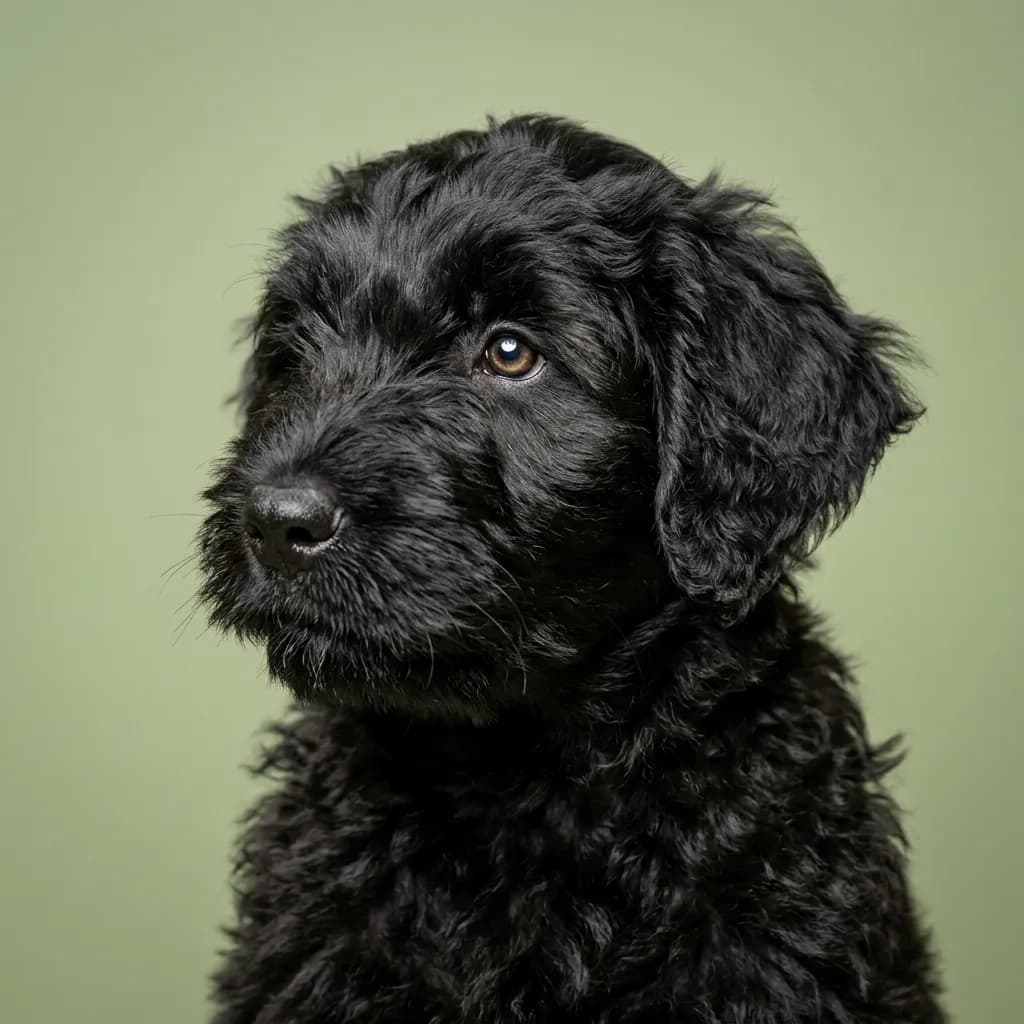
People compare Basenjis and Black Russian Terriers because both are independent, intelligent dogs that demand experienced handling, and neither barks much in the traditional sense. the Basenji yodels, the Black Russian Terrier keeps quiet until there’s a reason not to. But beyond that, they’re polar opposites, and choosing between them is like picking between a sports car and a tank. The Basenji is compact, clean, and self-grooming, with the energy of a coiled spring. It’s built for speed and silence in the African bush, and it shows. You’ll need a rock-solid recall and a fenced yard because this dog won’t come when called just because you asked. Training is a puzzle they may or may not feel like solving. They’re aloof with kids and other pets, not out of aggression but instinct. they’re not pack dogs in the usual way. If you live in an apartment and want a low-shedding, cat-like companion who still needs serious daily exercise, the Basenji could work. But only if you’ve owned dogs before and understand that “independent” means “will ignore you dramatically.” The Black Russian Terrier is a giant, calm-in-the-storm guardian bred for Soviet military work. It’s 100 pounds of thoughtful muscle that thrives on structure, cold weather, and a job to do. This dog is trainable, but needs early and consistent socialization. It’s not for tiny apartments or fragile households. its sheer size makes it a hazard for toddlers. But in the right home, it’s a loyal, steady presence. Here’s the real difference: the Basenji will walk all over your rules. The Black Russian Terrier will wait to see if you’re worth following. One tests your patience, the other tests your leadership. Choose accordingly.
Trait-by-trait
Higher bar = more of that trait. Shedding, barking, drooling, grooming flipped for readability.Where they diverge
Choose the Basenji if…
- Apartments
- Experienced owners
- Allergy sufferers
- You value good with strangers — Basenji scores noticeably higher.
Choose the Black Russian Terrier if…
- Experienced owners
- Active people
- Cold climates
- You value coat grooming — Black Russian Terrier scores higher here.