Black Russian Terrier
Despite the name, this is a working dog through and through — bred by the Soviet military as a patrol and guard dog. Large, powerful, and calm under pressure, with a quiet confidence that doesn't need to prove anything. Needs an experienced owner who can channel that drive productively and socialize it thoroughly from the start.
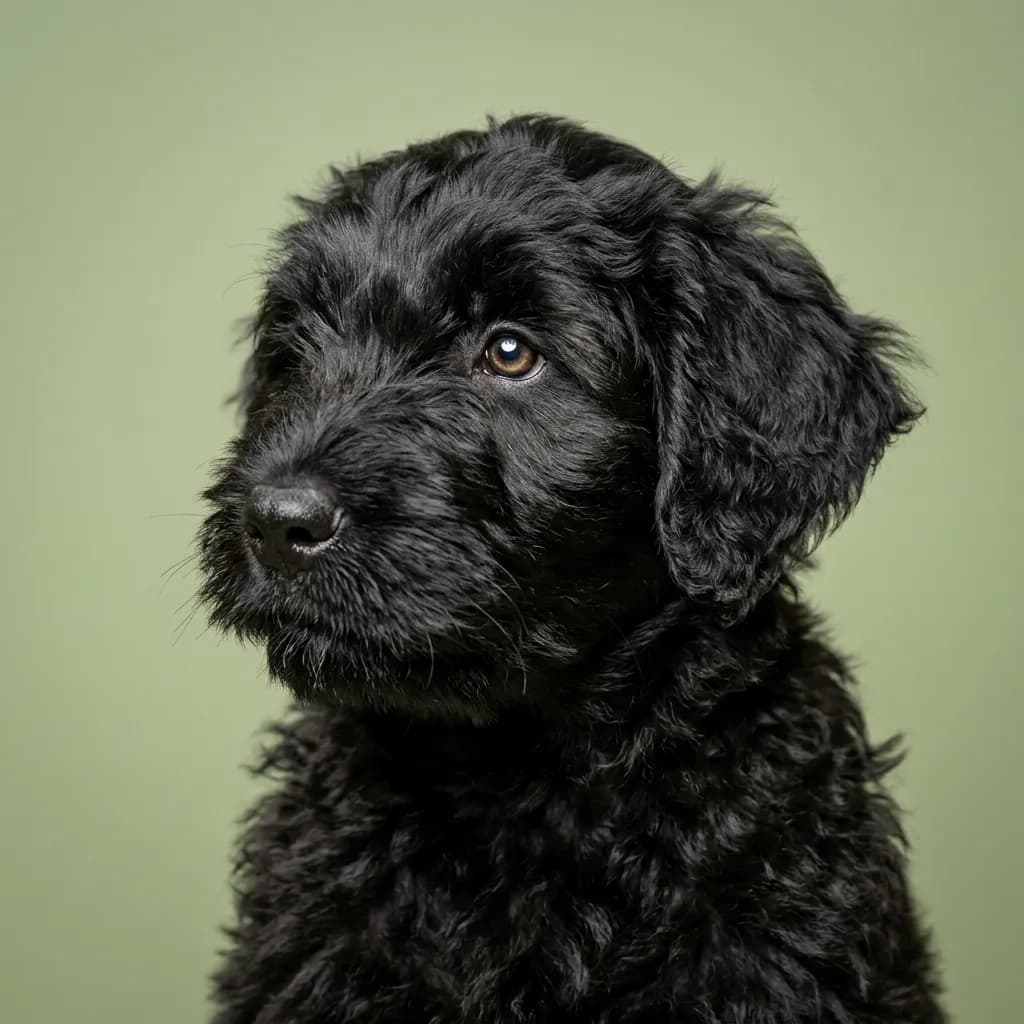
Free weekly training plan, specific to your Black Russian Terrier’s age. Exactly what to focus on this week.
Get your free training planLiving with a Black Russian Terrier
The Black Russian Terrier was built for a job, not a show ring. Developed in the Soviet military kennels during the 1930s, this breed was designed to guard installations in brutal winter conditions. That origin explains everything about them today.
They’re massive, standing 26 to 30 inches tall and weighing between 80 and 130 pounds of dense muscle and bone. But size isn’t their most defining trait, it’s their calm intensity. You’ll notice it right away.
They don’t bounce or pester. They observe. They’re intelligent and mentally engaged, needing real jobs or structured training to stay balanced.
Don’t mistake their calm for laziness though. They’ve got energy rated at 4 out of 5 and need daily exercise, long walks, off-leash runs in secure areas, or even cart-pulling to satisfy their working drive. Living with one means embracing routine and responsibility.
They’re adaptable to different homes as long as they get movement and mental stimulation, but they’re not for apartments. They need space and a yard with a solid fence. They’re not overly vocal, barking is a 3 out of 5, but they’re alert and will sound off when something’s up, making them excellent guard dogs.
Affection is doled out on their terms. They’re loyal and devoted to their people, but not clingy or overly demonstrative. With kids, it’s a mixed bag.
They can tolerate older children who respect their space, but their sheer size makes them risky around toddlers. Supervision isn’t optional. Grooming is serious business.
Their thick, harsh double coat needs brushing twice a week and professional trimming every six to eight weeks. Shedding is moderate. 3 out of 5, but the coat traps hair, so you’ll find it in clumps if you skip maintenance.
Health-wise, they’re prone to hip and elbow dysplasia, so ask breeders for OFA clearances. PRA and hyperuricosuria are also concerns, but DNA testing helps reduce risk. Lifespan is 10 to 12 years, typical for a giant breed.
They cost $1,500 to $4,500, reflecting their specialized breeding and working background. These dogs are not for first-timers. You need experience reading dog behavior and confidence in handling a powerful animal.
Here’s the real talk: if you want a dog that turns heads and demands respect, the Black Russian Terrier delivers. But the best use of one isn’t as a status symbol, it’s as a working partner. They thrive when they have a purpose, not just a patio.
14 traits, at a glance.
Every breed on PuppyBase is rated across the 14 trait dimensions the American Kennel Club publishes — from trainability to drooling level. The higher the score, the better the fit for that trait.
What to expect day-to-day
Things to screen for
- Hyperuricosuria
- Elbow dysplasia
- Hip dysplasia
- Juvenile laryngeal paralysis
- Progressive retinal atrophy
See a full price breakdown — first-year costs, lifetime estimate, breeder vs. adoption.
Full price guideSimilar breeds
Browse all 200+
Common questions
How long do Black Russian Terriers live?
Black Russian Terriers typically live between 10 and 12 years. This lifespan is average for a dog of their large size, and maintaining their health through proper diet and exercise helps them reach their full lifespan potential.
How much does a Black Russian Terrier puppy cost?
A Black Russian Terrier puppy usually costs between $2,000 and $4,500, with most buyers paying around $3,000. Prices are high due to their specialized breeding, working background, and the health testing required for responsible breeding.
How much do Black Russian Terriers shed?
Black Russian Terriers shed moderately. Their double coat requires regular maintenance, and while they don’t blow their coat seasonally like some breeds, you’ll still find some hair around the house year-round.
What colors do Black Russian Terriers come in?
Black Russian Terriers come only in solid black. Any other color is a disqualification in the breed standard, and puppies born outside of black are typically not considered purebred.
How big do Black Russian Terriers get?
They are large dogs, standing 26 to 30 inches tall at the shoulder and weighing between 80 and 130 pounds. Males are generally larger and heavier than females, and their muscular build gives them a powerful presence.
Are Black Russian Terriers smart?
Yes, Black Russian Terriers are very intelligent and were bred for complex tasks in military and police work. They learn quickly but need consistent, structured training to stay mentally engaged and obedient.
Are Black Russian Terriers hypoallergenic?
No, Black Russian Terriers are not hypoallergenic. While their coat is dense and may trap some allergens, they still shed and produce dander, making them unsuitable for most people with allergies.
Are Black Russian Terriers aggressive?
They are not inherently aggressive, but they are naturally aloof and protective, especially around strangers. Proper socialization from an early age is critical to prevent suspicion or over-guarding behavior.
What health problems are common in Black Russian Terriers?
Common health issues include hip and elbow dysplasia, progressive retinal atrophy, hyperuricosuria, and juvenile laryngeal paralysis. Responsible breeders screen for these conditions, but potential owners should be prepared for possible vet costs.
Do Black Russian Terriers bark a lot?
They bark moderately and usually only when necessary, such as alerting to strangers or unusual activity. They’re not chronic barkers, but their deep voice carries, so they make effective watchdogs without being noisy.
Are Black Russian Terriers easy to train?
Yes, they are highly trainable and respond well to firm, consistent instruction. However, their intelligence and strength mean they need an experienced handler who can lead confidently and provide mental challenges.
Are Black Russian Terriers good family dogs?
They can be good family dogs for experienced owners with older children. They’re calm and loyal but are so large and powerful that they may unintentionally knock over small kids, making supervision essential.
Are Black Russian Terriers good with cats?
They can coexist with cats if raised together or properly introduced, but their prey drive means they may not be trustworthy around small animals. Early socialization improves their tolerance, but they’re not naturally cat-friendly.
Are Black Russian Terriers good guard dogs?
Yes, they are excellent guard dogs, originally bred for military and police work in the Soviet Union. They are naturally watchful, courageous, and protective, making them highly effective at property and personal protection.
How much exercise does a Black Russian Terrier need?
They need a lot of exercise—daily long walks, off-leash play in secure areas, and mental challenges like training or dog sports. Without enough activity, they can become bored and develop destructive habits.
Are Black Russian Terriers good first dogs?
No, they are not recommended for first-time owners. Their size, strength, and need for firm, experienced handling make them challenging for anyone without prior experience training large working breeds.
Not sure which breed fits your life?
Answer five questions about your home, your schedule, and your tolerance for shedding. We’ll match you to your top three breeds from over 200.