Brussels Griffon
Tiny dog, enormous personality — the Griffon is convinced they are the most important creature in any room, and they're hard to argue with. Velcro dogs who follow you from room to room, they do poorly when left alone for long stretches. The scruffy, almost human-like face is the hook; the demanding personality is the fine print.

Free weekly training plan, specific to your Brussels Griffon’s age. Exactly what to focus on this week.
Get your free training planLiving with a Brussels Griffon
The Brussels Griffon started as a rat hunter in 19th-century Belgian stables, later refined into a lapdog with a face only a mother could love, except everyone else falls for it too. Don’t let the monkey-like expression fool you. This tiny dog, weighing just 8 to 10 pounds and standing under 10 inches tall, is packed with personality.
They’re loyal to their people, alert to every doorbell and squirrel, and endlessly curious, often poking their button nose into places it doesn’t belong. Living with a Brussels Griffon feels like sharing your home with a tiny, opinionated roommate who happens to adore you. They’re not nonstop barkers, but they’ll speak up when something changes in their world, mail delivery, a new vacuum sound, your decision to stand up from the couch.
Trainability is solid, scoring a 4 out of 5, but they learn best with gentle consistency. They’re not stubborn like some terriers, but they’re not eager-to-please spaniels either. Positive reinforcement works best.
Exercise needs are modest, a daily walk around the block and some indoor playtime keep them happy. That makes them ideal for apartments, retirees, or singles who want a close companion without a high energy drain. Grooming depends on coat type.
The rough-coated variety needs hand-stripping every few weeks to maintain that wiry, expressive look. The smooth coat is easier but still requires weekly brushing. Either way, expect some maintenance.
Shedding is moderate, not heavy, but their facial wrinkles need regular wiping to prevent irritation. Health-wise, they’re generally tough for their size, living 12 to 15 years, but their squished faces mean brachycephalic airway syndrome is a real concern. Keep them cool in summer, avoid overexertion, and budget for potential issues like patellar luxation or eye ulcers.
Reputable breeders screen for these, so don’t skimp on vetting the breeder, this isn’t a rescue-friendly breed due to high demand and price, typically $1500 to $4000. They’re great for singles, couples, or families with older kids who know how to handle delicate dogs. Young children?
Not ideal. A clumsy toddler can injure one by accident. And if you’re looking for a dog you can ignore or take on long trail runs, look elsewhere.
Here’s the real insight: Brussels Griffons don’t just bond, they fuse. They’ll know your routines better than you do, and they’ll protest if you change them. This isn’t a dog to keep in the backyard.
They need to be inside, with you, always.
14 traits, at a glance.
Every breed on PuppyBase is rated across the 14 trait dimensions the American Kennel Club publishes — from trainability to drooling level. The higher the score, the better the fit for that trait.
What to expect day-to-day
Things to screen for
- Eye problems (cataracts, corneal ulcers)
- Hip dysplasia
- Syringomyelia
- Brachycephalic airway syndrome
- Patellar luxation
See a full price breakdown — first-year costs, lifetime estimate, breeder vs. adoption.
Full price guideSimilar breeds
Browse all 200+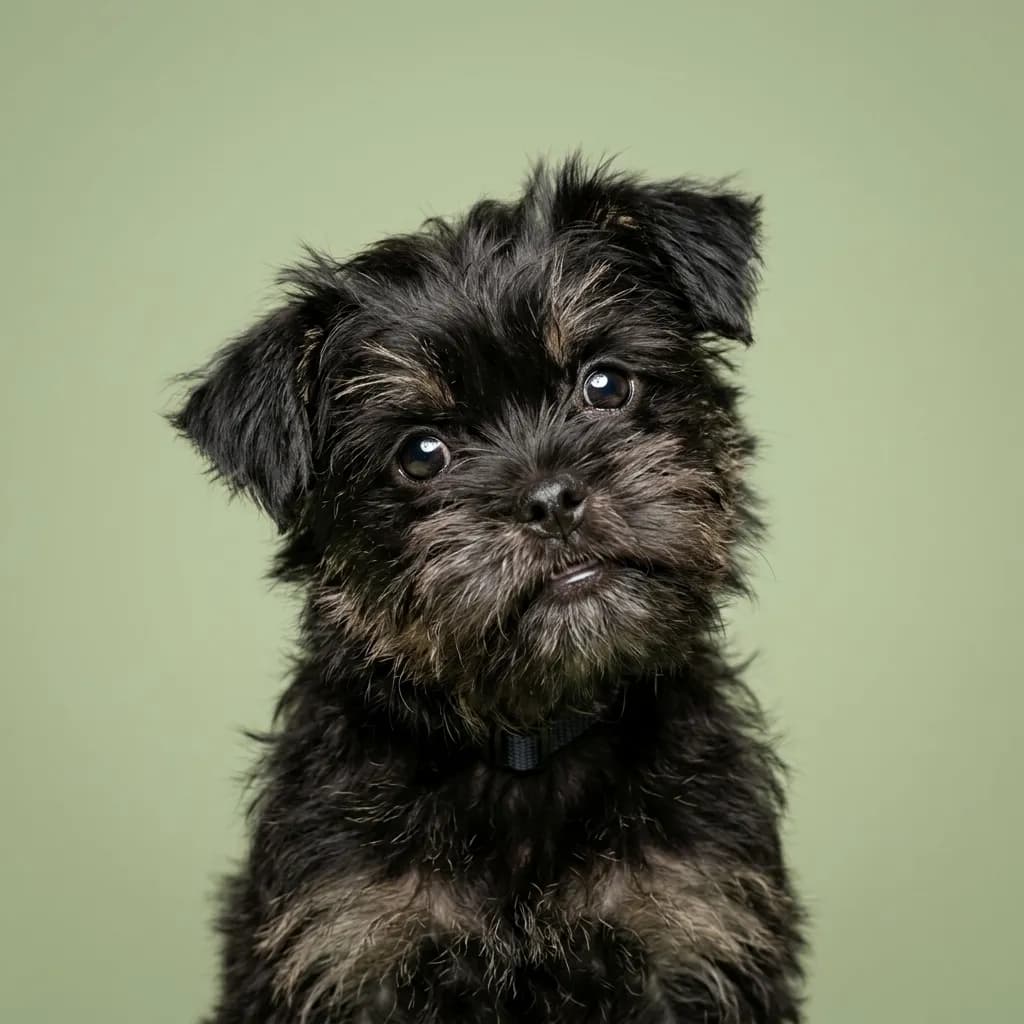


Common questions
How long do Brussels Griffons live?
Brussels Griffons typically live between 12 and 15 years, which is standard for a small dog breed. With proper care and regular vet checkups, many live into their mid-teens.
How much does a Brussels Griffon puppy cost?
A Brussels Griffon puppy usually costs between $1,500 and $4,000, with most reputable breeders charging around $2,500. The price reflects their rarity, breeding standards, and health testing.
How much do Brussels Griffons shed?
Brussels Griffons shed moderately. Their wiry coat requires regular brushing to manage loose hair, especially during seasonal changes.
What colors do Brussels Griffons come in?
Brussels Griffons come in four recognized colors: red, black, black and tan, and belge—a mix of red, black, and grayish fur that resembles a grizzled beard.
How big do Brussels Griffons get?
Brussels Griffons are small, standing between 7 and 10 inches tall and weighing 8 to 10 pounds. They’re compact but sturdy for their size.
Are Brussels Griffons smart?
Yes, Brussels Griffons are highly intelligent and quick to learn. They thrive on mental interaction and pick up new commands in just a few repetitions.
Are Brussels Griffons hypoallergenic?
No, Brussels Griffons are not hypoallergenic. While they don’t drool and have moderate shedding, they still produce dander like all dogs.
Are Brussels Griffons aggressive?
Brussels Griffons aren’t inherently aggressive, but they can be bold and feisty if not properly socialized. They’re alert and confident, which sometimes comes across as bossy around strangers or bigger dogs.
What health problems are common in Brussels Griffons?
Common health issues include brachycephalic airway syndrome, patellar luxation, eye problems like corneal ulcers, hip dysplasia, and syringomyelia. Responsible breeding and vet screening help reduce risks.
Do Brussels Griffons bark a lot?
Yes, Brussels Griffons bark frequently. They’re alert and vocal, often barking to announce visitors or express excitement, which can be a nuisance in quiet settings.
Are Brussels Griffons easy to train?
Yes, Brussels Griffons are highly trainable due to their intelligence and strong desire to please. Consistent, positive methods work best, though they can be stubborn if bored.
Are Brussels Griffons good family dogs?
They make excellent companions for singles, couples, and families with older children. Their fragile size and low tolerance for rough play make them a poor fit for homes with very young kids.
Are Brussels Griffons good with cats?
Brussels Griffons usually get along with cats, especially if raised together. Their curiosity and moderate playfulness mean they’ll interact without usually being overly aggressive.
Do Brussels Griffons have breathing problems?
Yes, Brussels Griffons often have breathing issues due to their short snouts and brachycephalic structure. This can lead to snoring, overheating, and difficulty breathing in hot or humid weather.
Can Brussels Griffons live in apartments?
Absolutely, Brussels Griffons are ideal for apartment living. They adapt well to small spaces and don’t require a yard, as long as they get daily walks and mental stimulation.
Are Brussels Griffons good first dogs?
They can be challenging for first-time owners because of their high grooming needs, vocal nature, and sensitivity to being left alone. They demand attention and routine care.
Not sure which breed fits your life?
Answer five questions about your home, your schedule, and your tolerance for shedding. We’ll match you to your top three breeds from over 200.