Doberman Pinscher vs Russian Toy
Side-by-side comparison across all 14 AKC trait ratings, with a clear verdict on which breed fits which kind of household.

Not sure which breed fits your life?
Answer five questions about your home, your schedule, and your tolerance for shedding. We’ll match you to your top three breeds from over 200.
Doberman Pinscher vs Russian Toy
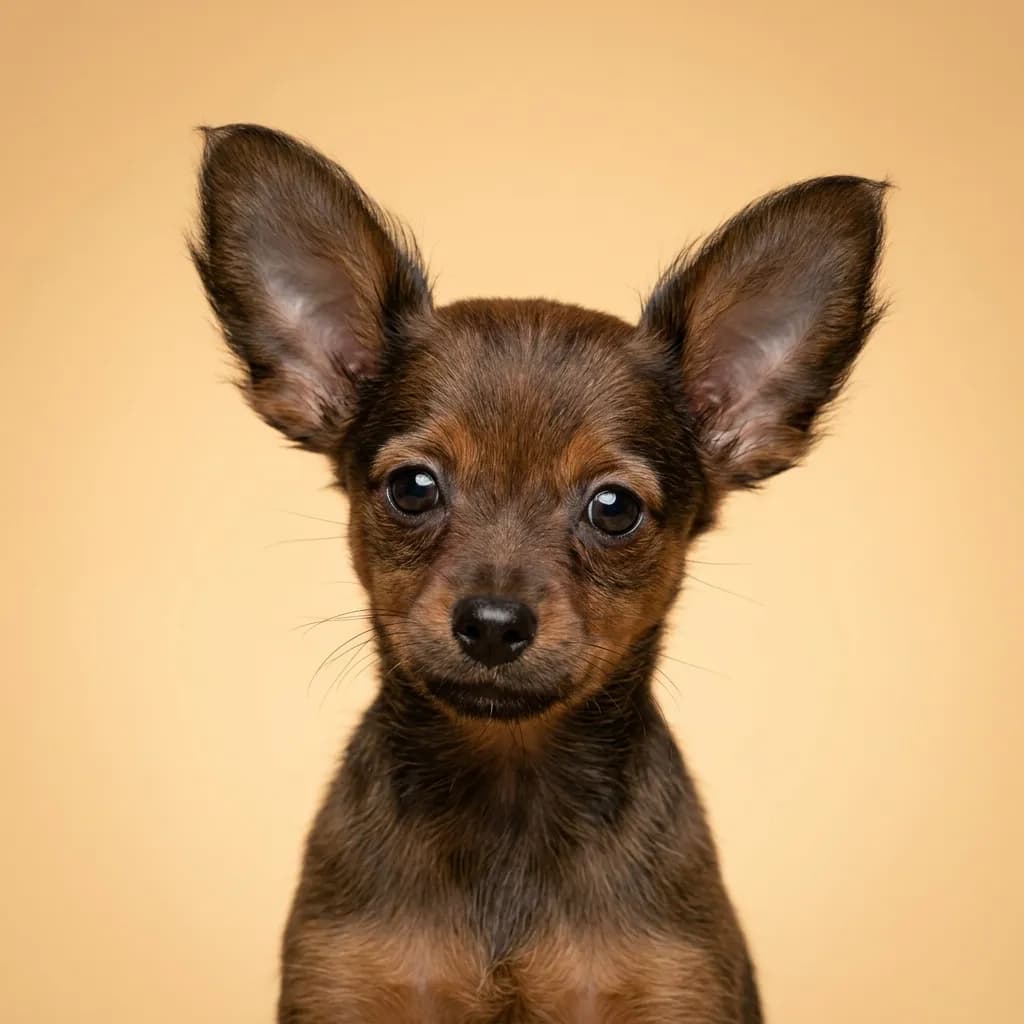
You’re not really comparing these two breeds because you’re torn between them. You’re comparing them because one showed up in your research while you were looking for something totally different. maybe a loyal companion, maybe a guardian. and now you’re wondering how two dogs so opposite could both seem to fit. The Doberman Pinscher and Russian Toy aren’t rivals. They’re extremes on the same spectrum of loyalty. The Doberman is a force of nature. He’s 90 pounds of muscle, precision, and presence, bred to protect and built to perform. He’ll run 5 miles with you, then stand guard all night. He’s fearless, yes, but also deeply bonded. affectionate to his people, alert to everything else. You need time, space, and consistency for a Doberman. He’s not for first-time owners because he’ll test you, train you, and demand your attention. Without it, that sharp mind turns destructive. The Russian Toy is the quiet whisper in contrast. Barely six pounds, he lives for lap time and eye contact. He’ll bark at the doorbell like it insulted his grandmother, but he’s not stopping intruders. he’s alerting you so you can handle it. He’s fragile, yes, but surprisingly bold in a quiet home. Kids under eight? Too rough. Long workdays? He’ll suffer. But if you’re home often, especially in a city apartment, he’s a velvety, big-eyed shadow who thrives on routine and closeness. Here’s the truth beyond the stats: both breeds live to serve their person. The Doberman does it with his body. The Russian Toy does it with his soul. Pick the Doberman if you want a partner who protects. Pick the Russian Toy if you want a mirror who reflects your mood. One guards your home. The other guards your heart.
Trait-by-trait
Higher bar = more of that trait. Shedding, barking, drooling, grooming flipped for readability.Where they diverge
Choose the Doberman Pinscher if…
- Experienced dog owners
- Active families
- Homes with a yard
- You value good with young children — Doberman Pinscher scores noticeably higher.
Choose the Russian Toy if…
- Apartment living
- Seniors
- Owners wanting a devoted companion
- You value coat grooming — Russian Toy scores higher here.