Keeshond vs Pudelpointer
Side-by-side comparison across all 14 AKC trait ratings, with a clear verdict on which breed fits which kind of household.

Not sure which breed fits your life?
Answer five questions about your home, your schedule, and your tolerance for shedding. We’ll match you to your top three breeds from over 200.
Keeshond vs Pudelpointer
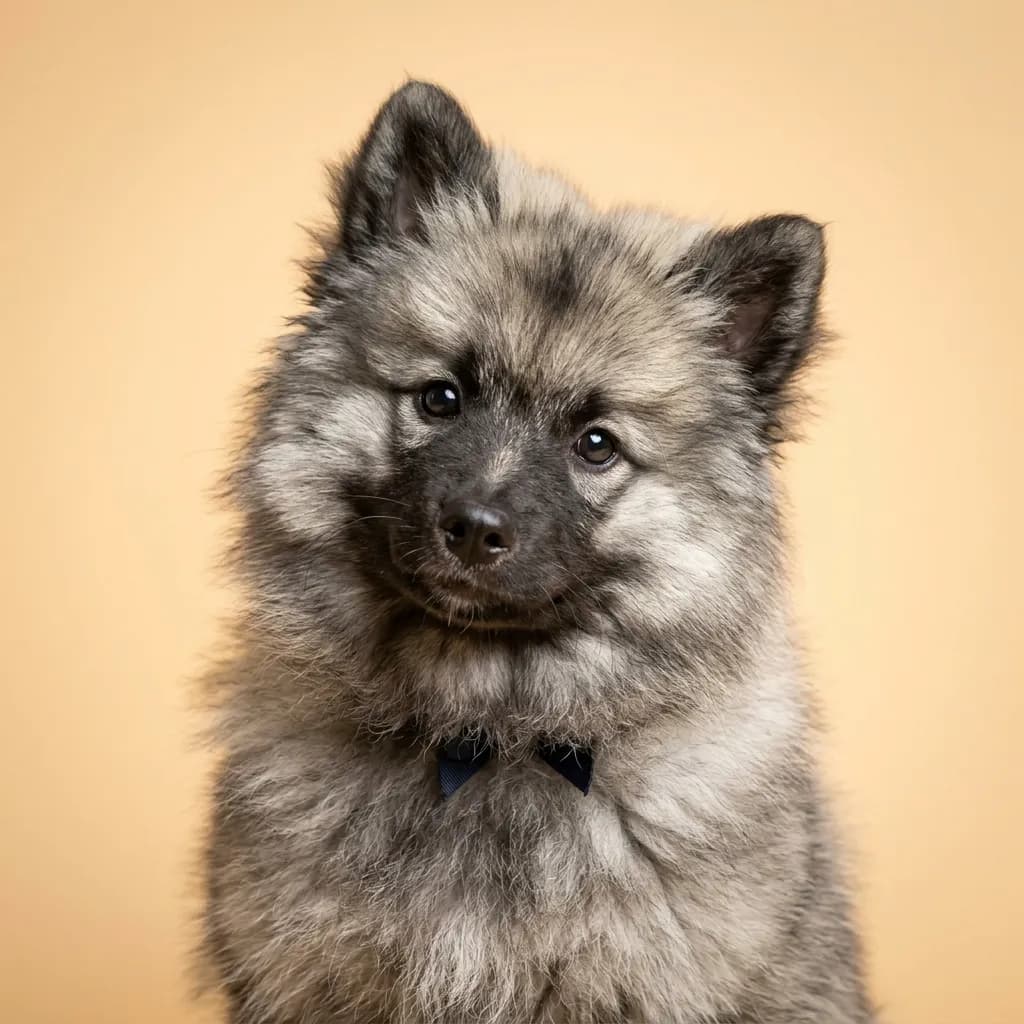
You don’t see Keeshonds and Pudelpointers squared off very often, but I get why someone might pause between them. On paper, both are smart, trainable, and energetic dogs with moderate shedding and a real desire to connect. But that’s where the overlap ends. These breeds come from entirely different worlds and will steer your life in opposite directions. The Keeshond is your friendly neighborhood comedian with a fluffy silver mane and a habit of barking at the mail carrier like it’s a national emergency. Bred to sit on Dutch barges and keep watch, this dog thrives on routine, affection, and cold weather walks. It’s a fantastic first dog. patient, adaptable to apartments, and adores kids. But you’ll need to commit to brushing that lush coat and embracing the soundtrack of frequent, opinionated barking. The Pudelpointer? That’s a working machine disguised as a dog. A blend of Poodle and Pointer built for hunters who need one dog to do it all. point, retrieve, swim hard, and track for hours. It’s not loud, but it’s intense. This dog needs space, purpose, and daily physical and mental challenges. Without a job. like hunting, advanced training, or serious fieldwork. it’ll find one for itself, probably involving your garden or your nerves. Here’s the real talk: the Keeshond wants to be your emotional support roommate. The Pudelpointer wants to be your co-worker in the wild. If you’re not hunting or doing advanced dog sports, don’t get a Pudelpointer. And if you can’t handle a chatty, fluffy homebody, skip the Keeshond. One fits a suburban family. The other fits a lifestyle. Choose based on the life you actually live, not the one you romanticize.
Trait-by-trait
Higher bar = more of that trait. Shedding, barking, drooling, grooming flipped for readability.Where they diverge
Choose the Keeshond if…
- Families with children
- Active owners
- Cold climates
- You value good with young children — Keeshond scores noticeably higher.
Choose the Pudelpointer if…
- hunters
- very active owners
- waterfowl and upland bird hunters
- You value drooling level — Pudelpointer scores higher here.