Bloodhound vs Curly-Coated Retriever
Side-by-side comparison across all 14 AKC trait ratings, with a clear verdict on which breed fits which kind of household.

Not sure which breed fits your life?
Answer five questions about your home, your schedule, and your tolerance for shedding. We’ll match you to your top three breeds from over 200.
Bloodhound vs Curly-Coated Retriever
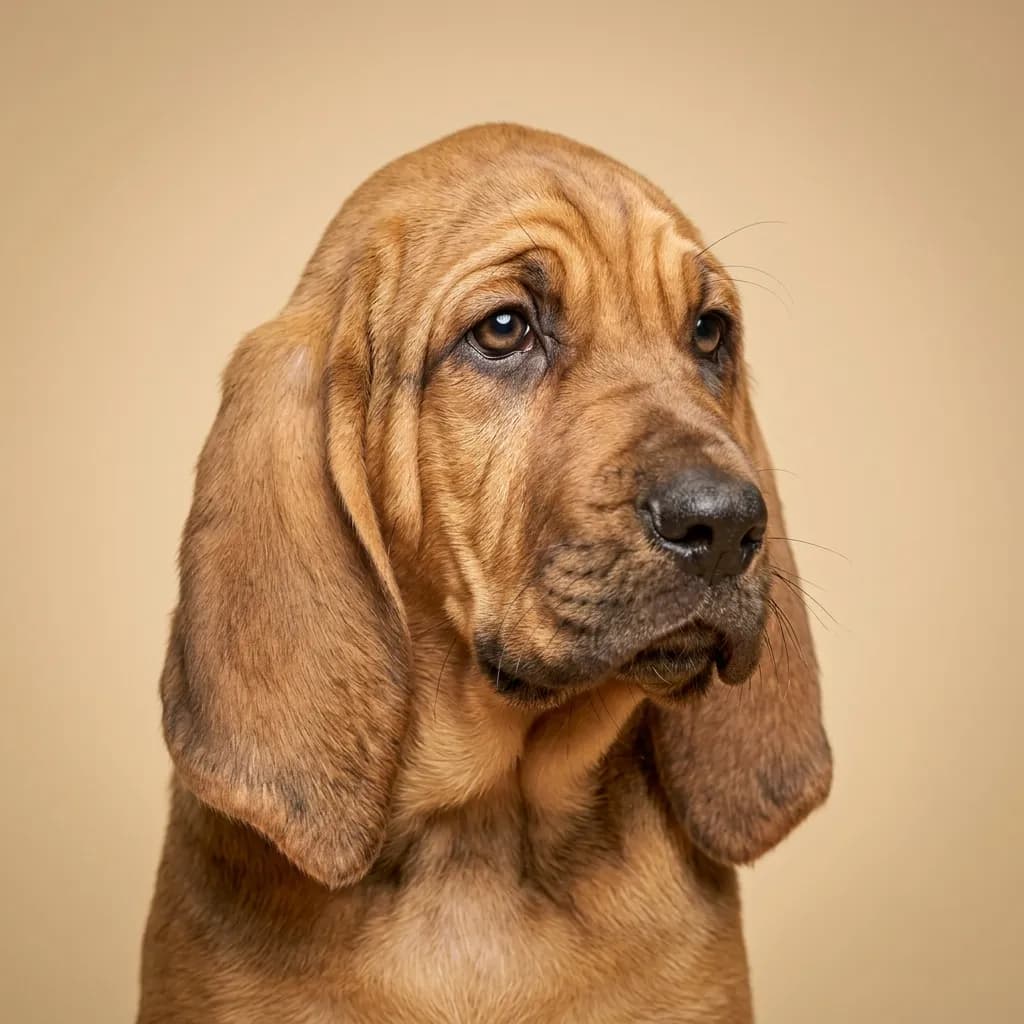
People compare Bloodhounds and Curly-Coated Retrievers because both are big, energetic dogs with noses that never quit. They look vaguely similar in size, and both were built for hunting. But that’s where the story splits. A Bloodhound isn’t just a dog with a nose. It’s a nose with a dog attached. If your life revolves around tracking, search and rescue, or you just love the idea of a living, breathing scent machine, this is your breed. But you’ll trade peace and quiet for that gift. Bloodhounds bay. Loudly. A deep, mournful howl that carries for miles. They’re also stubborn as bedrock when that nose hits the trail. You won’t outrun it, so a rock-solid fence isn’t optional. They’re affectionate and gentle, but not as naturally tuned to kids or family routines as the Curly-Coated Retriever. The Curly, by contrast, is the athletic, all-weather retriever who thrives on teamwork. That tight, water-resistant curl isn’t just for show. it sheds less and stands up to icy lakes. These dogs bond hard with their people, love kids, and while independent in the field, they want to please at home. They’re quieter, more adaptable, and frankly easier to live with in a family setting. But don’t mistake that for softness. They need real work. hunting, training, long swims. or they’ll find their own entertainment, which you might not like. Here’s the real talk: Bloodhounds demand experience. Their single-mindedness isn’t a flaw. It’s the whole point. If you’re not ready for a dog that might ignore you completely when a scent hits, don’t get one. Curly-Coated Retrievers are easier to integrate into active family life, but they’re not beginner dogs either. They’re sharp, bold, and need confident handling. Pick the Bloodhound if you want a specialist. Pick the Curly if you want a versatile, loyal athlete who happens to love the water and your kids equally.
Trait-by-trait
Higher bar = more of that trait. Shedding, barking, drooling, grooming flipped for readability.Where they diverge
Choose the Bloodhound if…
- Active people
- Rural homes
- Hunters
- You value drooling level — Bloodhound scores noticeably higher.
Choose the Curly-Coated Retriever if…
- Active families
- Hunters and waterfowlers
- Cold and wet climates
- You value good with young children — Curly-Coated Retriever scores higher here.