Bloodhound
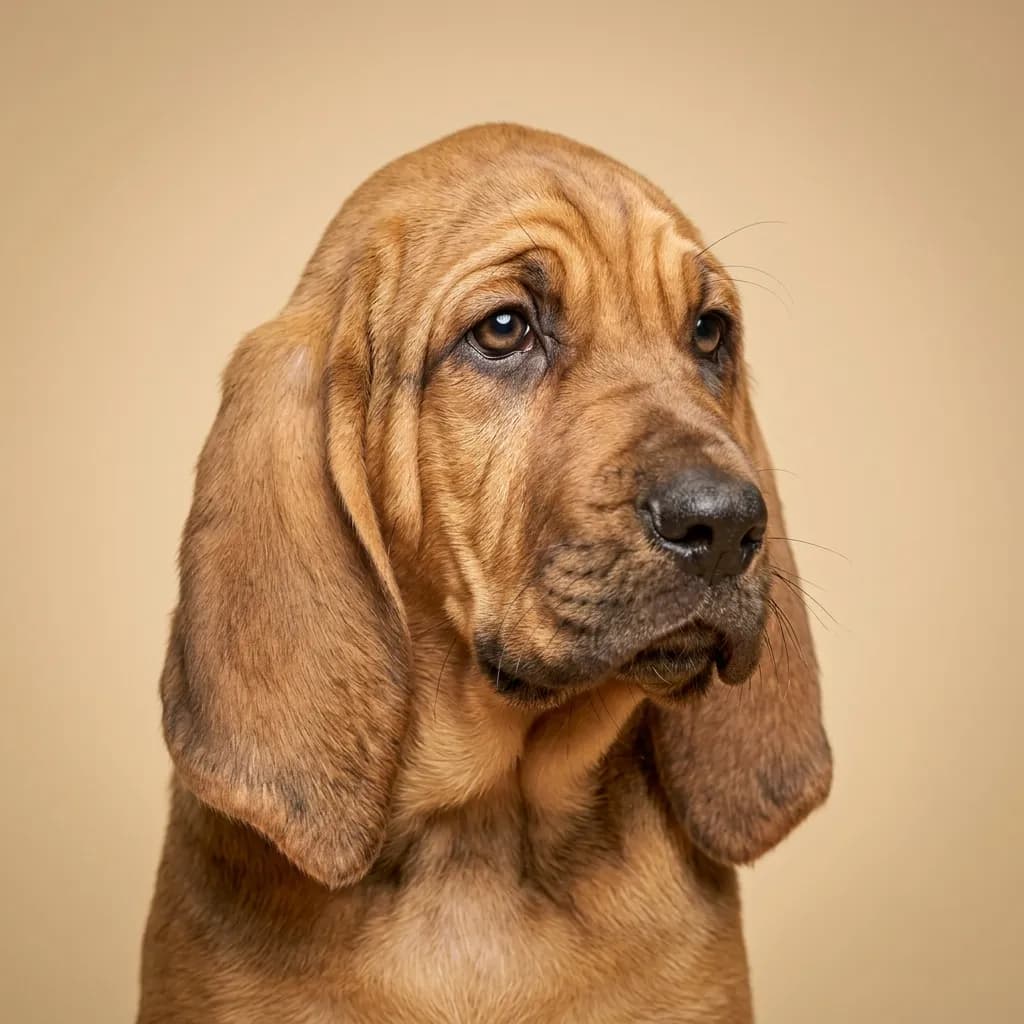
The gold standard of scent tracking — its nose is so accurate that its findings are admissible as evidence in court. Bloodhounds are friendly and curious but absolutely ruled by smell, which makes recall a fantasy outdoors. That loose skin and those magnificent ears come with a cleaning bill: ear infections and drool are part of the deal.
Free weekly training plan, specific to your Bloodhound’s age. Exactly what to focus on this week.
Get your free training planLiving with a Bloodhound
The Bloodhound isn’t just a dog with a good nose, it’s basically a walking, slobbering scent laboratory. Originally bred in Belgium by monks over a thousand years ago to track game and later humans, this breed helped shape modern scent work used in search and rescue and law enforcement. If you’ve ever seen a Bloodhound on a trail, you know that once they catch a whiff, nothing short of a tractor will pull them off course.
Living with a Bloodhound means embracing chaos with a smile. They’re friendly and deeply affectionate with their people, but don’t mistake that for obedience. Their independent, inquisitive mind is always working, which makes training a mix of triumph and frustration.
They score a 4/5 on trainability not because they’re eager to please like a Labrador, but because they can learn when motivated, but you’ll need patience and high-value treats. And that nose? It’s a superpower and a liability.
Unleashed, they’ll follow a scent into traffic, over a hill, or halfway through a neighbor’s backyard. A secure, tall fence isn’t optional. It’s survival.
They’re not hyper dogs, energy sits at a moderate 3/5, but their exercise needs are unique. You can’t just toss a ball. They need scent trails, long walks with exploration time, or tracking games to stay mentally satisfied.
Without it, they’ll invent their own jobs, usually involving your laundry basket or the trash. Grooming isn’t bad despite the wrinkles and 3/5 shedding. A weekly wipe-down of facial folds and ears prevents infections, and brushing keeps loose hair in check.
But be ready for the drool. Counter-surfing isn’t just a behavior issue, it’s a biohazard. Health-wise, watch for bloat, hip dysplasia, and ectropion, where the lower eyelid rolls outward and invites irritation.
Regular vet checks and slow feeding help. Lifespan is 10 to 12 years, and quality breeders are key, hence the $800 to $2500 price. Best for experienced owners in rural or active homes, especially those who hunt or do scent work.
Not for apartment dwellers or anyone who values quiet. Bloodhounds bark and bay at a 5/5, they’re not subtle. Here’s the real talk: most people underestimate how single-minded a Bloodhound can be.
They don’t just track scents. They live inside them. If you want a dog that’s truly present, always engaged with you, this isn’t the breed.
But if you can love a dog that’s blissfully lost in the world of smell, you’ll gain a loyal, goofy, drooly companion like no other.
14 traits, at a glance.
Every breed on PuppyBase is rated across the 14 trait dimensions the American Kennel Club publishes — from trainability to drooling level. The higher the score, the better the fit for that trait.
What to expect day-to-day
Things to screen for
- Skin fold infections
- Hip dysplasia
- Ear infections
- Bloat (GDV)
- Eye conditions (ectropion)
See a full price breakdown — first-year costs, lifetime estimate, breeder vs. adoption.
Full price guideSimilar breeds
Browse all 200+


Common questions
How long do Bloodhounds live?
Bloodhounds typically live between 10 and 12 years, which is average for a dog of their size. Proper care, diet, and regular vet checkups can help them reach the upper end of that range.
How much does a Bloodhound puppy cost?
A Bloodhound puppy usually costs between $1,500 and $2,500, with some reaching up to $2,500 for show-quality lines from reputable breeders. The price reflects their specialized breeding and demand for tracking work.
How much do Bloodhounds shed?
Bloodhounds shed moderately year-round, and regular weekly brushing helps manage loose hair. They aren’t heavy shedders like some double-coated breeds, but you’ll still find hair around the house.
What colors do Bloodhounds come in?
Bloodhounds come in three standard colors: black and tan, liver and tan, and solid red. The rich tan markings contrast with the darker saddle and are a signature of the breed.
How big do Bloodhounds get?
Bloodhounds are large dogs, standing 23 to 27 inches tall and weighing between 80 and 110 pounds. Males are typically larger than females, and they have a powerful, deep-chested build.
Are Bloodhounds smart?
Bloodhounds are highly intelligent, especially when it comes to scent work—so much so that their tracking is legally admissible in court. But their independent thinking can make them seem stubborn in obedience training.
Are Bloodhounds hypoallergenic?
No, Bloodhounds are not hypoallergenic. They shed moderately and produce dander, plus their drool can trigger allergies in sensitive individuals.
Are Bloodhounds aggressive?
Bloodhounds are not aggressive by nature. They’re friendly and gentle with people and other dogs, but their strong drive to follow a scent can make them single-minded and hard to control off-leash.
What health problems are common in Bloodhounds?
Common health issues include hip dysplasia, bloat, ear infections, ectropion (a condition where the eyelid rolls outward), and skin fold infections. Regular cleaning of their ears and facial folds is essential.
Do Bloodhounds bark a lot?
Yes, Bloodhounds bark and howl frequently, especially when excited or on a scent trail. Their deep, loud voice carries far, so they’re not a good choice if you need a quiet dog.
Are Bloodhounds easy to train?
Bloodhounds are smart but independent, so training requires patience and consistency. They respond best to positive reinforcement, but their nose easily overrules commands when a scent is in the air.
Are Bloodhounds good family dogs?
Bloodhounds can be good family dogs if you have the space and patience for their size and drool. They’re friendly with kids and strangers, but their strength and tendency to bolt on a scent make them better for homes with older children and secure fencing.
Are Bloodhounds good with cats?
Bloodhounds can live with cats, especially if raised together, but their strong prey drive means they may chase smaller animals. Supervision is necessary, and success depends on the individual dog’s temperament.
Are Bloodhounds good guard dogs?
No, Bloodhounds are not good guard dogs. They’re friendly with strangers and lack protective instincts, often greeting intruders like long-lost friends. Their job is tracking, not protection.
Can Bloodhounds live in apartments?
Bloodhounds are a poor fit for apartments due to their size, loud barking, and need for secure outdoor space. They do best in rural or suburban homes with large, fenced yards.
Do Bloodhounds drool a lot?
Yes, Bloodhounds drool heavily, especially after drinking, eating, or when excited. Their loose lips and jowls mean you’ll need towels on hand and should expect damp spots around the house.
Not sure which breed fits your life?
Answer five questions about your home, your schedule, and your tolerance for shedding. We’ll match you to your top three breeds from over 200.