Irish Wolfhound vs Scottish Terrier
Side-by-side comparison across all 14 AKC trait ratings, with a clear verdict on which breed fits which kind of household.

Not sure which breed fits your life?
Answer five questions about your home, your schedule, and your tolerance for shedding. We’ll match you to your top three breeds from over 200.
Irish Wolfhound vs Scottish Terrier
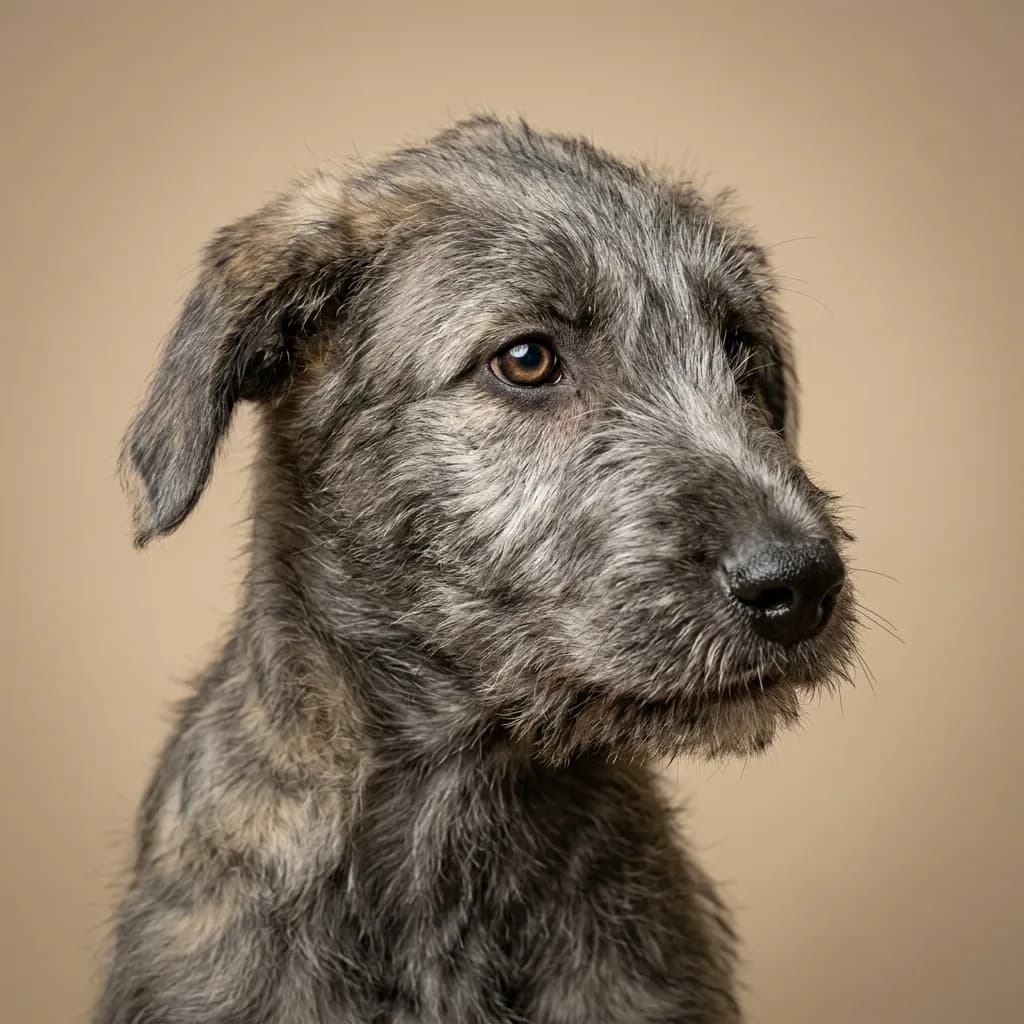
People compare Irish Wolfhounds and Scottish Terriers because they’re both proudly national breeds with big personalities, but that’s where the similarity ends. You’re not just choosing between big and small here. you’re picking entirely different dog philosophies. One was built to take down wolves, the other to dig into dens after foxes, and their lives reflect that. The Irish Wolfhound is a gentle giant with the soul of a poet. At over 100 pounds and standing taller than your kitchen counter, he’ll fold his lanky frame into your living room like he’s saving space. He’s calm, deeply affectionate, and surprisingly quiet, but he won’t live long. 6 to 8 years is typical, which breaks hearts. He needs room to stretch, food that costs a small fortune, and a vet you trust implicitly. If you have space, time, and emotional bandwidth for a short but profound bond, he’s unmatched. The Scottish Terrier is a fireplug of confidence. He’s small enough for an apartment, but don’t mistake size for softness. He’s independent, will bark at the mailman like it’s personal, and can be stubborn in training. But he’s also fiercely loyal and lives 12 years or more, often with fewer major health surprises. He’s better for someone who wants a long-term companion with a dash of drama and a lot of character. Here’s the real talk: the Irish Wolfhound isn’t really a family dog in the traditional sense. he’s a legacy dog. You get one because you’re ready to love deeply and say goodbye too soon. The Scottie? He’s the dog who’ll grow old with you, bossing you around the whole way. Pick based on the life you can give, not just the look you love.
Trait-by-trait
Higher bar = more of that trait. Shedding, barking, drooling, grooming flipped for readability.Where they diverge
Choose the Irish Wolfhound if…
- Families with space
- Gentle companion seekers
- Owners with large homes
- You value good with other dogs — Irish Wolfhound scores noticeably higher.
Choose the Scottish Terrier if…
- Apartment living
- Independent owners
- Those wanting a distinctive, classic breed
- You value barking level — Scottish Terrier scores higher here.