Irish Wolfhound
Enormous, ancient, and oddly gentle — a dog that once hunted wolves now mostly occupies couches and leans on people. Their lifespan is heartbreakingly short, and their size means every cost is amplified, from food to vet bills. But if you have the space and the heart for it, few breeds leave a deeper impression.
Free weekly training plan, specific to your Irish Wolfhound’s age. Exactly what to focus on this week.
Get your free training planLiving with a Irish Wolfhound
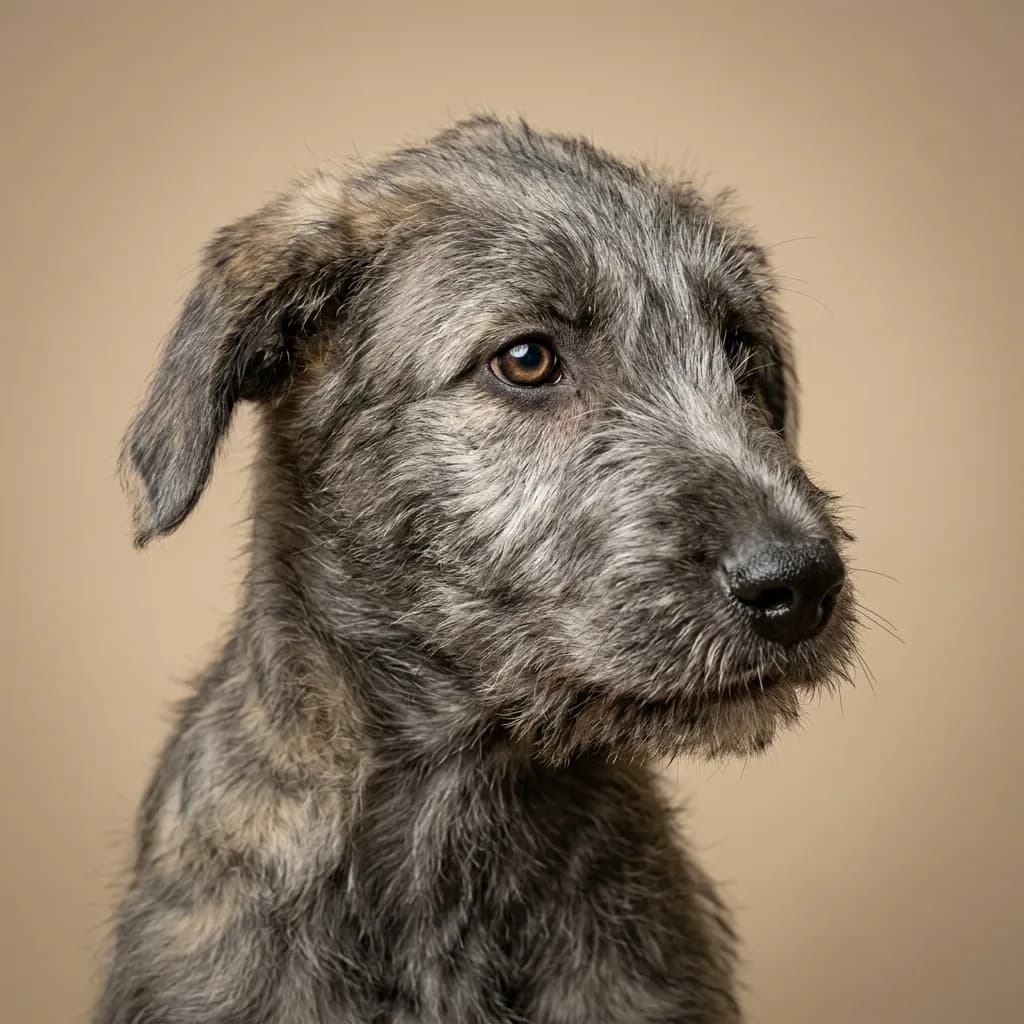
The Irish Wolfhound is not a dog you buy. It’s a commitment you sign up for, like adopting a small horse with the soul of a monk. Bred to hunt wolves and elk in ancient Ireland, these giants are the tallest of all dog breeds, standing 30 to 32 inches at the shoulder and weighing between 105 and 120 pounds.
They’re part of the Hound Group, but don’t expect hyper energy or constant barking. In fact, they’re quiet, dignified, and oddly calm in the house, more likely to stretch out on your living room floor like a fallen sequoia than demand attention. Day-to-day life with an Irish Wolfhound is surprisingly peaceful.
They score only 3 out of 5 on energy, meaning they need regular walks and some off-leash time in a secure area, but they won’t burn down your house if you skip a day. They’re affectionate, give them a 5 out of 5 in that category, and they’ll lean on you like a warm, shaggy wall when they’re feeling cozy. But don’t be fooled by the gentle demeanor.
They’re courageous by nature, bred for battle, and that quiet watchfulness means they’re always aware of their surroundings. Grooming is a real task. Their rough, wiry coat sheds moderately and needs brushing twice a week, plus hand-stripping to keep it in good condition.
It’s not high maintenance like a Poodle, but it’s not a wipe-and-go coat either. And while they’re good with kids, their sheer size means they can knock over a toddler without meaning to, supervision is non-negotiable. Health-wise, they’re fragile.
A 6 to 8 year lifespan is typical, and they’re prone to serious issues like dilated cardiomyopathy, bone cancer, and bloat. You’ll spend more at the vet than with most breeds, and you’ll likely face heartbreak earlier than you’d like. The price tag.
$1500 to $5000, only covers the start. They’re best for families with space, a calm home, and deep pockets. Not for apartment dwellers, budget-limited owners, or anyone who can’t handle losing a dog too soon.
Here’s the truth no one wants to admit: owning an Irish Wolfhound isn’t about convenience. It’s about bearing witness to a rare kind of nobility, even if it only lasts a moment.
14 traits, at a glance.
Every breed on PuppyBase is rated across the 14 trait dimensions the American Kennel Club publishes — from trainability to drooling level. The higher the score, the better the fit for that trait.
What to expect day-to-day
Things to screen for
See a full price breakdown — first-year costs, lifetime estimate, breeder vs. adoption.
Full price guideSimilar breeds
Browse all 200+



Common questions
How long do Irish Wolfhounds live?
Irish Wolfhounds typically live between 6 and 8 years, which is a relatively short lifespan for a dog. Their large size contributes to faster aging and increased risk of serious health issues like heart disease and bone cancer.
How much does a Irish Wolfhound puppy cost?
A Irish Wolfhound puppy usually costs between $2,500 and $5,000, with most averaging around $3,500. The high price reflects their breeding standards, health testing, and the significant ongoing costs of feeding and caring for such a large dog.
How much do Irish Wolfhounds shed?
Irish Wolfhounds have moderate shedding. You’ll need to brush them weekly to manage loose hair, especially during seasonal changes, but they aren’t heavy shedders compared to some double-coated breeds.
What colors do Irish Wolfhounds come in?
Irish Wolfhounds come in a range of colors including black, blue, brindle, cream, gray, red, silver, and white. The coat is wiry and medium-length, giving them a rugged but dignified look regardless of color.
How big do Irish Wolfhounds get?
Irish Wolfhounds are one of the largest dog breeds, standing 30 to 32 inches tall at the shoulder and weighing between 105 and 120 pounds. They take up a lot of space, both in the home and when moving around.
Are Irish Wolfhounds smart?
Irish Wolfhounds are moderately intelligent and capable of learning, but they aren’t among the quickest learners. They respond best to patient, consistent training and appreciate mental challenges that don’t feel like drudgery.
Are Irish Wolfhounds hypoallergenic?
No, Irish Wolfhounds are not hypoallergenic. They shed moderately and produce dander, so they’re unlikely to be suitable for people with allergies.
Are Irish Wolfhounds aggressive?
No, Irish Wolfhounds are not aggressive. They’re known for being calm, dignified, and gentle, even with strangers. Their size might be intimidating, but their temperament is peaceful and courageous without being threatening.
What health problems are common in Irish Wolfhounds?
Irish Wolfhounds are prone to several serious health issues, including dilated cardiomyopathy, bone cancer, bloat, hip dysplasia, and progressive retinal atrophy. Responsible breeding and regular vet care are critical to managing these risks.
Do Irish Wolfhounds bark a lot?
No, Irish Wolfhounds rarely bark. They’re very quiet dogs by nature, which makes them poor alarm barkers but excellent companions in settings where noise is a concern.
Are Irish Wolfhounds easy to train?
Irish Wolfhounds are moderately trainable. They’re willing to please but can be independent, so consistency and positive reinforcement work best. Early socialization is key to managing their size and sensitivity.
Are Irish Wolfhounds good family dogs?
Yes, Irish Wolfhounds can be excellent family dogs if you have space and older children. They’re very affectionate with family members and calm in the home, but their size means they can accidentally knock over small kids.
Are Irish Wolfhounds good with cats?
Irish Wolfhounds can get along with cats, especially if raised together, but their prey drive means caution is needed. They were bred to hunt large game, so some individuals may not be reliable around small animals.
Are Irish Wolfhounds good guard dogs?
Irish Wolfhounds make excellent passive guard dogs due to their imposing size and strong protective instincts. They’re deeply loyal and watchful, though they’re more likely to stand their ground than to attack.
Can Irish Wolfhounds live in apartments?
Irish Wolfhounds are not well-suited to apartment living. They need space to stretch out and move comfortably, and even moderate exercise requirements are harder to meet in confined urban environments.
When do Irish Wolfhounds calm down?
Irish Wolfhounds tend to remain playful and somewhat clumsy until around 2 years of age, after which they settle into their naturally calm and dignified demeanor. Even as adults, they enjoy lounging more than constant activity.
Not sure which breed fits your life?
Answer five questions about your home, your schedule, and your tolerance for shedding. We’ll match you to your top three breeds from over 200.