Saint Bernard vs Slovensky Cuvac
Side-by-side comparison across all 14 AKC trait ratings, with a clear verdict on which breed fits which kind of household.

Not sure which breed fits your life?
Answer five questions about your home, your schedule, and your tolerance for shedding. We’ll match you to your top three breeds from over 200.
Saint Bernard vs Slovensky Cuvac
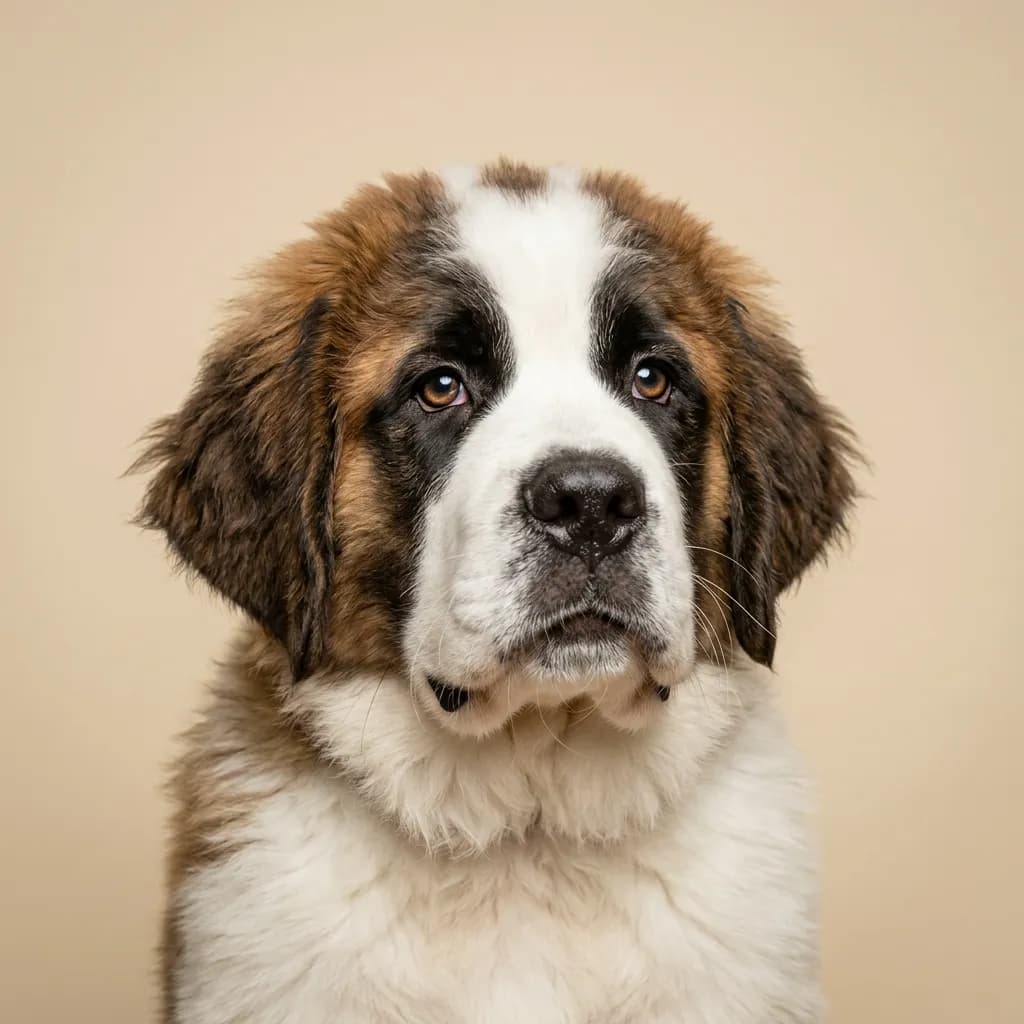
People don’t usually pit a Saint Bernard against a Slovensky Cuvac unless they’re deep into the world of big, white, cold-weather dogs with old-world roots. Maybe you saw both in a movie or at a rare breed show and thought, “Wait, which one fits my life?” On paper, they’re both massive white dogs built for snow and loyalty. But living with one versus the other? That’s where things get real. The Saint Bernard is the dog you imagine saving Alpine travelers—gentle, goofy, and built like a draft horse. At 120 to 180 pounds, it’s not just big, it’s present. You’ll find it napping on your rug, drooling on your shoes, and loving every kid in the neighborhood unconditionally. It’s a family dog through and through, adaptable to suburban life if you’ve got space and a yard. But be honest: if you live somewhere hot or hate cleaning fur off everything, this isn’t your breed. And yes, the drool isn’t a myth. You will keep towels handy. The Slovensky Cuvac? That’s a different animal—literally. From Slovakia’s rugged hills, it was bred to guard flocks from wolves, not pose for postcards. It’s leaner, lighter, but fiercely alert and reserved, especially with strangers. It won’t knock over toddlers, but it’s not throwing confetti at their birthday party either. This dog thrives on a farm, with space, a job, and an owner who speaks its language of quiet vigilance. Here’s the truth no breeder will lead with: the Saint Bernard wants to be part of your couch. The Cuvac wants to patrol the perimeter while you sleep. Pick based on whether you want a gentle giant who’s always with you—or a silent guardian who watches from a distance, doing what it was born to do.
Trait-by-trait
Higher bar = more of that trait. Shedding, barking, drooling, grooming flipped for readability.Where they diverge
Choose the Saint Bernard if…
- Families with children
- Those wanting a gentle giant
- Cold climate households
- You value good with young children — Saint Bernard scores noticeably higher.
Choose the Slovensky Cuvac if…
- experienced large-breed owners
- farms and large properties
- cold climates
- You value shedding level — Slovensky Cuvac scores higher here.