Training Your Bouvier des Flandres
Thrives on structured tasks with clear goals. Responds to body language and subtle cues. Needs mental challenges to prevent herding behavior redirected at people/kids.
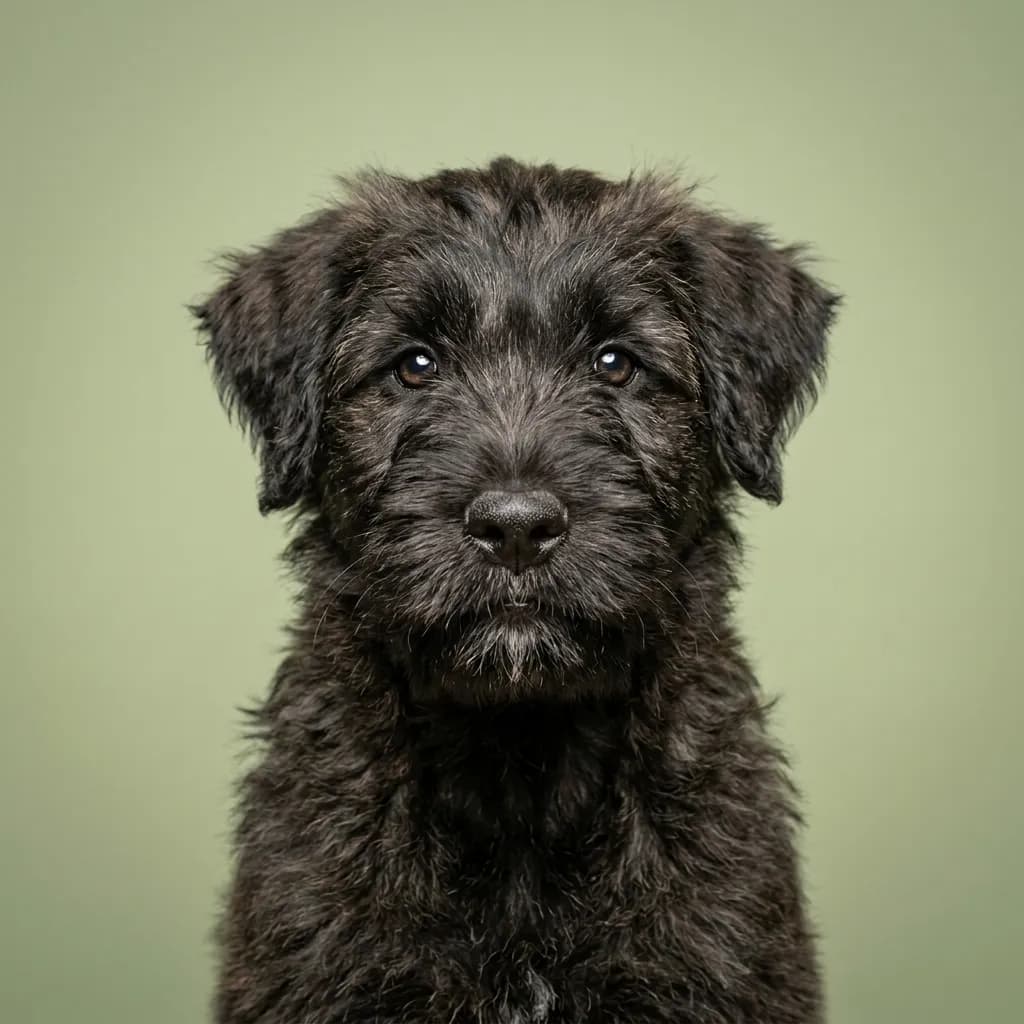
What Training a Bouvier des Flandres Is Actually Like
Training a Bouvier is like working with a smart, opinionated farmhand who’s willing to cooperate but won’t take orders blindly. They’re in the top third of dog intelligence, picking up new commands in 15 to 25 repetitions and responding to 70% of first commands. But don’t mistake that for eagerness to please. Bouviers are independent thinkers bred to make decisions with minimal human input while managing livestock. They’re affectionate and loyal, but also strong-willed. You’ll need consistency, patience, and a clear structure. They’re not reactive or hyper like some herding breeds, but their energy is steady and purposeful. Without enough mental engagement, they’ll default to herding behavior—nudging kids, circling guests, or testing boundaries. This isn’t malice. It’s boredom. They need jobs that challenge them, not just obedience drills.
Training Timeline
Start training the moment you bring your puppy home at 8 weeks. Their socialization window closes fast—weeks 3 to 12—so prioritize exposure to different people, sounds, surfaces, and dogs in a controlled way. By 16 weeks, they should be enrolled in puppy classes with a focus on positive reinforcement. Around 6 months, adolescence kicks in hard. This lasts until 18 months, and it’s when your previously polite pup might ignore commands, test limits, or show fear in familiar situations. A second fear period hits between weeks 44 and 56, so avoid forced introductions or overwhelming experiences. Keep training sessions predictable and low-stress during this phase. Housebreaking may take longer than average—some Bouviers don’t fully settle into routines until 12 to 14 months. Formal training should emphasize precision and repetition. By 14 months, their physical and mental maturity align, and you’ll see a shift toward reliability—provided you’ve stayed consistent.
Breed-Specific Challenges
First, their independence. Bouviers don’t default to looking at you for direction like a Border Collie would. You’ll need to earn their attention through engagement, not just expectation. Second, their herding instinct is strong and easily misdirected. Without structured outlets, they’ll nip at running children, crowd visitors, or circle other pets. This isn’t aggression, but it’s intrusive and needs early management. Third, they’re sensitive to tone and body language. Harsh corrections or inconsistent signals shut them down or provoke resistance. They’re not stubborn for the sake of it—they’re assessing whether your cue makes sense. Finally, their size and strength mean poor manners are harder to correct later. A 90-pound dog that pulls on leash or jumps is a problem. Start teaching impulse control early.
What Works Best
Use a cooperative precision approach: give them clear tasks with measurable outcomes. Bouviers excel in dog sports like obedience, carting, and rally—activities with structure and purpose. Sessions should be 10 to 15 minutes, 2 to 3 times daily, with frequent introduction of new challenges to prevent stagnation. They respond best to verbal praise paired with toy rewards—tug or fetch work better than food for many. Keep the pace brisk but precise. Repetition is necessary, but vary the context to build reliability. Use body language cues consistently; they read your posture as much as your voice. And always, always reward correct choices immediately. They’re not eager-to-please, but they respect competence. Be clear, fair, and engaged, and they’ll follow your lead.
Crate Training Your Bouvier des Flandres
You need a 48-inch crate for a Bouvier des Flandres. Don’t waste money on smaller; they’re thick, heavy dogs and even puppies fill out fast. Use a divider early on, but don’t rely on it too long. Bouviers are smart and strong-willed, and if they start feeling cramped by 12 weeks, they’ll push back—literally. They’ll test the boundaries, so transition to full size by 5 months max, depending on growth. Most hit 70 pounds by then and keep going.
They don’t settle easily at first. High energy and a courageous streak mean they’ll bark or paw at the crate door if they’re not mentally drained. You can’t just plop them in and walk away. Crate time should follow structured work—30 minutes of obedience drills, heelwork, or scent games. A tired Bouvier is a cooperative one. They respond to precision, so make crate entry a polished behavior: sit, wait, go in, lie down, stay. Reward calmness, not fussing.
Adult Bouviers handle 4 to 5 hours crated if exercised well, but don’t push it. They’re affectionate and bond tightly, so prolonged isolation triggers anxiety. They’re not barkers by nature, but a bored Bouvier will chew the crate pad to shreds or dig at the floor. Use a heavy-duty rubber mat instead of fabric, and anchor water bowls to the side. They’ll flip flimsy ones and soak the bedding.
One quirk: their mouthiness. Puppies especially grab crate bars or chew the edges. Redirect with a frozen marrow bone or a Kong stuffed with raw goat yogurt and kibble. Make the crate a place where good things happen, but stay firm—no bribing after tantrums. Consistency wins with this breed. They respect structure, and once they accept the crate as their den, they’ll use it willingly.
Potty Training Your Bouvier des Flandres
Potty training a Bouvier des Flandres is a manageable process, but you have to respect their size and personality. At 90 pounds on average, they have a decent bladder capacity as puppies, but don’t let that fool you—consistent scheduling is still critical. Expect to take them out every 2-3 hours during the day, plus immediately after meals, naps, and play sessions. Their larger size means fewer indoor accidents from sheer physical limitation compared to tiny breeds, but missing a cue can still mean a big mess to clean.
Bouviers are smart—ranked in the Above Average working dogs by Coren, needing just 15 to 25 repetitions to learn a command—and they want to please, but “strong-willed” is not an understatement. They’re not defiant like some terriers, but they’ll test boundaries if your routine slips. Consistency isn’t just helpful, it’s non-negotiable. If you’re inconsistent, they’ll assume the rules are flexible, and good luck getting back on track.
Realistically, most Bouviers are reliably house-trained by 6 to 8 months, though some take until 10 months. That’s faster than many giant breeds but not lightning fast. Crate training works well here, as they’re not typically anxious dogs and adapt to a den-like space. Just make sure the crate is large enough for their frame without allowing space to potty in one end and sleep in the other.
One challenge? Their independence. They might decide to sniff around or plant themselves instead of hurrying to eliminate on command. Keep outdoor potty trips focused and on a short leash, no free-roaming exploration until business is done.
Use high-value rewards—small bits of chicken or cheese—and praise lavishly. They respond best to confident, calm leadership paired with clear rewards. Over time, praise alone becomes enough, but in the early weeks, food seals the deal.
Leash Training Your Bouvier des Flandres
Leash training a Bouvier des Flandres starts with respecting their build and job history. These dogs hit 90 pounds on average and pull carts for generations in Flanders, so you need gear that matches their strength. Skip the standard collar; a front-clip harness like the Balance or 2Hounds is a smarter choice. It gives you control without risking tracheal damage when they surge forward. A well-fitted harness paired with a 6-foot biothane leash is non-negotiable here.
Their energy level is high—4 out of 5—and while they’re not driven by prey like a terrier, they’re alert and observant. That means distractions matter. A loose leash isn’t automatic; they’ll test you at 6 months and again at 18 months when that strong-willed streak kicks in. You’ll see common issues like forging ahead or leaning into tension, especially if they sense hesitation in you. That herding instinct doesn’t vanish. They were bred to move cattle, so they default to positioning themselves between you and what they perceive as “the herd,” which on city streets turns into weaving in front or blocking pedestrians.
Good leash behavior for a Bouvier isn’t about prancing at heel like a Schutzhund dog. It’s about walking calmly beside you, under voice cues, with a loose lead 80% of the time. They’ll check in, but they’re not robots. Use cooperative precision—reward focus, redirect pressure, and keep sessions short but frequent. Start training early; their trainability is high, but their strength amplifies bad habits fast. A 40-pound puppy pulling is manageable. A 90-pound adult pulling is a safety issue. Build leadership early through consistency, not force. They’re affectionate and courageous, so they’ll work hard for someone they respect. Make sure that person is you.
“I just wish someone would tell me what to do and when to do it.”
Not generic puppy tips. Not a video course you’ll never finish. Just one email a week telling you exactly what to work on with your Bouvier des Flandres, at the age they are right now. Nothing to sift through. Nothing to figure out. Just this week.
Get Started — It’s FreeTell us your breed and your puppy’s age. We’ll send you exactly what to work on this week.
Socializing Your Bouvier des Flandres
Socializing a Bouvier des Flandres isn’t just helpful, it’s non-negotiable. Their critical socialization window runs from weeks 3 to 12, and here’s the kicker: that overlaps almost exactly with their first fear period, weeks 8 to 11, which is when most puppies are changing homes. That means you’ve got a narrow, high-stakes window to build confidence while they’re biologically wired to be cautious. Miss it, and you’re setting up a 90-pound dog with a herding dog’s suspicion and a guardian’s instinct to take charge.
Bouviers were bred to move cattle and guard farms in Flanders, so they’re naturally watchful and strong-willed. That means they need more exposure to things they’ll naturally question: strangers, sudden movements, children, and busy environments. Kids especially—they’re unpredictable, loud, and fast, which can trigger a Bouvier’s herding or guarding reflex if they’re not thoroughly habituated early. Take your puppy to parks, pet-friendly stores, and friend’s houses with kids, but keep it positive and controlled.
They’re wary of unfamiliar people and situations by default, which isn’t aggression but can become it without proper exposure. Never force interactions. Instead, use treats and calm presence to teach them that new things aren’t threats. Counter-conditioning works better than flooding; a scared Bouvier pushed too hard will dig in, not warm up.
A common mistake? Assuming their calm puppy phase means they’re “fine.” Bouviers can seem steady early on, so owners slack off, then get blindsided at maturity, around 14 months, when their full temperament solidifies. Without early socialization, you’ll get a dog that’s not just shy but potentially reactive—overprotective, reluctant to greet guests, or quick to bark at movement. That strength and courage become liabilities. Socialize like your future sanity depends on it, because with a Bouvier, it really does.