Training Your Entlebucher Mountain Dog
Thrives on structured tasks with clear goals. Responds to body language and subtle cues. Needs mental challenges to prevent herding behavior redirected at people/kids.
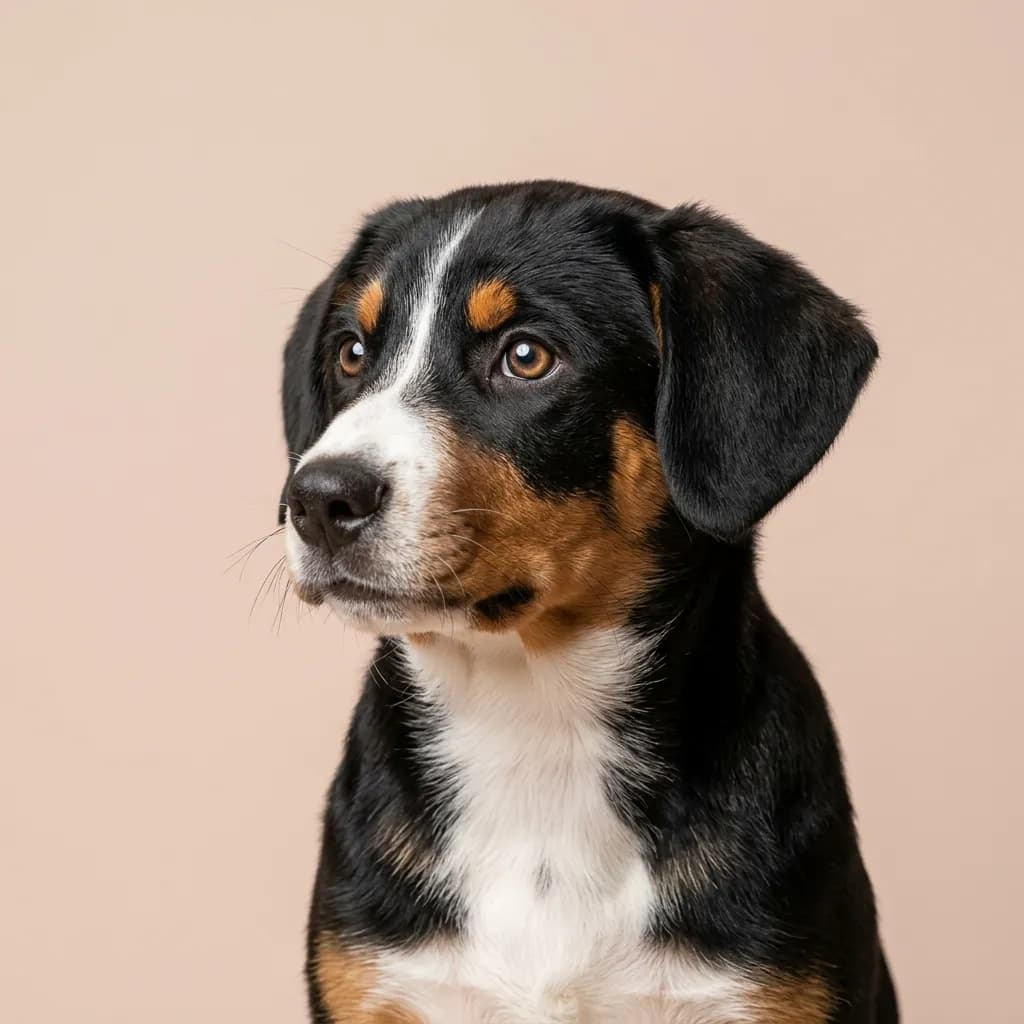
What Training a Entlebucher Mountain Dog Is Actually Like
Training an Entlebucher Mountain Dog is like working with a high-energy project manager who’s deeply committed but insists on doing things their way. They’re smart, eager to please, and pick up on patterns quickly—but they’re not in the top tier of obedience learners. With a Coren tier of 4, they need 25 to 40 repetitions to learn a new command, and they’ll only follow that first command about half the time. That’s not defiance; it’s their herding brain scanning for context. These dogs were bred to make independent decisions while driving cattle in rugged terrain, so they assess before obeying. They’re loyal and enthusiastic, but without structure, that energy turns into nipping at kids’ heels or obsessive circling in the backyard. You’ll need consistency, mental challenges, and a sense of humor. If you’re a first-time owner or want a dog that learns commands in five minutes, this isn’t your breed. But if you’re active, patient, and love problem-solving, the Entlebucher will surprise you with their precision and devotion.
Training Timeline
Start training at 8 weeks. Their socialization window is narrow—weeks 3 to 12—so expose them to different people, surfaces, and sounds early. By 12 weeks, they should be comfortable with handled paws, collars, and basic cues like “sit” and “come.” Between 4 and 6 months, focus on impulse control. Their energy is peaking, and they’ll test boundaries. Introduce structured tasks like obstacle sequences or scent games to channel focus. At 11 to 14 months, watch for the second fear period (weeks 44–56). Avoid forced interactions; use positive reinforcement to build confidence. Adolescence runs from 6 to 18 months, so expect pushback on known commands. Stay consistent. By 14 months, most Entlebuchers hit emotional maturity. You’ll see sharper focus, better recall, and fewer outbursts—if you’ve kept up the mental work.
Breed-Specific Challenges
First, their herding instinct doesn’t switch off. Without outlets, they’ll nip at running kids, chase bikes, or circle family members during arguments. This isn’t aggression; it’s hardwired behavior. You have to redirect it into structured activities like treibball or agility. Second, their high energy (5/5 on AKC scale) demands daily physical and mental work. A walk around the block won’t cut it. Third, they’re sensitive to tone and body language. Harsh corrections backfire. They shut down or become anxious. Finally, they bond intensely with their family and can develop separation anxiety if not conditioned early to alone time.
What Works Best
Keep sessions short—10 to 15 minutes—and task-oriented. These dogs thrive on clear goals: “fetch the glove,” “weave through cones,” “find the hidden toy.” Rotate challenges weekly to prevent boredom. Use verbal praise paired with toy rewards; they love tug and flirt pole games. Avoid food-only reinforcement—it’s not stimulating enough for their 4/5 mental needs score. Train daily, even if just for five minutes. Their cooperative precision style means they respond best to consistent cues and predictable routines. Use hand signals early; they pick up body language faster than verbal commands. And never stop training. Even after maturity, they need jobs. A tired Entlebucher is a well-behaved one, but a mentally engaged one is a happy one.
Crate Training Your Entlebucher Mountain Dog
You’ll need a 42-inch crate for an adult Entlebucher Mountain Dog. They hit around 52 pounds on average, but their build is compact and muscular, so they need space to stretch out without being oversized. Get one with a divider panel—puppies grow fast, and starting too big sets you up for housebreaking setbacks. Use the divider early and adjust it as they fill out, usually ready to drop it around 8 to 10 months.
Don’t expect quick crate love from this breed. They’re smart and loyal, but their energy is off the charts and their trainability is only moderate—not because they’re stubborn, but because they’re always scanning for the next task. They won’t settle easily at first. They’ll test limits, bark, and maybe paw at the crate door. That’s normal. Their enthusiasm works for you if you structure crate time like a job: short, positive sessions where going in and lying down earns praise or a stuffed Kong. Make it predictable. These dogs thrive on routine and purpose.
An adult Entlebucher can handle 4 to 5 hours crated if exercised beforehand, but don’t push it. They don’t do well with isolation. They’re people dogs, bred to work alongside handlers, so long stretches alone invite stress behaviors. Puppies? No more than two hours past their age in months—so a 4-month-old maxes out at three hours.
Watch for chewing. They’ve got a working dog mouth and may gnaw crate pads or fabric covers. Use indestructible bedding like Kuranda mats. Some dig at the crate floor out of boredom—rotate in snuffle mats or chew-safe puzzles to redirect that energy.
Keep sessions task-oriented. Crate training isn’t about confinement; it’s about creating a reliable den they respect. Use commands like “place” and reward precision. This breed excels when they’ve got a clear job to do—and staying calm in their crate should be one of them.
Potty Training Your Entlebucher Mountain Dog
Entlebuchers are medium-large dogs with decent bladder control for their size, but don’t expect miracles. At around 52 pounds, they can typically hold it longer than small breeds, but their trainability rating of 3 out of 5 means consistency is non-negotiable. You’re looking at a realistic house-training timeline of 4 to 6 months, sometimes longer, because they’re smart but not always in a hurry to comply. They learn new commands in 25 to 40 repetitions, so housebreaking won’t be instant, and occasional setbacks are normal—especially if your routine slips.
These dogs are loyal and enthusiastic, which helps, but don’t mistake enthusiasm for instant obedience. They’re eager to please on their terms, and they can be quietly stubborn. If they decide the backyard squirrel is more interesting than doing their business, they’ll ignore your cues. That means leash-led potty trips are a must early on. Don’t just let them wander the yard. Take them out on a schedule—every 3 to 4 hours, after meals, naps, and play—and wait until they go. Their intelligence means they’ll catch on faster if you use a consistent phrase like “go potty” and reward immediately after.
One challenge with Entlebuchers is their energy. They’re not likely to sneak off and pee indoors like some small, independent breeds, but if they’re under-exercised, they may have accidents due to overstimulation or pent-up energy. Make sure they’re getting physical and mental work daily. Crate training helps, as they’re not escape artists by nature and do best with structure.
For rewards, use high-value treats—small bits of chicken or cheese—and pair them with enthusiastic praise. They respond better to positive reinforcement than corrections, which they’ll either ignore or find confusing. Keep sessions short, predictable, and rewarding. Patience and routine win the day with this breed.
Leash Training Your Entlebucher Mountain Dog
Leash training an Entlebucher Mountain Dog means working with a powerhouse that’s built for moving cattle across rugged alpine terrain. At 52 pounds on average and ranked 5/5 in energy, this dog doesn’t just walk on a leash—he engages with it. And if you’re using a standard collar, you’re already behind. A well-fitted front-clip harness is your best bet. It gives you more control over their strong pull and reduces strain on their neck, especially since they were bred to push and drive livestock, not walk politely beside a human. That herding instinct shows up in their leash behavior—they’ll weave ahead, dart side to side, and try to take the lead, not out of defiance but because their job was to manage movement from all angles.
Their high prey drive and alert nature mean distractions are constant. Squirrels, bikes, other dogs—they’re all triggers. Without consistent training, you’ll end up with a dog who’s constantly lunging or barking on walks. The good news? Entlebuchers are smart and eager to please, scoring a moderate 3/5 on trainability. They respond best to cooperative precision methods—clear cues, structured repetition, and positive reinforcement. Think of it as negotiating with a very enthusiastic co-pilot rather than commanding a soldier.
Realistically, “good” leash behavior for an Entlebucher isn’t perfect heelwork every time. It’s having a dog who checks in, responds to corrections, and walks beside you most of the time—especially once they’ve burned off some energy. Plan for two solid walks or active sessions daily, and use the first 10 minutes of any walk as structured training time. With consistency, they’ll learn to channel that herding intensity into focus, not chaos. But expect occasional bursts of power. This is a dog bred to move stubborn animals uphill. A little pull? It’s in their DNA.
“I just wish someone would tell me what to do and when to do it.”
Not generic puppy tips. Not a video course you’ll never finish. Just one email a week telling you exactly what to work on with your Entlebucher Mountain Dog, at the age they are right now. Nothing to sift through. Nothing to figure out. Just this week.
Get Started — It’s FreeTell us your breed and your puppy’s age. We’ll send you exactly what to work on this week.
Socializing Your Entlebucher Mountain Dog
Socializing an Entlebucher Mountain Dog is not optional, it’s urgent—especially between weeks 3 and 12, when their socialization window is wide open. That’s tight because their first fear period hits hard between weeks 8 and 11, right when most puppies are changing homes. That overlap means one bad experience can stick, and this breed tends to remember things. They’re smart and observant, so if they’re overwhelmed or frightened during that window, they’ll default to caution later. You’ve got to be proactive, not reactive.
Because they were bred to herd cattle in the Swiss Alps, Entlebuchers are naturally alert and a bit suspicious of novelty. They’re not aggressive, but they’re quick to assess threats—great for a herding job, not ideal if you want a dog who’s chill at dog parks or welcoming to every visitor. That means you need way more exposure to new people, especially children. Their herding instinct can kick in around fast-moving kids, so early, controlled interactions are key. Introduce them to different ages, strollers, bikes, even backpacks that move unpredictably.
They’re also prone to being wary of strangers and unfamiliar dogs. Don’t make the mistake of thinking their early friendliness means they’ll stay that way. I’ve seen too many Entlebuchers become overly reserved because owners skipped varied exposures after 12 weeks, assuming the job was done. It’s not. Their loyalty and enthusiasm need direction. Without consistent, positive socialization, they don’t turn aggressive, but they do become hyper-vigilant, overly protective, and difficult to manage in public. By 14 months, when they’re mature, those traits solidify. Get the foundation right early, and you’ll have a confident, engaged companion who’s loyal without being tense. Skip it, and you’ll spend years managing a dog who sees the world as a series of potential threats.