Training Your Staffordshire Bull Terrier
Bred for tenacity and independence. Gets bored fast, needs variety. Responds to enthusiasm and play. Can be stubborn but not untrainable -- just needs the right motivation.
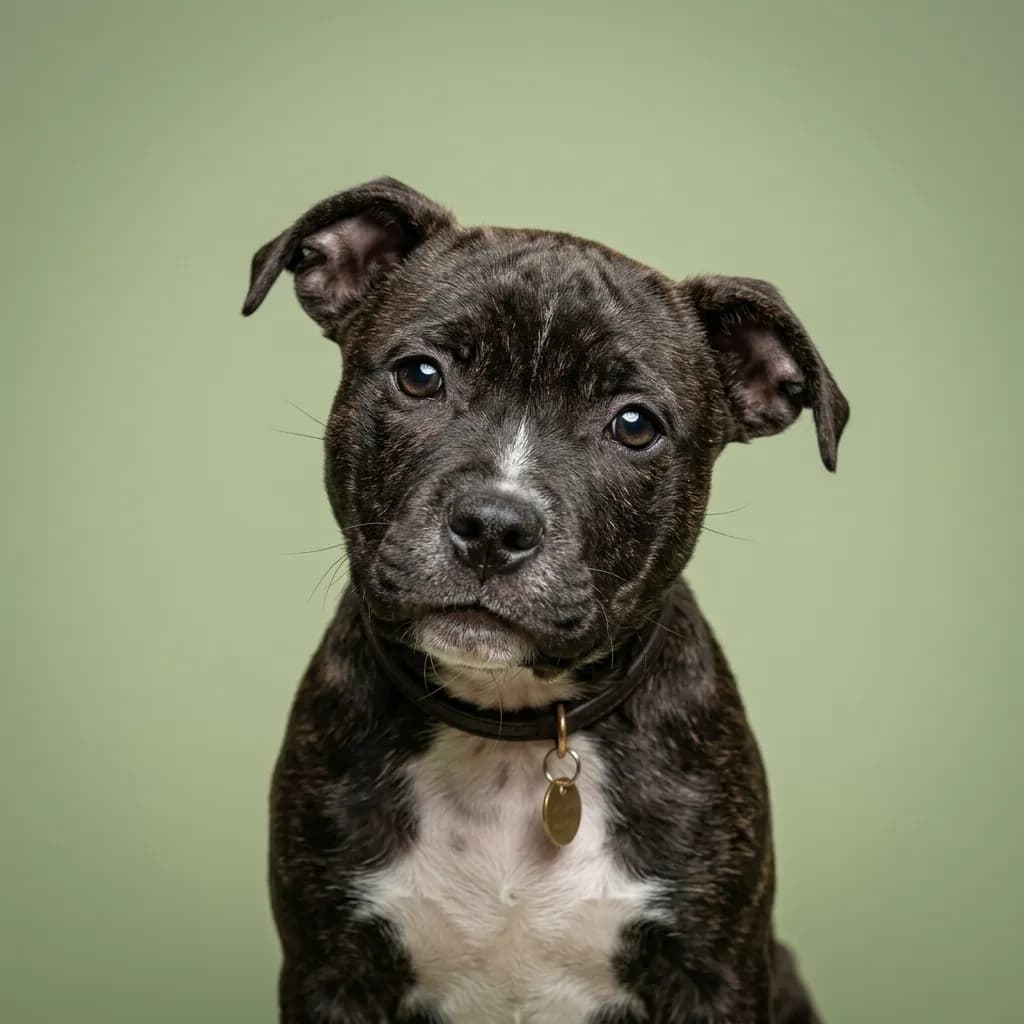
What Training a Staffordshire Bull Terrier Is Actually Like
Training a Staffordshire Bull Terrier is like working with a smart kid who finishes the homework in five minutes but then starts flipping the chair upside down because they’re bored. They’re clever, game for anything, and deeply eager to please their people—when they’re engaged. But they’re also bred for tenacity and independence, traits that don’t vanish just because they now live on a couch. Their Coren trainability tier is “Average,” meaning they need 25 to 40 repetitions to learn a new command, and they’ll only respond about half the time on the first try. That’s not a bad score, but it’s misleading if you don’t factor in their energy and attention span. They’re not slow learners; they’re fast-bored learners. If training feels like a chore, they’ll opt out. But if it’s a game, a challenge, a wrestling match with rules—they’ll crush it.
They thrive on enthusiasm. Your energy has to match theirs, and then some. These dogs don’t respond well to monotony or robotic drills. They’re bred from bull-baiting stock, yes, but decades of selective breeding for companionability mean they bond fiercely and want to be part of the action. That makes them trainable—but only if you make training worth their time.
Training Timeline
Start at 8 weeks. That’s when their socialization window opens, and it slams shut by week 12. You’ve got eight weeks to expose them to every sound, surface, person, and dog they’ll meet in life. Be proactive. Miss this, and you’re fighting fear or reactivity later.
Around week 32 to 40, brace for the second fear period. A dog that was bold at 6 months might suddenly spook at umbrellas or refuse to walk on tile. Don’t push. Reassure. Go back to basics. Keep exposures low-pressure and reward courage.
From 5 to 14 months is adolescence. They’ll test boundaries, ignore commands they knew at 6 months, and act like they’ve never met you. This isn’t defiance—it’s brain remodeling. Keep sessions short, keep them fun, and don’t backslide on consistency.
By 9 months, they’re mentally mature enough to grasp complex sequences, but physically and emotionally, they’re still kids. That’s when you layer in impulse control, off-leash reliability, and advanced obedience.
Breed-Specific Challenges
First, dog aggression. Not all Staffs have it, but the potential is there. They were bred to be dog-selective, and without proper socialization and management, that can tip into reactivity. Early, controlled exposure to other dogs is non-negotiable.
Second, over-arousal. They don’t have an off switch. They’ll play until they collapse, and that energy can spill into training. You need to teach them to toggle between “on” and “calm” before they blow past your cues.
Third, stubbornness masked as independence. They’ll decide a command isn’t worth doing if the reward isn’t exciting enough. This isn’t defiance—it’s negotiation. You have to be more interesting than the squirrel.
Fourth, prey drive. Small animals? They’re not pets to a Staff, they’re moving toys. Never leave them unsupervised around cats, rabbits, or rodents.
What Works Best
Short sessions—2 to 5 minutes, multiple times a day. High energy, full voice, big movements. Use tug or fetch as primary rewards; pair with high-value treats like freeze-dried liver. Rotate commands and games every few days. If they’re doing sit-stay for the third day in a row, switch to “find it” or “spin.” They need novelty.
Use play as both reward and teaching tool. A game of tug after a solid heel pattern reinforces focus better than a kibble. Keep it fast, keep it loud, keep it fun. And never let a session end with refusal—back up, make it easier, and win the rep. They need to leave each session feeling like they nailed it.
Crate Training Your Staffordshire Bull Terrier
A Staffordshire Bull Terrier puppy needs a crate that’s big enough to stand up, turn around, and lie down comfortably, but not so large that they can use one end as a bathroom. Since they average around 31 pounds as adults, a 36-inch crate is ideal, and yes, get one with a divider. Puppies grow fast and you’ll want to adjust the space as they mature to prevent accidents and bad habits. Start with the divider set to just enough room for their current size.
Staffies are clever and tenacious, which means they’ll test boundaries if crate training feels like a punishment. Their high energy and bravery don’t always make them eager to settle right away. They won’t typically cower, but they might protest with barking or scratching if they’re bored or anxious. The key is to keep sessions short—2 to 5 minutes max—and high energy. Toss a treat in, praise like crazy when they go in, then let them out immediately. Repeat multiple times a day with zero pressure.
These dogs thrive on variety, so switch up your cues, treats, and crate entry games. Use their natural mouthiness as a tool: stuff a Kong with peanut butter and freeze it, then let them chew it in the crate. It builds positive association fast. Avoid leaving them crated longer than 3-4 hours even as adults; their energy and need for interaction make extended confinement stressful. Puppies under 6 months shouldn’t be crated more than 2 hours at a stretch.
Watch for chewing on crate pads—Staffies love to mouth things. Skip plush bedding early on; use a durable rubber mat instead. If they bark, don’t reinforce it with attention. Wait for silence before opening the crate. Consistency wins with this breed. They’re eager to please but won’t respond to force. Make it fun, keep it fast, and they’ll see the crate as their den, not a jail.
Potty Training Your Staffordshire Bull Terrier
Staffordshire Bull Terriers are medium-sized dogs with an average weight of around 31 pounds, which gives them a decent bladder capacity compared to smaller breeds. That said, puppies still need frequent potty breaks—every 2 to 3 hours during the day—because their muscles and control are still developing. Most Staffordshire Bull Terrier puppies can make it through the night by 12 to 16 weeks, but consistent scheduling is key. Their size helps, but don’t expect overnight success.
These dogs rank a solid 5 out of 5 in trainability, but don’t let that fool you. They’re clever and eager to please on their terms. They’re not stubborn in the typical sense, but they’re tenacious and will test boundaries if routines get sloppy. If you’re inconsistent with timing or rewards, they’ll pick up on it fast and start making their own rules. They learn new behaviors in about 25 to 40 repetitions, which puts them in Coren’s “Average” tier, so patience and repetition matter.
Realistically, most Staffordshire Bull Terriers are reliably house-trained by 5 to 7 months, though occasional slips can happen up to a year, especially during transitions or high excitement. One breed-specific challenge is their determination—they might hold it too long if they’re focused on playing or guarding their space, then have an accident out of sheer overload.
When it comes to rewards, these dogs respond best to enthusiastic praise paired with high-value treats. They thrive on positive interaction, so a cheerful tone and a scratch behind the ears right after they go potty outside reinforces the behavior more than food alone. Avoid punishment—they tune out or shut down if scolded. Stick to a strict schedule, use a cue word, and keep outdoor trips brief and focused. They’re not easily distracted like scent hounds, so they’ll usually do their business quickly if given the chance.
Leash Training Your Staffordshire Bull Terrier
Staffordshire Bull Terriers are strong, clever, and full of go, so leash training starts with respecting their build and brain. At 31 pounds on average, they’re compact but powerful, and they’ve got that terrier drive to investigate everything at high speed. A front-clip harness is your best friend here. It gives you control without risking neck strain, especially since Staffies tend to lunge when excited. Skip the standard collar for walks—these dogs can generate surprising force in a short burst, and you don’t want trachea issues down the line.
Their energy level is 4 out of 5, and while they’re not off-leash sprinters like a Border Collie, that prey drive flares fast. Squirrels, cats, other dogs—anything that moves suddenly becomes a mission. That tenacity, bred originally for bull-baiting and later refined into a loyal companion, means they’ll pull toward what grabs their attention and won’t let go easily once committed. You’ll see this as single-minded lunging or stubborn stopping mid-walk when something interesting crosses their radar.
Common leash problems? Pulling like a sled dog (even though they weren’t built for it), quick-darting forward when the door opens, and reactivity to other animals. Their original purpose—gripping and holding—doesn’t translate to loose-leash walking, so don’t expect natural politeness. They need consistent, engaging training that matches their intelligence.
Good leash behavior for a Staffie isn’t perfect heel work. It’s being able to walk with a loose leash most of the time, checking in periodically, and responding quickly to cues despite distractions. Use short, high-energy sessions with lots of rewards. They’re 5 out of 5 in trainability, so they’ll get it fast—but they’ll also test you. Keep it fun, firm, and frequent, and you’ll have a walk partner who’s as well-mannered as he is bold.
“I just wish someone would tell me what to do and when to do it.”
Not generic puppy tips. Not a video course you’ll never finish. Just one email a week telling you exactly what to work on with your Staffordshire Bull Terrier, at the age they are right now. Nothing to sift through. Nothing to figure out. Just this week.
Get Started — It’s FreeTell us your breed and your puppy’s age. We’ll send you exactly what to work on this week.
Socializing Your Staffordshire Bull Terrier
Staffordshire Bull Terriers are clever and brave by nature, but those traits can backfire without smart, consistent socialization. Their critical window runs from weeks 3 to 12, and that timing is tricky because it overlaps directly with their first fear period at 8 to 11 weeks. That means the exact time you're trying to build confidence is when they're biologically wired to be cautious. If you miss the mark here, even slightly, you risk creating lasting sensitivities.
Because they were originally bred for bull-baiting and later refined as companion dogs in working-class England, Staffords are deeply people-oriented but can be selective about strangers and other dogs. They need more exposure to adult strangers, children, and unfamiliar dogs—especially in controlled, positive settings—than many other terriers. You can't just assume their affectionate nature with family will translate universally. Without early, repeated positive interactions, their tenacity turns into reactivity, and their bravery becomes defensiveness.
They’re not naturally aggressive, but they are naturally discerning. Some Staffords will hang back around new dogs or stiffen when approached too fast by strangers. That’s not dominance, that’s instinct. Counter it with high-value treats, calm handling, and gradual exposure—never force interactions. Let them observe and approach on their own timeline.
A common mistake is thinking their small-medium size (around 31 pounds) and sweet home demeanor means they don’t need rigorous socialization. That’s dead wrong. Another pitfall is overprotective handling—shielding them from scary things instead of coaching them through. That teaches them the world is dangerous.
Skip proper socialization and by 9 months—their maturity point—you’ll likely see a dog that’s either over-the-top with guests or shuts down and guards space. A well-socialized Stafford is a joyful, adaptable companion. One that’s not? You’re dealing with a clever, brave dog who’s learned to make his own rules, and good luck unteaching that.