Chinese Shar-Pei
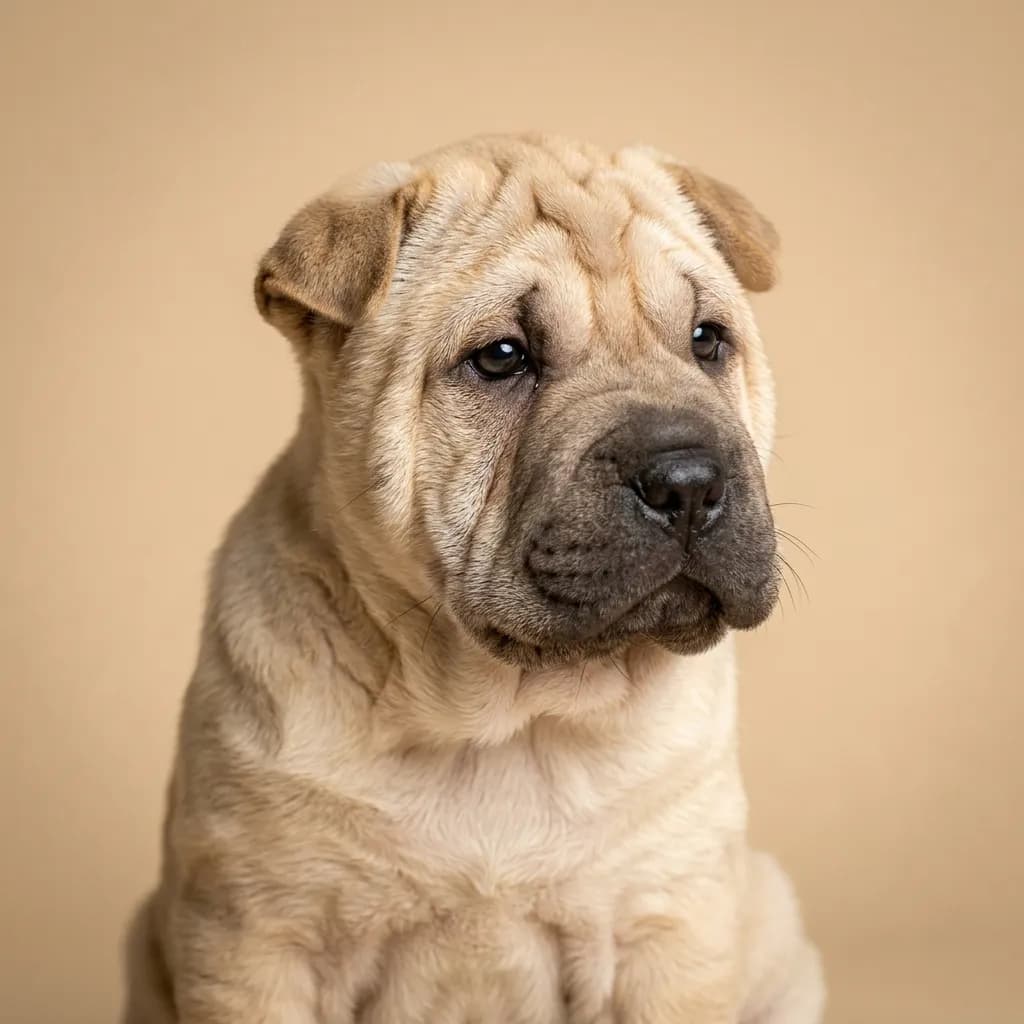
Calm, loyal, and deeply attached to their family, but the Shar-Pei's wrinkles and aloof disposition come with a side of strong opinions about other dogs. They're not warm to strangers and not looking to make friends at the dog park — they want their people, their space, and some peace. The wrinkled skin requires regular fold-cleaning to prevent infection.
Free weekly training plan, specific to your Chinese Shar-Pei’s age. Exactly what to focus on this week.
Get your free training planLiving with a Chinese Shar-Pei
The Chinese Shar-Pei has one of the most distinctive looks in the dog world, wrinkled skin, a hippo-like muzzle, and a rough, bristly coat that feels like sandpaper. Originating in southern China over 2,000 years ago, they were bred as multipurpose farm dogs, used for hunting, herding, and guarding. Their loyalty and alertness made them natural protectors, and that instinct still runs deep today.
These aren’t dogs that’ll happily greet every stranger; they’re reserved, often aloof, and they bond intensely with one or two people. You’ll get deep devotion, but don’t expect a tail-wagging greeter at the door. Day to day, Shar-Peis are calm indoors and surprisingly adaptable.
They do well in apartments if exercised properly, but a fenced yard is ideal. They’re rated a 3 out of 5 for energy, not lazy, but not high-octane either. A couple of 20-minute walks and some mental downtime usually suffice.
They’re independent thinkers, which makes training a slow game of negotiation. They’ll learn commands, but on their own timeline. Don’t expect off-leash reliability.
Grooming isn’t just about looks, it’s health. Those adorable wrinkles trap moisture and bacteria, so you’ll need to clean and dry them every few days, especially around the face and tail. Their short coat sheds moderately year-round, so weekly brushing helps, but the real work is in the folds.
Skip that, and skin fold dermatitis becomes a real risk. Health-wise, be prepared for Shar-Pei fever, a hereditary condition causing recurrent fevers and potential kidney damage. Entropion, where eyelids roll inward, is also common due to facial structure.
Reputable breeders screen for these, but it’s not a guarantee. Lifespan is 8 to 12 years, and vet bills can add up. They’re best for experienced owners who value loyalty over constant affection and don’t mind a dog that’s emotionally complex.
First-time owners or families with rowdy kids should think twice. They’re not naturally sociable with other dogs and can be territorial. Here’s the real talk: Shar-Peis aren’t just wrinkly conversation starters.
They’re emotionally nuanced dogs that thrive on consistency and quiet leadership. If you want a dog that reflects your energy, calm, grounded, quietly watchful, the Shar-Pei could be your match. But they don’t forgive inconsistency.
Get it wrong, and you’ll end up with a stressed, aloof dog you can’t reach.
14 traits, at a glance.
Every breed on PuppyBase is rated across the 14 trait dimensions the American Kennel Club publishes — from trainability to drooling level. The higher the score, the better the fit for that trait.
What to expect day-to-day
Things to screen for
- Hip dysplasia
- Shar-Pei fever (familial Shar-Pei fever)
- Skin fold dermatitis
- Entropion
- Amyloidosis
See a full price breakdown — first-year costs, lifetime estimate, breeder vs. adoption.
Full price guideSimilar breeds
Browse all 200+



Common questions
How long do Chinese Shar-Peis live?
Chinese Shar-Peis typically live between 8 and 12 years, which is shorter than many breeds of similar size due to genetic health issues like amyloidosis and Shar-Pei fever.
How much does a Chinese Shar-Pei puppy cost?
A Chinese Shar-Pei puppy usually costs between $1,200 and $3,500, with an average price around $2,000 depending on breeder reputation and bloodline.
How much do Chinese Shar-Peis shed?
Chinese Shar-Peis shed moderately year-round; their short, smooth coat doesn't require intense grooming but will shed noticeably indoors.
What colors do Chinese Shar-Peis come in?
Chinese Shar-Peis come in a variety of solid colors including fawn, red, chocolate, black, cream, blue, and sable, often with a distinctive mask on the face.
How big do Chinese Shar-Peis get?
Chinese Shar-Peis stand 18 to 20 inches tall and weigh between 45 and 60 pounds, with a compact, muscular build and a unique wrinkled appearance.
Are Chinese Shar-Peis smart?
Yes, Chinese Shar-Peis are intelligent dogs with strong problem-solving abilities, but their independent nature means they often choose when to obey.
Are Chinese Shar-Peis hypoallergenic?
No, Chinese Shar-Peis are not hypoallergenic; they shed moderately and produce dander, making them unsuitable for most allergy sufferers.
Are Chinese Shar-Peis aggressive?
Chinese Shar-Peis aren't inherently aggressive, but they are naturally aloof with strangers and can be dog-selective, especially same-sex pairs, requiring early socialization.
What health problems are common in Chinese Shar-Peis?
Common health issues include Shar-Pei fever, skin fold dermatitis, entropion, hip dysplasia, and amyloidosis, a serious kidney-related condition linked to chronic inflammation.
Do Chinese Shar-Peis bark a lot?
Chinese Shar-Peis bark moderately; they're not constant noisemakers but will alert you to strangers or changes in their environment.
Are Chinese Shar-Peis easy to train?
Training a Chinese Shar-Pei can be challenging due to their stubborn, independent streak; they respond best to consistent, positive methods starting in puppyhood.
Are Chinese Shar-Peis good family dogs?
They can be good family dogs for experienced owners who understand their need for space and structure, but they're better suited to homes without young children.
Are Chinese Shar-Peis good with cats?
Chinese Shar-Peis can live with cats if raised together, but their prey drive and territorial nature mean they may chase or confront unfamiliar small animals.
Are Chinese Shar-Peis good guard dogs?
Yes, Chinese Shar-Peis make excellent guard dogs thanks to their loyalty, alertness, and natural suspicion of strangers, all traits bred into them historically.
Do Chinese Shar-Peis have breathing problems?
While not brachycephalic like some breeds, some Chinese Shar-Peis can develop breathing issues due to excess skin around the face or poorly constructed airways in certain bloodlines.
Can Chinese Shar-Peis live in apartments?
Yes, Chinese Shar-Peis can adapt to apartment living if given enough mental stimulation and short daily walks, but they need a quiet, predictable environment.
Not sure which breed fits your life?
Answer five questions about your home, your schedule, and your tolerance for shedding. We’ll match you to your top three breeds from over 200.