Australian Cattle Dog
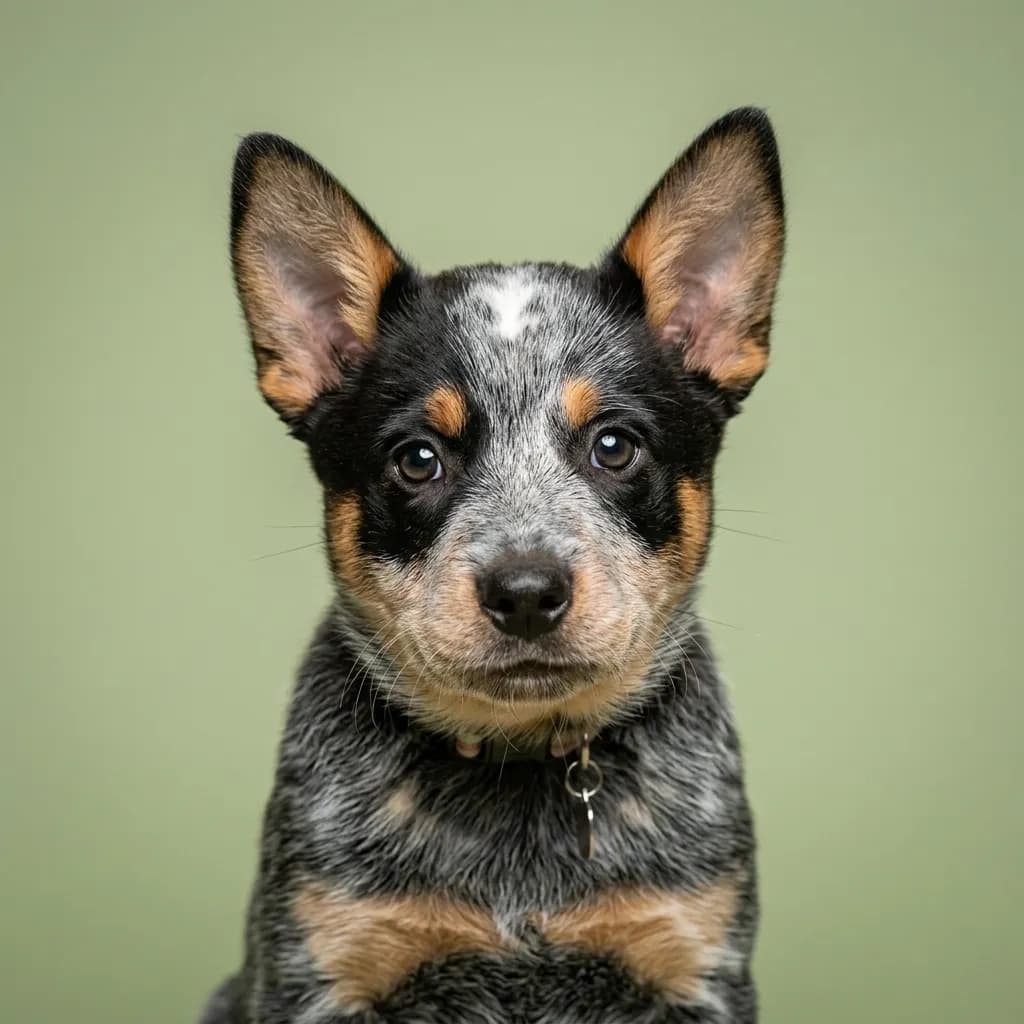
Arguably the most intense herding dog you can own. The ACD is tireless, clever, and will start managing your household — including your children and other pets — if it doesn't have actual livestock to work. Bonds hard to one person, keeps everyone else at a respectful distance.
Free weekly training plan, specific to your Australian Cattle Dog’s age. Exactly what to focus on this week.
Get your free training planLiving with a Australian Cattle Dog
The Australian Cattle Dog was bred to work cattle over vast, rugged stretches of the Australian outback, and that legacy shows in every inch of them. Developed in the 19th century by crossing collies with Dingoes and later refining with Dalmatians and Black and Tan Kelpies, these dogs were built for endurance, intelligence, and toughness under extreme conditions. They don’t just like work, they need it.
If you’re picturing lazy Sundays on the couch, think again. Living with an ACD means living with a dog that’s always on. They’re alert and curious, constantly scanning their environment, and they bond closely with their people, though they’re not the clingy type.
Their affection is earned and shown through loyalty, not cuddles. They score only a 3 out of 5 for affectionate behavior, and while they can be good with kids, their herding instinct might kick in with fast-moving children, think nipping at heels or trying to “round up” the chaos. Supervision is key.
Their energy level is a solid 5 out of 5. These dogs aren’t satisfied with a couple of walks a day. They need structured work, hiking, agility, flyball, or advanced obedience.
Without it, they’ll find their own job, like dismantling your garden or barking at shadows (though their barking tendency is actually low, just 1 out of 5). Mental stimulation is just as critical. A bored ACD will chew, dig, or escape.
They’re too smart for their own good. Grooming is manageable, moderate shedding year-round, heavier twice a year, and a quick weekly brush usually suffices. But health-wise, you’ll need to stay proactive.
Hip and elbow dysplasia, progressive retinal atrophy, and congenital deafness are real concerns. Reputable breeders do all the necessary tests, so don’t skip vetting them thoroughly. A good ACD from health-tested lines starts at $1,200 and up.
They’re perfect for active adults who already speak “dog,” especially those into dog sports or outdoor adventures. They’re not for first-time owners, apartment dwellers, or anyone with a 9-to-5 desk job. Here’s the truth no one talks about: this breed thrives on partnership, not ownership.
They don’t want to be told what to do, they want to figure it out with you. Treat them like a co-worker, not a pet, and you’ll have a tireless companion for life.
14 traits, at a glance.
Every breed on PuppyBase is rated across the 14 trait dimensions the American Kennel Club publishes — from trainability to drooling level. The higher the score, the better the fit for that trait.
What to expect day-to-day
Things to screen for
See a full price breakdown — first-year costs, lifetime estimate, breeder vs. adoption.
Full price guideSimilar breeds
Browse all 200+

Common questions
How long do Australian Cattle Dogs live?
Australian Cattle Dogs typically live between 12 and 16 years, making them a relatively long-lived breed when properly cared for.
How much does a Australian Cattle Dog puppy cost?
Australian Cattle Dog puppies usually cost between $1,200 and $3,500, with an average price around $2,000 depending on breeder reputation and lineage.
How much do Australian Cattle Dogs shed?
Australian Cattle Dogs shed moderately year-round and have a heavier seasonal blow of their undercoat, requiring weekly brushing to manage loose hair.
What colors do Australian Cattle Dogs come in?
They come in blue, blue mottled, blue speckled, red mottled, and red speckled coat colors, all with or without tan or black markings.
How big do Australian Cattle Dogs get?
They stand 17 to 20 inches tall at the shoulder and weigh between 35 and 50 pounds, with males typically slightly larger than females.
Are Australian Cattle Dogs smart?
Yes, Australian Cattle Dogs are extremely intelligent and were bred to work independently over long distances, requiring sharp problem-solving skills and focus.
Are Australian Cattle Dogs hypoallergenic?
No, Australian Cattle Dogs are not hypoallergenic and do shed, making them unsuitable for most people with allergies.
Are Australian Cattle Dogs aggressive?
They are not inherently aggressive but can be reserved or suspicious with strangers and may herd or nip without proper training, which can be mistaken for aggression.
What health problems are common in Australian Cattle Dogs?
Common health issues include progressive retinal atrophy, hip and elbow dysplasia, deafness, and osteochondrosis, so responsible breeding and screening are essential.
Do Australian Cattle Dogs bark a lot?
No, Australian Cattle Dogs are not big barkers and tend to be quiet, using their alertness more for observation than vocalization.
Are Australian Cattle Dogs easy to train?
Yes, they are highly trainable and excel in dog sports, but they need consistent, engaging training from an early age to prevent boredom and stubbornness.
Are Australian Cattle Dogs good family dogs?
They can be good family dogs for active households, but they are best suited to families with older children who understand boundaries and can handle their herding energy.
Are Australian Cattle Dogs good with cats?
They can coexist with cats if raised together or properly socialized, but their strong herding instinct may drive them to chase or nip at cats if not trained.
Can Australian Cattle Dogs live in apartments?
No, they are not well-suited to apartment living due to their very high energy and need for space and demanding physical and mental work.
Are Australian Cattle Dogs good guard dogs?
They are excellent watchdogs, naturally protective and alert, making them quick to notice and respond to potential threats or unfamiliar activity.
When do Australian Cattle Dogs calm down?
Most Australian Cattle Dogs don't fully calm down until they are around 2 to 3 years old, and even then they remain highly active and alert dogs.
Not sure which breed fits your life?
Answer five questions about your home, your schedule, and your tolerance for shedding. We’ll match you to your top three breeds from over 200.