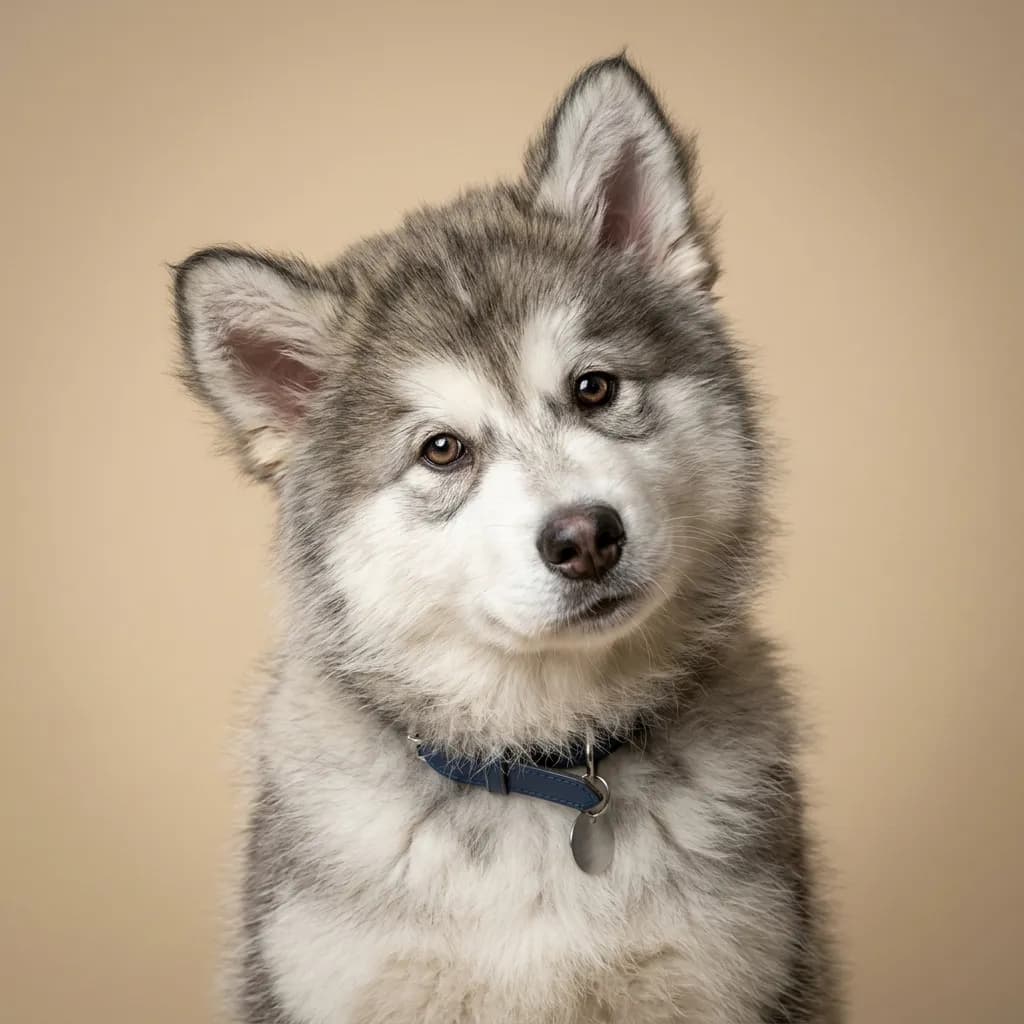
Alaskan Malamute
Built to haul sleds across frozen tundra, and it really hasn't forgotten. The Malamute is affectionate and goofy at home, but give it an inch of slack outdoors and it will pull until your shoulder gives out. Sheds in volumes that seem physically impossible for one animal.
Free weekly training plan, specific to your Alaskan Malamute’s age. Exactly what to focus on this week.
Get your free training planLiving with a Alaskan Malamute
The Alaskan Malamute isn’t just built for the Arctic, they carry that icy resilience in their bones. Originally bred by the Mahlemut Inuit people to haul heavy sleds across frozen tundra, these dogs are powerhouses, not racers. That means they’re built like tanks: males average 85 pounds, standing up to 25 inches tall, with a thick double coat that laughs at -30°F.
But don’t mistake their wolf-like looks for aloofness. Malamutes are deeply affectionate with their families, goofy and playful well into adulthood, and intensely loyal. They’re not guard dogs, they’ll probably lick an intruder, but they bond tightly and hate being left alone.
Living with one means embracing a lifestyle. These dogs need serious daily exercise, not just a walk around the block. Think long hikes, skijoring, cart-pulling, or at minimum a large, secure yard where they can burn off that 4/5 energy.
Without it, they’ll redecorate your living room, with their teeth. Training is smart-dog level, but they’re independent thinkers. You’ll need consistency and patience, not dominance.
They bark moderately, but they howl, often, and with dramatic flair, especially at sirens or when bored. Grooming is a seasonal battle. They shed heavily twice a year, requiring daily brushing during blowouts.
The rest of the time? Weekly brushing still. And forget keeping their paws or belly snow-free in winter, they’re built for it, but your floors won’t be.
Health-wise, hip dysplasia and hypothyroidism are real concerns. Chondrodysplasia affects bone development, and inherited polyneuropathy can cause weakness. Reputable breeders screen for these, so don’t skip vet checks.
With care, they live 10 to 14 years. They’re ideal for active owners in cold climates, think Alaska, Canada, or mountain states, who already get dog psychology. First-timers or apartment dwellers should pass.
Malamutes need space, routine, and mental challenges. Here’s the real talk: most people underestimate their need for purpose. They’re not couch potatoes with fluff.
Give them a job, pulling, packing, even weight-dragging games, and they’ll be calmer, happier, and less likely to stage a backyard escape. No job? You’ll pay for it in chewed doors and fence-jumping.
They’re not pets. They’re partners. Treat them like one.
14 traits, at a glance.
Every breed on PuppyBase is rated across the 14 trait dimensions the American Kennel Club publishes — from trainability to drooling level. The higher the score, the better the fit for that trait.
What to expect day-to-day
Things to screen for
- Hip dysplasia
- Inherited polyneuropathy
- Hypothyroidism
- Chondrodysplasia
- Bloat (GDV)
See a full price breakdown — first-year costs, lifetime estimate, breeder vs. adoption.
Full price guideSimilar breeds
Browse all 200+



Common questions
How long do Alaskan Malamutes live?
Alaskan Malamutes typically live between 10 and 14 years with proper care and a healthy lifestyle.
How much does a Alaskan Malamute puppy cost?
A Alaskan Malamute puppy usually costs between $1,500 and $3,500, with most averaging around $2,200 depending on breeder quality and lineage.
How much do Alaskan Malamutes shed?
Alaskan Malamutes shed moderately year-round and blow their undercoat heavily twice a year, requiring regular brushing to manage loose hair.
What colors do Alaskan Malamutes come in?
Alaskan Malamutes come in a variety of colors including gray and white, sable and white, black and white, red and white, seal and white, silver and white, and solid white.
How big do Alaskan Malamutes get?
Alaskan Malamutes are large dogs, standing 23 to 25 inches tall at the shoulder and weighing between 75 and 85 pounds on average.
Are Alaskan Malamutes smart?
Yes, Alaskan Malamutes are very intelligent dogs and excel at learning tasks quickly, especially when training starts early and remains consistent.
Are Alaskan Malamutes hypoallergenic?
No, Alaskan Malamutes are not hypoallergenic and shed regularly, making them a poor choice for people with allergies.
Are Alaskan Malamutes aggressive?
Alaskan Malamutes are not typically aggressive toward people, but they can be dominant and assertive with other dogs, especially those of the same sex.
What health problems are common in Alaskan Malamutes?
Common health issues in Alaskan Malamutes include hip dysplasia, chondrodysplasia, hypothyroidism, inherited polyneuropathy, and bloat, which can be life-threatening.
Do Alaskan Malamutes bark a lot?
Alaskan Malamutes bark moderately, but they’re more likely to howl or vocalize in other ways, especially when excited or trying to communicate.
Are Alaskan Malamutes easy to train?
Alaskan Malamutes are very intelligent and capable of learning quickly, but they can be independent and stubborn, so consistent, patient training works best.
Are Alaskan Malamutes good family dogs?
Yes, Alaskan Malamutes are affectionate and loyal with their families and can be playful with children, but they need supervision due to their size and energy.
Are Alaskan Malamutes good with cats?
Alaskan Malamutes have a high prey drive and may not do well with cats, especially if not raised together from a young age.
Are Alaskan Malamutes good guard dogs?
Alaskan Malamutes are not ideal guard dogs, but they are naturally protective and alert, making them decent watchdogs that will notify you of strangers.
Can Alaskan Malamutes live in apartments?
No, Alaskan Malamutes are not suited for apartment living. They need ample space and daily exercise to stay healthy and happy.
When do Alaskan Malamutes calm down?
Alaskan Malamutes tend to remain high-energy through their first few years and may not fully settle until they reach around 4 to 5 years of age.
Not sure which breed fits your life?
Answer five questions about your home, your schedule, and your tolerance for shedding. We’ll match you to your top three breeds from over 200.