Cardigan Welsh Corgi
The older, longer-tailed Corgi cousin, and arguably the more versatile of the two — athletic enough for herding and agility, calm enough to adapt to apartment life with proper exercise. Smart, somewhat independent, and deeply loyal without being clingy. The herding instinct means they may try to round up your kids, which is either charming or annoying depending on your kids.
Free weekly training plan, specific to your Cardigan Welsh Corgi’s age. Exactly what to focus on this week.
Get your free training planLiving with a Cardigan Welsh Corgi
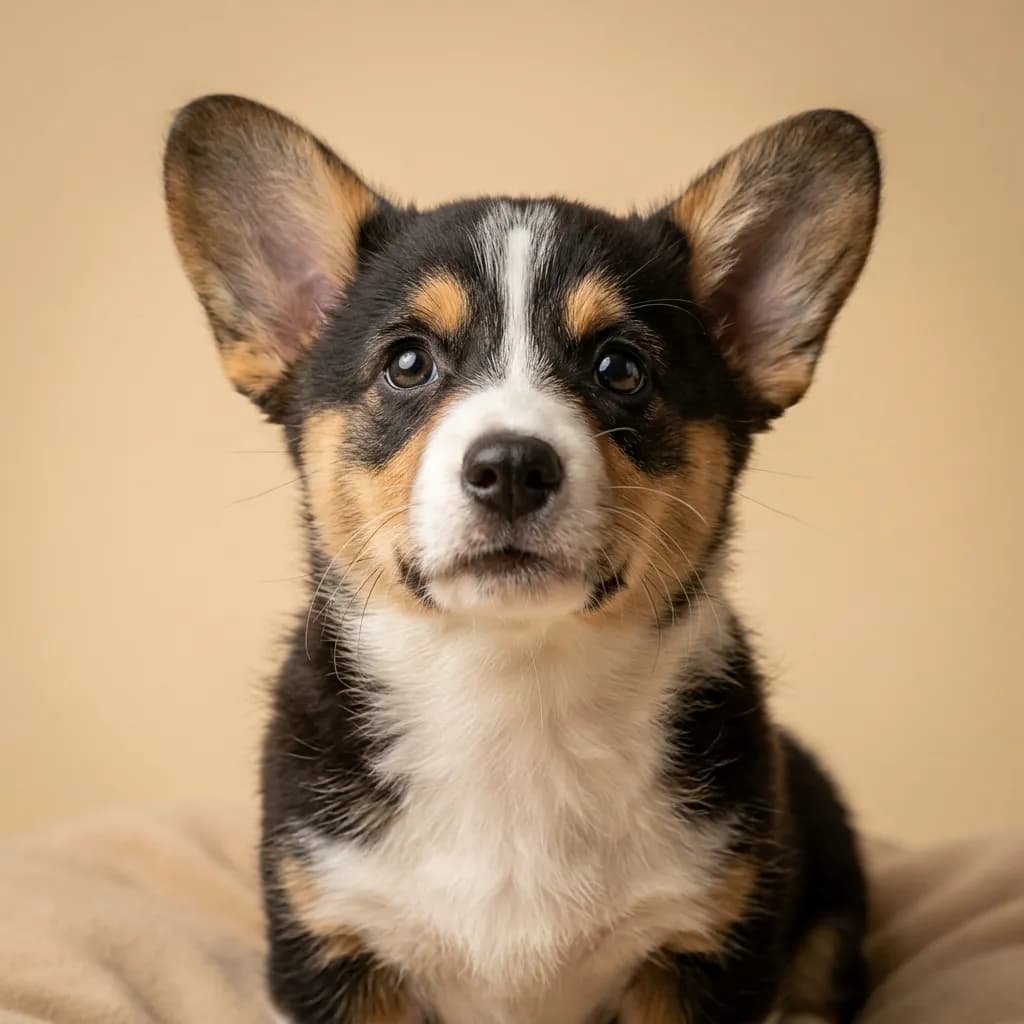
The Cardigan Welsh Corgi isn’t just a cute face with a fox-like brush and a low-slung body; this breed has been working Welsh farmland for over 3,000 years, herding cattle with courage and smarts that belie their size. They’re the older of the two corgi breeds, with a long body, large upright ears, and a full tail, unlike their Pembroke cousins. Don’t let their 10.5 to 12.5 inch height fool you.
These dogs are sturdy, weighing 25 to 38 pounds of dense muscle and determination. In real life, Cardigans are deeply affectionate and form tight bonds with their people. They’re loyal to a fault and surprisingly sensitive, picking up on moods faster than most.
They’re smart, ranked high in working intelligence, and eager to please, which makes training rewarding. But they’re also vocal. Their barking score of 5 out of 5 isn’t a typo.
They’ll alert you to the mail carrier, a squirrel at 200 yards, or a change in barometric pressure. If you live in an apartment, this matters. You’ll need to manage it with early training and mental stimulation, because an unchallenged Cardigan will find its own job, usually involving barking or mild mischief.
They’ve got energy to burn. A daily walk plus structured play or training is non-negotiable. They thrive in homes with yards, but even apartment dwellers can make it work if you’re committed to routine exercise.
Their double coat sheds year-round, spiking heavily twice a year. Brushing twice a week keeps it manageable, but don’t expect a low-shed home. Health-wise, they’re generally solid for 12 to 15 years, but you should screen for hip dysplasia, degenerative myelopathy, and progressive retinal atrophy.
Reputable breeders do genetic testing, so don’t skip that step. Intervertebral disc disease is a risk due to their long backs, so no jumping on and off furniture. They’re great with kids when raised together, patient and playful, and can work for first-time owners who are diligent.
But they’re not for couch potatoes or those wanting a giant dog. They’re also not for anyone who hates moderate shedding or constant commentary. Here’s the real talk: Cardigans aren’t just pets.
They’re partners. They want to be involved in everything. Leave them out of your routine and they’ll shut down.
Include them, and you’ve got a dog who’ll stick by you like glue, bark at every passing threat, and still manage to melt your heart at the end of the day.
14 traits, at a glance.
Every breed on PuppyBase is rated across the 14 trait dimensions the American Kennel Club publishes — from trainability to drooling level. The higher the score, the better the fit for that trait.
What to expect day-to-day
Things to screen for
See a full price breakdown — first-year costs, lifetime estimate, breeder vs. adoption.
Full price guideSimilar breeds
Browse all 200+



Common questions
How long do Cardigan Welsh Corgis live?
Cardigan Welsh Corgis typically live between 12 and 15 years, which is a solid lifespan for a dog of their size. With proper care, many stay active and healthy well into their teens.
How much does a Cardigan Welsh Corgi puppy cost?
A Cardigan Welsh Corgi puppy usually costs between $1,500 and $3,500, with most reputable breeders pricing around $2,500. The cost reflects their lineage, health testing, and demand.
How much do Cardigan Welsh Corgis shed?
Cardigan Welsh Corgis shed moderately year-round and more heavily during seasonal changes. Weekly brushing helps manage the loose fur, but don’t expect a low-shed home.
What colors do Cardigan Welsh Corgis come in?
They come in several color combinations including red and white, sable and white, blue merle and white, black and white, and brindle and white. Their markings are often distinct and striking.
How big do Cardigan Welsh Corgis get?
Cardigan Welsh Corgis stand 10.5 to 12.5 inches tall and weigh between 25 and 38 pounds. They’re low to the ground but solidly built, with a longer body and tail than their Pembroke cousins.
Are Cardigan Welsh Corgis smart?
Yes, Cardigan Welsh Corgis are highly intelligent and were bred to work independently while herding cattle. They pick up commands quickly and thrive on mental challenges.
Are Cardigan Welsh Corgis hypoallergenic?
No, Cardigan Welsh Corgis are not hypoallergenic. They have a medium-length double coat that sheds, so they’re not ideal for people with allergies.
Are Cardigan Welsh Corgis aggressive?
Cardigan Welsh Corgis are not naturally aggressive. They’re loyal and alert but generally friendly with people and other dogs when properly socialized.
What health problems are common in Cardigan Welsh Corgis?
Common issues include hip dysplasia, progressive retinal atrophy, degenerative myelopathy, and intervertebral disc disease. They’re also prone to obesity if not exercised and fed carefully.
Do Cardigan Welsh Corgis bark a lot?
Yes, they bark frequently. Bred as herding dogs, they’re alert and vocal, often using their voice to signal or respond to activity around them.
Are Cardigan Welsh Corgis easy to train?
Yes, they’re highly trainable thanks to their intelligence and willingness to learn. Consistent, positive methods work best, though their independent streak means they’ll test boundaries.
Are Cardigan Welsh Corgis good family dogs?
Absolutely, they’re affectionate with families and great with kids. They bond closely, stay playful, and adapt well to home life as long as they get daily activity.
Are Cardigan Welsh Corgis good with cats?
They can be, especially if raised with cats or introduced early. Their herding instinct might kick in, so supervision is wise until you know how they’ll act around smaller pets.
Can Cardigan Welsh Corgis live in apartments?
Yes, they can adapt to apartment living if they get regular exercise like walks, playtime, and mental stimulation. Without enough activity, they’ll become restless and noisy.
Are Cardigan Welsh Corgis good first dogs?
Yes, they’re a solid choice for first-time owners who are willing to train consistently and meet their exercise needs. Their loyalty and smarts make them rewarding to raise.
Do Cardigan Welsh Corgis have a strong herding instinct?
Yes, they have a strong herding drive and may try to nip at heels or circle children and other pets. This behavior can be managed with training, but it won’t disappear completely.
Not sure which breed fits your life?
Answer five questions about your home, your schedule, and your tolerance for shedding. We’ll match you to your top three breeds from over 200.