Chesapeake Bay Retriever
The retriever for people who find Labradors a little too eager to please — the Chessie is confident, assertive, and not afraid to have an opinion. Built for cold-water duck hunting and capable of working all day in brutal conditions, they need a real athletic outlet or they get bored and difficult. Loyal to their people but not particularly warm to strangers.
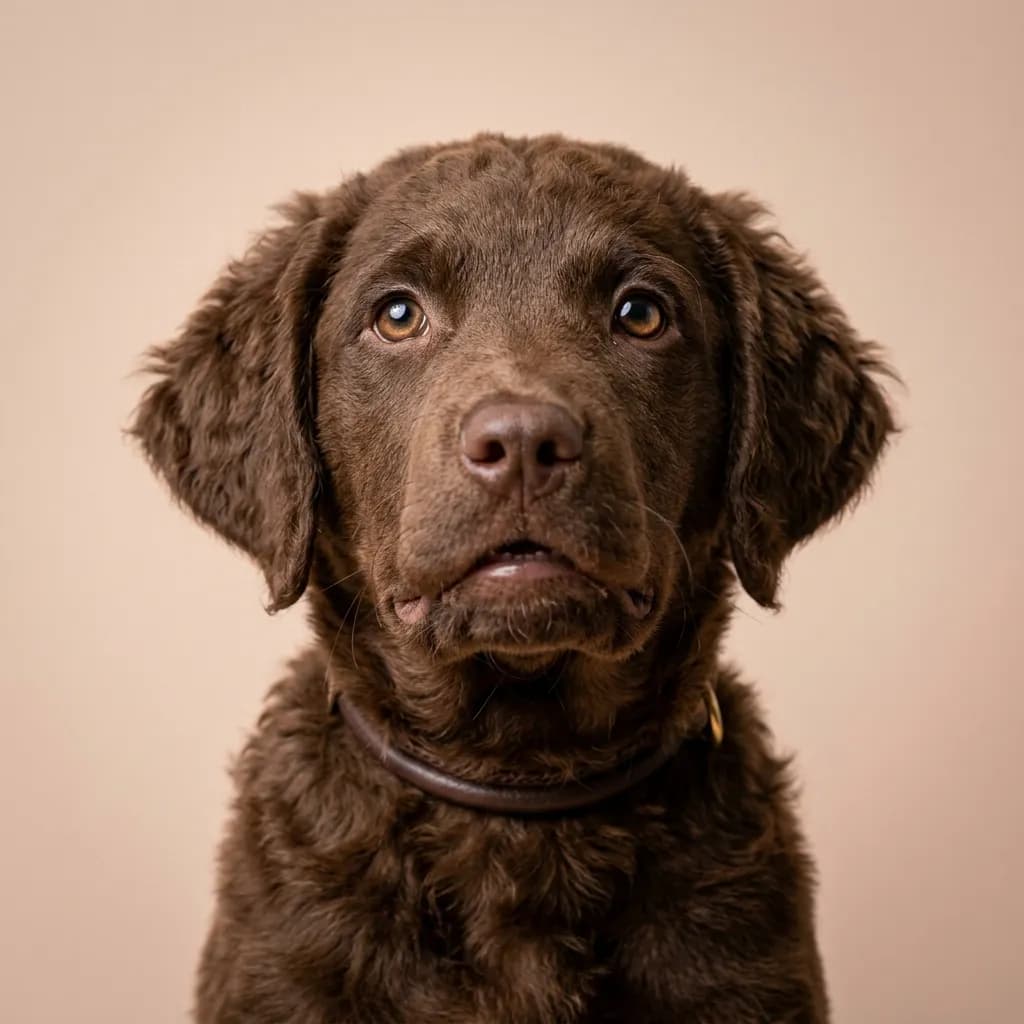
Free weekly training plan, specific to your Chesapeake Bay Retriever’s age. Exactly what to focus on this week.
Get your free training planLiving with a Chesapeake Bay Retriever
The Chesapeake Bay Retriever was born out of necessity on the stormy shores of the Chesapeake Bay in the 1800s, bred to haul downed waterfowl from icy, choppy waters. They’re not just retrievers, they’re survivalists, built with a thick, oily coat that repels water, webbed feet, and a chest like a battering ram to power through waves. This isn’t a dog that merely tolerates cold; it thrives in it.
If you live somewhere with long winters or damp, drizzly weather, the Chessie will probably be outside having the time of its life while you’re reaching for another sweater. Day to day, Chessies are deeply loyal and surprisingly sensitive. They bond fiercely with their people and tend to be more reserved with strangers than other retrievers.
Don’t expect the goofy, everyone’s-best-friend Golden. This dog is affectionate, yes, but on its own terms. They’re bright, easily trainable, especially with positive reinforcement, and need real mental work, not just obedience drills.
Puzzle toys, advanced commands, tracking games, give them something to solve or they’ll start solving problems you didn’t know existed, like how to open your pantry. They need serious exercise. Think 60-90 minutes daily, and not just a walk around the block.
They want to swim, run, retrieve, and burn that 4/5 energy hard. A yard is essential, preferably with access to water. Without it, they’ll get restless and potentially destructive.
Grooming is low in frequency but high in character. Their wavy, harsh coat only needs brushing once a week, but it comes with a distinct “wet dog” smell that’s hard to avoid, especially after time outside. Bathe only when necessary, over-bathing strips the coat’s natural oils.
Health-wise, watch for hip dysplasia, progressive retinal atrophy, and exercise-induced collapse. Reputable breeders do genetic testing, so don’t skip that step. With good care, they’ll be with you 10 to 13 years.
They’re perfect for active families, hunters, or anyone with a rural or suburban home and a tolerance for dog hair and high spirits. But if you’re a first-time owner, live in an apartment, or prefer evenings on the couch, this isn’t your dog. Here’s the real talk: Chessies aren’t just dogs you own, they’re dogs that partner with you.
They demand engagement. But if you're willing to meet them halfway, you’ll get a dog that’s not just loyal but deeply in tune with you, quietly intense, always watching, always ready to work.
14 traits, at a glance.
Every breed on PuppyBase is rated across the 14 trait dimensions the American Kennel Club publishes — from trainability to drooling level. The higher the score, the better the fit for that trait.
What to expect day-to-day
Things to screen for
- Progressive retinal atrophy
- Epilepsy
- Degenerative myelopathy
- Hip dysplasia
- Exercise-induced collapse
See a full price breakdown — first-year costs, lifetime estimate, breeder vs. adoption.
Full price guideSimilar breeds
Browse all 200+



Common questions
How long do Chesapeake Bay Retrievers live?
Chesapeake Bay Retrievers typically live between 10 and 13 years.
How much does a Chesapeake Bay Retriever puppy cost?
A Chesapeake Bay Retriever puppy usually costs between $1,500 and $3,500, with an average price around $2,500 depending on breeder location and bloodline.
How much do Chesapeake Bay Retrievers shed?
Chesapeake Bay Retrievers shed moderately year-round, with heavier shedding during seasonal changes.
What colors do Chesapeake Bay Retrievers come in?
They come in three distinct coat colors: brown, sedge (a golden wheat shade), and deadgrass (a faded tan).
How big do Chesapeake Bay Retrievers get?
Males typically stand 23 to 26 inches tall and weigh 65 to 80 pounds, while females are slightly smaller at 21 to 24 inches and 55 to 70 pounds.
Are Chesapeake Bay Retrievers smart?
Yes, Chesapeake Bay Retrievers are highly intelligent and rank among the most trainable retrievers, thriving on problem-solving and consistent challenges.
Are Chesapeake Bay Retrievers hypoallergenic?
No, Chesapeake Bay Retrievers are not hypoallergenic and will shed dander that can trigger allergies in sensitive individuals.
Are Chesapeake Bay Retrievers aggressive?
They are not inherently aggressive but are naturally protective and reserved with strangers, which can come across as assertive without proper socialization.
What health problems are common in Chesapeake Bay Retrievers?
Common health issues include hip dysplasia, progressive retinal atrophy, exercise-induced collapse, epilepsy, and degenerative myelopathy.
Do Chesapeake Bay Retrievers bark a lot?
They bark moderately, usually to alert their family of something unusual, but are not considered excessive barkers.
Are Chesapeake Bay Retrievers easy to train?
Yes, they are very easy to train thanks to their sharp minds and strong desire to work, especially when training is consistent and mentally engaging.
Are Chesapeake Bay Retrievers good family dogs?
They can be excellent family dogs for active households, forming strong bonds with their people and showing loyalty and protectiveness.
Are Chesapeake Bay Retrievers good with cats?
They can coexist with cats, especially if raised together, but their strong prey drive means early socialization is essential.
Do Chesapeake Bay Retrievers like water?
Yes, they love water and were specifically bred for retrieving in cold, rough conditions; swimming comes naturally to them.
Are Chesapeake Bay Retrievers good hunting dogs?
Yes, they are exceptional hunting dogs, especially for waterfowl, and excel in cold weather and challenging terrain.
Are Chesapeake Bay Retrievers good guard dogs?
They are excellent watchdogs due to their protective instincts and alert nature, though they are not aggressive without cause.
Not sure which breed fits your life?
Answer five questions about your home, your schedule, and your tolerance for shedding. We’ll match you to your top three breeds from over 200.