Icelandic Sheepdog
Iceland's only native breed, descended from Viking-era herding dogs and built for cold weather and long days — they're cheerful, vocal, and always ready for whatever's next. They genuinely enjoy work and play equally, and they're affectionate with kids in a sturdy, engaged way rather than a delicate lap-dog way. The barking is part of the herding package; manage it early or you'll manage it forever.
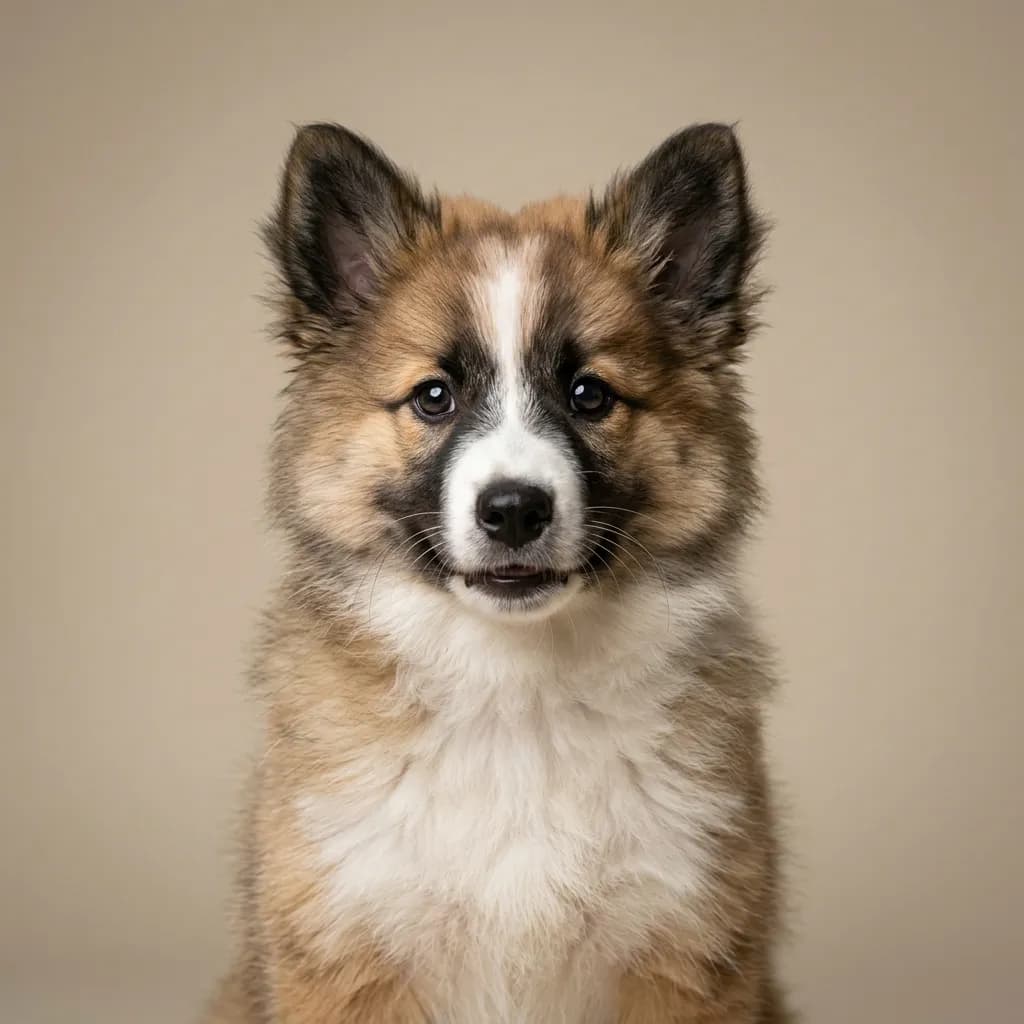
Free weekly training plan, specific to your Icelandic Sheepdog’s age. Exactly what to focus on this week.
Get your free training planLiving with a Icelandic Sheepdog
The Icelandic Sheepdog isn’t just a national symbol of Iceland, it’s a survivor. Descended from spitz-type dogs brought over by Norse settlers as early as the 9th century, this breed spent centuries working rugged volcanic terrain, herding sheep and horses across lava fields and highlands. Isolated from other breeds, it developed a tough constitution and a big personality in a compact 25 to 30-pound frame.
Today, it’s still a working dog at heart, but it thrives just as much as a family companion, if you can keep up. Living with one feels like having a tiny, enthusiastic life coach. They’re friendly, inquisitive, and constantly checking in with you, tail wagging like a metronome.
Don’t expect a couch potato. These dogs need real daily exercise, long walks, hikes, or active yard play, plus mental challenges. Without enough stimulation, that 4 out of 5 energy level turns into frustration, and the 4 out of 5 barking tendency becomes a full-time job.
They’re not loud without reason; they’re alert and communicative, bred to manage livestock and alert their handlers. Grooming is manageable but not low-maintenance. Their double coat sheds moderately year-round and heavier twice a year.
Weekly brushing keeps it under control, but twice a year you’ll need to dedicate serious time to de-shedding. They’re 5 out of 5 affectionate and 5 out of 5 good with kids, making them ideal for active families. First-time owners can succeed too, thanks to their 5 out of 5 trainability, they’re eager to please and quick learners.
Health-wise, they’re generally robust with a 12 to 14-year lifespan, but watch for hip dysplasia, patellar luxation, and eye issues like cataracts or distichiasis. Reputable breeders do screenings, so don’t skip that vet check. They’re perfect for cold climates and homes with space to move.
Apartment living? Only if you’re committed to vigorous daily activity. They wilt in heat and boredom.
Here’s the real talk: most people underestimate how much this dog needs to do. It’s not enough to just love them. They crave purpose.
Teach them tricks, try nose work, or agility. A bored Icelandic Sheepdog isn’t just annoying, it’s miserable. Give them a job, and they’ll give you unwavering loyalty and joy.
14 traits, at a glance.
Every breed on PuppyBase is rated across the 14 trait dimensions the American Kennel Club publishes — from trainability to drooling level. The higher the score, the better the fit for that trait.
What to expect day-to-day
Things to screen for
See a full price breakdown — first-year costs, lifetime estimate, breeder vs. adoption.
Full price guideSimilar breeds
Browse all 200+



Common questions
How long do Icelandic Sheepdogs live?
Icelandic Sheepdogs typically live between 12 and 14 years, which is on the longer side for a dog of their size. With consistent care and vet checkups, they can enjoy a full, active life well into their teens.
How much does a Icelandic Sheepdog puppy cost?
A Icelandic Sheepdog puppy usually costs between $1,500 and $3,500, with most buyers paying around $2,500. The price reflects their rarity, lineage, and the care breeders put into health testing.
How much do Icelandic Sheepdogs shed?
They shed moderately year-round and more heavily during seasonal changes. Regular brushing helps manage loose hair, especially during spring and fall coat blows.
What colors do Icelandic Sheepdogs come in?
They come in a wide range of color combinations including black and white, red and white, cream, sable and white, gold and white, chocolate and white, gray and white, tan and white, and solid white. Their markings are often striking and varied.
How big do Icelandic Sheepdogs get?
They stand 16.5 to 18 inches tall and weigh between 25 and 30 pounds. They're compact but sturdy, built for endurance rather than speed.
Are Icelandic Sheepdogs smart?
Yes, they're very intelligent and thrive on mental challenges. They pick up commands quickly and excel in dog sports like agility and obedience.
Are Icelandic Sheepdogs hypoallergenic?
No, they are not hypoallergenic. Their double coat sheds and carries dander, which can trigger allergies in sensitive individuals.
Are Icelandic Sheepdogs aggressive?
No, they're not aggressive by nature. They're friendly and playful, though they can be alert and bark at strangers, which is part of their herding background.
What health problems are common in Icelandic Sheepdogs?
They're generally healthy but can be prone to hip dysplasia, patellar luxation, cataracts, distichiasis, and elbow dysplasia. Reputable breeders screen for these conditions.
Do Icelandic Sheepdogs bark a lot?
Yes, they bark a lot—especially when alert, excited, or working. Barking is part of their herding instinct, so early training is key to keeping it under control.
Are Icelandic Sheepdogs easy to train?
Yes, they're very easy to train due to their intelligence and eagerness to please. They respond best to positive, consistent methods and learn new commands in just a few repetitions.
Are Icelandic Sheepdogs good family dogs?
Yes, they're excellent family dogs. They're affectionate with kids, enjoy active households, and bond closely with all family members without being overly clingy.
Are Icelandic Sheepdogs good with cats?
They can get along with cats, especially if raised together, but their herding instinct might kick in with fast-moving pets. Supervision and early socialization are important.
Can Icelandic Sheepdogs live in apartments?
They can live in apartments only if their owners provide vigorous daily exercise and mental stimulation. Without enough activity, they'll become restless and noisy.
Are Icelandic Sheepdogs good first dogs?
Yes, they're a good choice for first-time owners who are active and committed to training. Their intelligence and responsiveness make them easier to guide than many herding breeds.
Are Icelandic Sheepdogs good guard dogs?
They're not true guard dogs, but they're excellent watchdogs. They'll alert you to anything unusual with consistent barking, though they're more likely to greet strangers than confront them.
Not sure which breed fits your life?
Answer five questions about your home, your schedule, and your tolerance for shedding. We’ll match you to your top three breeds from over 200.