Newfoundland
The world's most reliable nanny dog — massive, sweet-tempered, and drawn to water with an instinct for rescue that's almost unnerving. Newfs are calm and patient indoors but need space; they drool heavily, shed seasonally, and track water everywhere they go. A relatively short lifespan for such a devoted breed, which is why owners almost universally describe them as worth every moment.
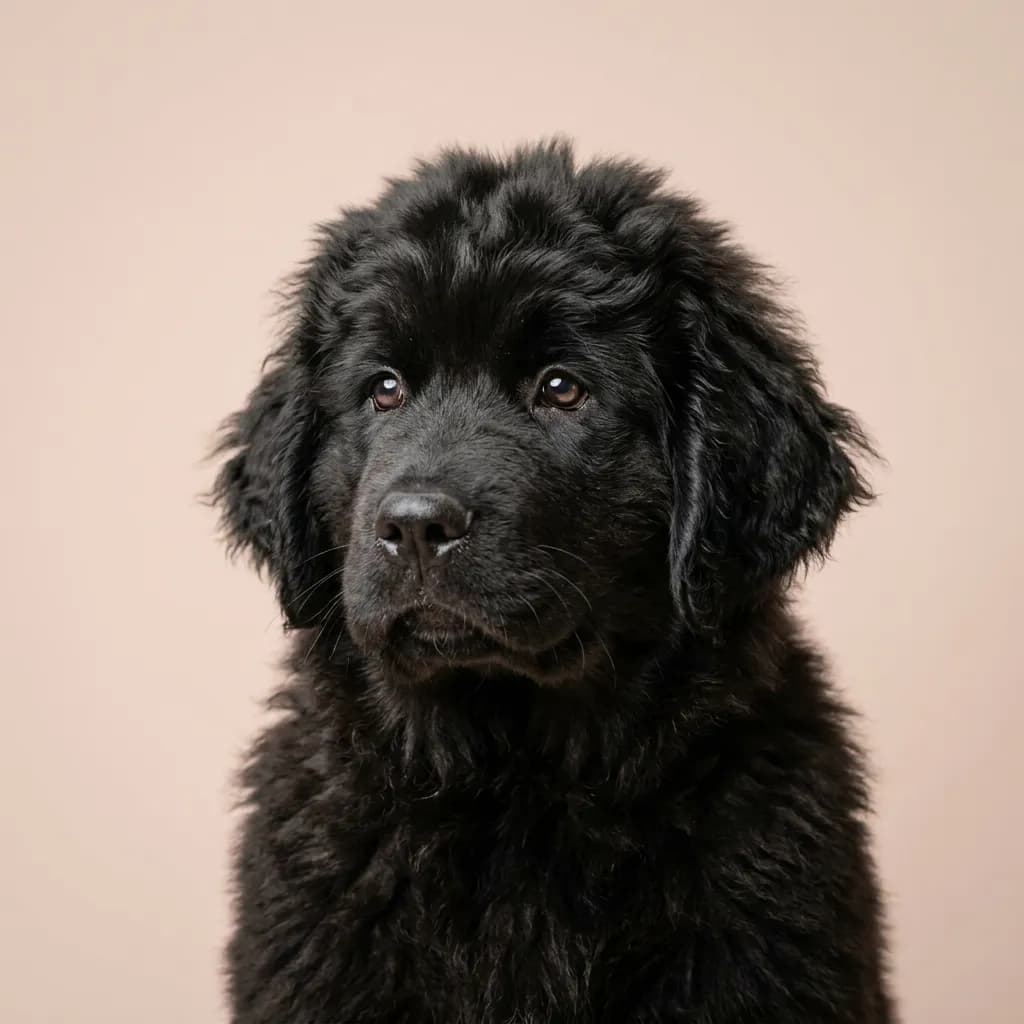
Free weekly training plan, specific to your Newfoundland’s age. Exactly what to focus on this week.
Get your free training planLiving with a Newfoundland
The Newfoundland is the gentle giant you’ve probably seen in movies rescuing people from icy rivers. Bred to haul fishing nets and save drowning sailors off the rocky coast of Newfoundland, Canada, this breed is built for water with webbed feet, a water-resistant coat, and incredible strength. But in real life, they’re less action hero and more your calm, slightly soggy shadow who just wants to lean on your leg while you cook dinner.
Despite their massive size, males can hit 150 pounds, they move with surprising grace and are incredibly patient, especially with kids. They score a perfect 5/5 for being good with children and affectionate, which makes them ideal for families. But don’t mistake their sweetness for low maintenance.
They need space. A yard is almost mandatory, and apartments? Forget it.
They adapt decently to different living situations if their needs are met, but they won’t thrive in cramped quarters or hot climates. These are cold-weather dogs. You’ll see them lying in snowbanks like it’s a day at the spa.
They’re not hyper, energy is only a 3/5, but they do need daily exercise. A long walk, some swimming (which they love), or light hiking keeps them balanced. Mental stimulation isn’t their strong suit, so training can be slow.
Trainability is a modest 3/5. They’re not stubborn, just thoughtful. You’ll need consistency and patience.
Grooming is where reality sets in. That gorgeous double coat sheds year-round and blows twice a year. You’ll need a heavy-duty de-shedding tool and weekly brushing, more during shedding season.
And yes, they drool. A lot. Keep towels handy.
Health-wise, they’re prone to hip and elbow dysplasia, bloat, and a heart condition called subaortic stenosis. Reputable breeders screen for these, so don’t skip vet checks and avoid bargain puppies. Lifespan is short, 9 to 10 years, which stings when you love them this much.
They’re best for families with space, outdoor lovers, and people who appreciate calm, loyal companions. Not for the fastidious or those afraid of dog hair on everything. Here’s the real talk: most Newfoundlands aren’t natural guard dogs, but their sheer size means strangers think twice.
That’s their superpower, they’re peaceful, but they project presence.
14 traits, at a glance.
Every breed on PuppyBase is rated across the 14 trait dimensions the American Kennel Club publishes — from trainability to drooling level. The higher the score, the better the fit for that trait.
What to expect day-to-day
Things to screen for
- Hip and elbow dysplasia
- Subaortic stenosis (SAS)
- Cystinuria
- Dilated cardiomyopathy
- Bloat (GDV)
See a full price breakdown — first-year costs, lifetime estimate, breeder vs. adoption.
Full price guideSimilar breeds
Browse all 200+


Common questions
How long do Newfoundlands live?
Newfoundlands typically live 9 to 10 years, which is relatively short for their size but common among giant breeds. Their devotion and calm nature make every year deeply meaningful to their families.
How much does a Newfoundland puppy cost?
A Newfoundland puppy usually costs between $2,500 and $5,000, with an average around $3,500. Prices reflect their working lineage, health testing, and breeder reputation.
How much do Newfoundlands shed?
Newfoundlands shed moderately year-round and heavily during seasonal shedding periods. Regular brushing helps manage loose fur, especially when they’re blowing their undercoat in spring and fall.
What colors do Newfoundlands come in?
Newfoundlands come in solid black, brown, gray, or the distinctive white and black pattern known as Landseer. All colors have the same calm, sweet temperament.
How big do Newfoundlands get?
Newfoundlands are massive dogs, standing 26 to 28 inches tall and weighing 100 to 150 pounds. They need plenty of space and a home prepared for a gentle giant.
Are Newfoundlands smart?
Newfoundlands are intelligent, especially in water-based and rescue tasks where their instincts shine. They learn best with patience and consistency, though they’re not as quick to pick up commands as some working breeds.
Are Newfoundlands hypoallergenic?
No, Newfoundlands are not hypoallergenic. They shed moderately and drool heavily, making them a poor choice for people with allergies.
Are Newfoundlands aggressive?
No, Newfoundlands are not aggressive. They’re famously sweet-tempered, patient, and devoted, making them one of the gentlest giant breeds around.
What health problems are common in Newfoundlands?
Common health issues include hip and elbow dysplasia, subaortic stenosis, bloat, cystinuria, and dilated cardiomyopathy. Reputable breeders perform cardiac and orthopedic screenings to reduce risks.
Do Newfoundlands bark a lot?
No, Newfoundlands rarely bark. They’re naturally quiet dogs who may alert with a deep woof if necessary, but they’re not prone to nuisance barking.
Are Newfoundlands easy to train?
Newfoundlands are moderately trainable. They respond well to gentle, consistent methods but can be stubborn. Early socialization and positive reinforcement work best.
Are Newfoundlands good family dogs?
Yes, Newfoundlands are exceptional family dogs. They’re deeply affectionate with children, incredibly patient, and naturally protective without being overbearing.
Are Newfoundlands good with cats?
Yes, Newfoundlands usually get along well with cats, especially when raised together. Their calm and tolerant nature makes them adaptable to other household pets.
Do Newfoundlands like water?
Yes, Newfoundlands are drawn to water like few other breeds. Bred for water rescue, they swim naturally, love playing in lakes or pools, and will happily retrieve from the water.
Can Newfoundlands live in apartments?
No, Newfoundlands are not suited for apartment living. They’re large, need space to move, and track water and drool indoors, making a house with a yard a far better fit.
Are Newfoundlands good guard dogs?
Newfoundlands aren’t traditional guard dogs, but they’re highly protective of family members and will act in emergencies, especially around water. Their size alone is a deterrent, but they’re far too friendly to be aggressive watchdogs.
Not sure which breed fits your life?
Answer five questions about your home, your schedule, and your tolerance for shedding. We’ll match you to your top three breeds from over 200.