Siberian Husky
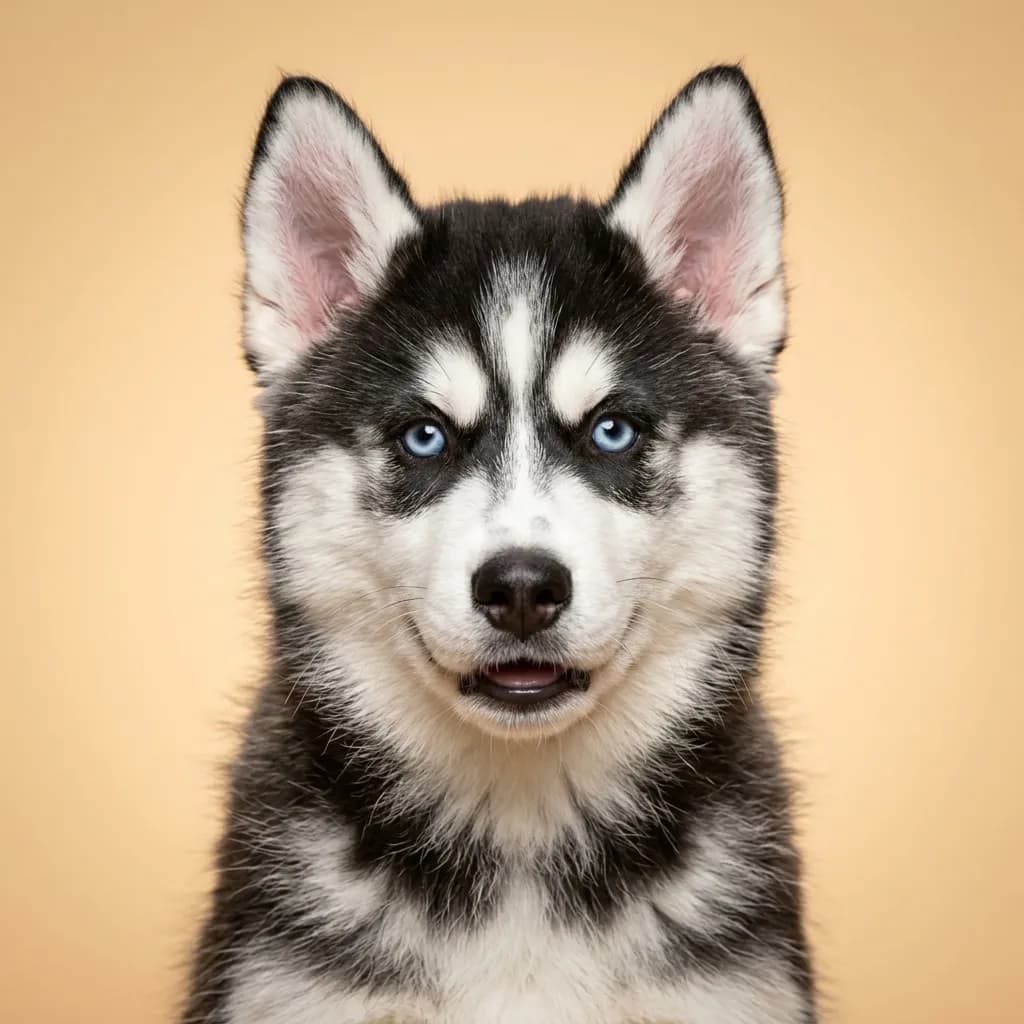
Built to run 50 miles a day through Arctic tundra — and they haven't forgotten it. Huskies are famously social, rarely aggressive, and will befriend anyone including intruders, making them useless as guard dogs but wonderful as companions. That double coat sheds in quantities that will genuinely test your commitment.
Free weekly training plan, specific to your Siberian Husky’s age. Exactly what to focus on this week.
Get your free training planLiving with a Siberian Husky
The Siberian Husky was built for endurance, not obedience. Developed by the Chukchi people of Siberia to pull sleds across frozen tundra in brutal conditions, this breed thrives on movement, cold weather, and pack life. They’re not just dogs with a striking wolf-like look; they’re athletes with a job deeply wired into their DNA.
If you’re picturing a fluffy companion that lounges at your feet, rethink that. Huskies are loyal and affectionate, yes, they’ll nuzzle you like a puppy at 60 pounds, but they’re also mischievous, clever, and relentless when it comes to testing boundaries. Day to day, living with a Husky means constant vigilance.
They’ll chew through drywall if bored, dig escape tunnels under fences, and bark, howl, and sing at sirens with full dramatic commitment, barking isn’t just communication, it’s performance art. Their energy level is a solid 5 out of 5. This isn’t a breed you can tire out with a backyard fetch session.
They need 60 to 90 minutes of intense exercise daily, preferably with a purpose, skijoring, bikejoring, or long trail runs. Without it, destructive behaviors aren’t just possible, they’re guaranteed. Grooming?
Don’t be fooled by their sleek coat. Huskies shed year-round and blow their entire undercoat twice a year in what can only be described as a fur tornado. Brushing two to three times a week is non-negotiable, and during shedding season, daily brushing is the price of keeping your home habitable.
Health-wise, they’re generally robust with a 12 to 14 year lifespan, but hip dysplasia, eye issues like progressive retinal atrophy, and hypothyroidism pop up enough that you should demand health clearances from breeders. Reputable ones test for these, and you should too, don’t skip that step even if the price tag is already $800 to $3,000. They’re fantastic with kids and adapt well to family life, but they’re not for hot climates, apartment living without serious commitment to exercise, or anyone hoping for a dog that comes when called off-leash.
Their recall? Terrible. Their wanderlust?
Legendary. Here’s the real talk: Huskies aren’t escape artists because they’re badly trained. They’re escape artists because running is their love language.
If you can’t give them a job or serious outdoor time in cool weather, you’re not failing them, someone else is failing to tell you the truth.
14 traits, at a glance.
Every breed on PuppyBase is rated across the 14 trait dimensions the American Kennel Club publishes — from trainability to drooling level. The higher the score, the better the fit for that trait.
What to expect day-to-day
Things to screen for
- Uveodermatological syndrome
- Progressive retinal atrophy
- Cataracts
- Hip dysplasia
- Hypothyroidism
See a full price breakdown — first-year costs, lifetime estimate, breeder vs. adoption.
Full price guideSimilar breeds
Browse all 200+


Common questions
How long do Siberian Huskies live?
Siberian Huskies typically live between 12 and 14 years with proper care and a healthy lifestyle.
How much does a Siberian Husky puppy cost?
A Siberian Husky puppy usually costs between $1,200 and $3,000, with most buyers paying around $1,800 depending on breeder quality and lineage.
How much do Siberian Huskies shed?
Siberian Huskies shed heavily, especially during seasonal blowouts when they lose large clumps of their undercoat—expect constant shedding and frequent vacuuming.
What colors do Siberian Huskies come in?
They come in a range of colors including black, gray, agouti, sable, red, white, and various combinations like black and white or gray and white.
How big do Siberian Huskies get?
Siberian Huskies stand between 20 and 23.5 inches tall and weigh between 35 and 60 pounds, with males generally larger than females.
Are Siberian Huskies smart?
Yes, they're intelligent dogs with high mental stimulation needs, but their cleverness often manifests as mischief rather than obedience.
Are Siberian Huskies hypoallergenic?
No, Siberian Huskies are not hypoallerg游戏代. Their double coat sheds heavily and releases dander, making them unsuitable for allergy sufferers.
Are Siberian Huskies aggressive?
No, they are rarely aggressive and tend to be outgoing and friendly with people, dogs, and even strangers.
What health problems are common in Siberian Huskies?
Common health issues include hip dysplasia, progressive retinal atrophy, cataracts, hypothyroidism, and uveodermatological syndrome.
Do Siberian Huskies bark a lot?
They don't bark excessively compared to other breeds, but they do vocalize frequently with howls, chirps, and 'talking' sounds.
Are Siberian Huskies easy to train?
They are moderately trainable but known for independence and stubbornness, requiring consistent, positive methods and early socialization.
Are Siberian Huskies good family dogs?
Yes, they're excellent with families, very affectionate with children, and thrive in active homes that can meet their exercise needs.
Are Siberian Huskies good with cats?
They can live with cats, especially if raised together, but their high prey drive means supervision is necessary around small animals.
Are Siberian Huskies good guard dogs?
No, they make terrible guard dogs because they're far too friendly with strangers and lack protective instincts.
Can Siberian Huskies live in apartments?
They can adapt to apartment living only if given massive daily exercise, but their high energy and vocal nature make them a poor fit for most small living spaces.
When do Siberian Huskies calm down?
Most never fully calm down—adults still need intense daily activity, though they may become slightly less hyper after age 2 with consistent training and outlets.
Not sure which breed fits your life?
Answer five questions about your home, your schedule, and your tolerance for shedding. We’ll match you to your top three breeds from over 200.