Keeshond vs Pumi
Side-by-side comparison across all 14 AKC trait ratings, with a clear verdict on which breed fits which kind of household.

Not sure which breed fits your life?
Answer five questions about your home, your schedule, and your tolerance for shedding. We’ll match you to your top three breeds from over 200.
Keeshond vs Pumi
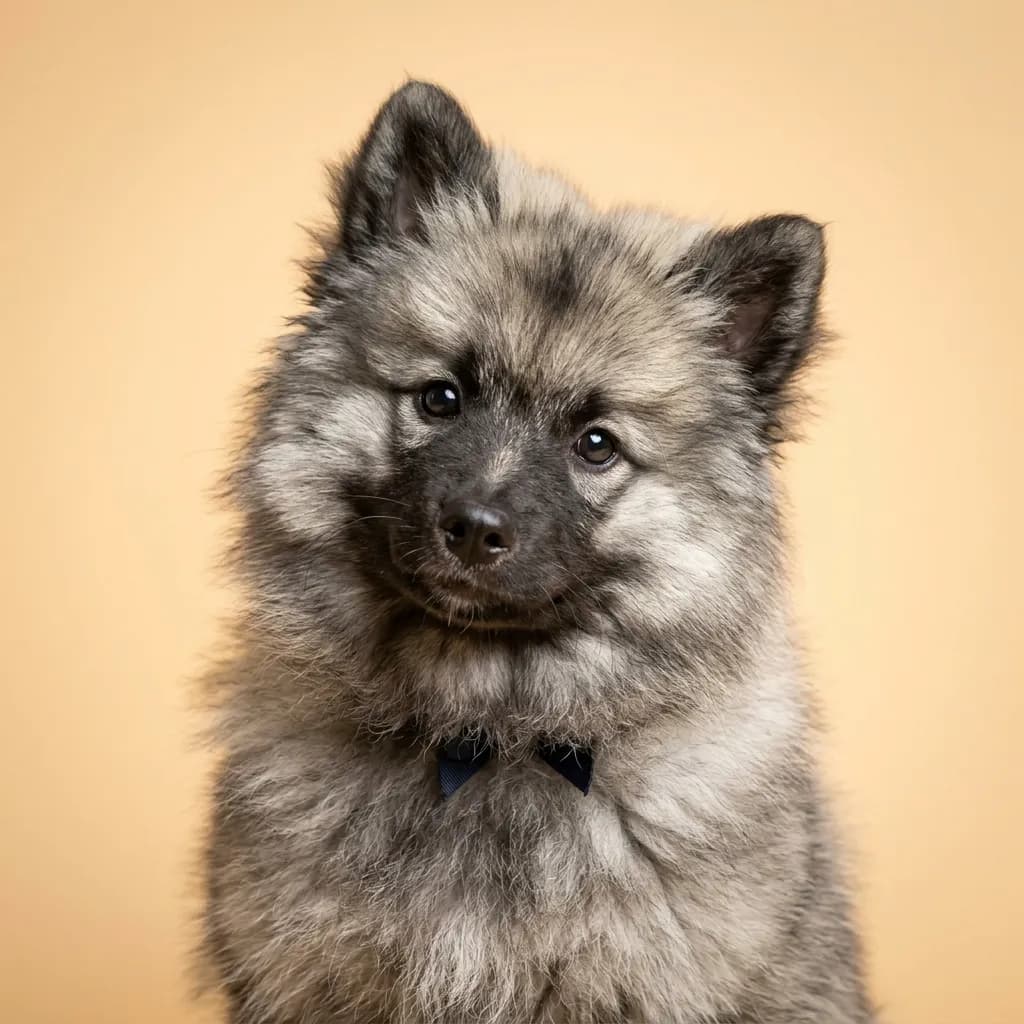
You don’t see Keeshonds and Pumis side by side at dog parks often, but if you’re drawn to spitz-type dogs with alert eyes and perky ears, you might find yourself comparing these two under-the-radar breeds. Both are smart, bouncy, and deeply bonded to their people. But that’s where the similarities fade. The Keeshond is your friendly neighborhood guardian. He’ll greet you with a smile. literally, that distinctive “spectacles” face gives him a permanent look of pleasant surprise. and settle in as the family’s warm, steady heartbeat. He’s a pro with kids, easygoing in apartments or houses, and eager to please with a trainability that makes him ideal for first-time owners. You will hear him, though. He’s not shy about barking at squirrels, mail carriers, or passing clouds. And yes, you’ll find fur on your clothes, especially in spring when he blows his thick double coat. He thrives in cooler weather and wants nothing more than to be part of your daily rhythm. The Pumi, on the other hand, is a herding dynamo disguised as a curly mop. This dog lives to work, learn, and move. He’s lighter on his feet, lower to the ground, and built for sprinting through fields. He’s not as predictable with kids. he can be nippy out of excitement. and he needs a job, whether it’s agility, obedience, or advanced tricks. If you’re into dog sports, the Pumi is a secret weapon. He sheds almost nothing, which sounds great until you realize his coat needs regular upkeep to prevent matting. Here’s the real talk: the Keeshond wants to belong to you. The Pumi wants to partner with you. If you’re looking for a devoted family dog who’s forgiving and fun, go Keeshond. If you’re an experienced handler craving a high-octane teammate who’ll challenge you every day, the Pumi’s your match.
Trait-by-trait
Higher bar = more of that trait. Shedding, barking, drooling, grooming flipped for readability.Where they diverge
Choose the Keeshond if…
- Families with children
- Active owners
- Cold climates
- You value good with young children — Keeshond scores noticeably higher.
Choose the Pumi if…
- Active owners
- Dog sports enthusiasts
- Experienced herding breed owners
- You value energy level — Pumi scores higher here.