Basset Hound
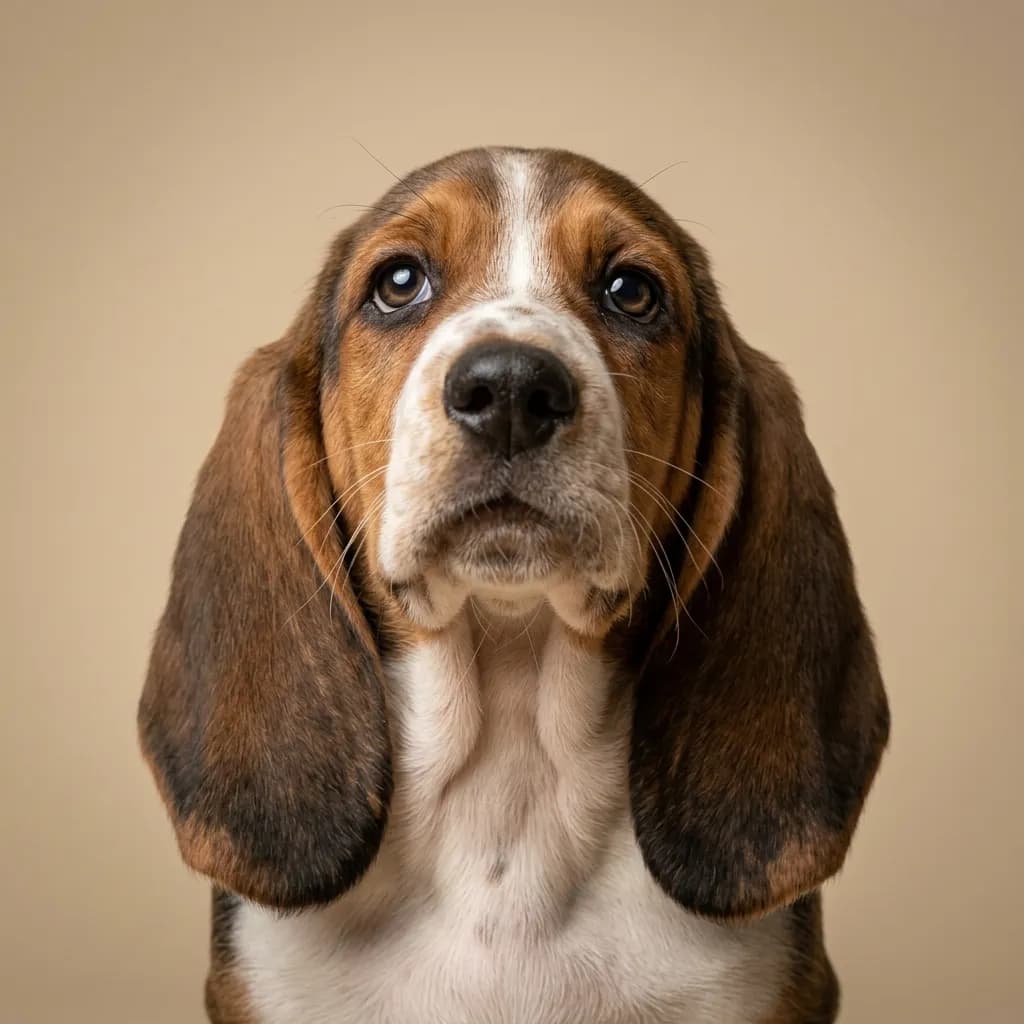
The world's most convincing couch argument. Bassets are charming, patient, and deeply unmotivated to hurry anywhere — except when a scent trail clicks in, at which point recall becomes a suggestion rather than a command. Surprisingly heavy for their height, and their ears need regular cleaning to avoid infections.
Free weekly training plan, specific to your Basset Hound’s age. Exactly what to focus on this week.
Get your free training planLiving with a Basset Hound
The Basset Hound was bred in France and Belgium to track rabbits and hares at a slow, deliberate pace, low to the ground, with a nose that never quits. That history shows in every wrinkle and bowed leg. They’re not fast, but they’re relentless when a scent hits.
And trust me, it will. Your backyard squirrel? Forgotten steak in the trash?
Your Basset will find it. Living with a Basset is like sharing your home with a laid-back, slightly stubborn roommate who snores like a chainsaw and leaves a trail of drool. They’re charming and patient, great with kids and other pets, which makes them ideal for families or multi-pet homes.
But don’t expect a jogging buddy. Their energy level is 2 out of 5, they’ll happily laze around all day, then bark at a passing mail truck like it’s a national emergency. Speaking of barking: it’s a 4 out of 5.
They’re not yappy, but they’ll howl, bay, and vocalize with abandon when triggered. If you’re sensitive to noise or live in tight quarters with thin walls, this matters. Exercise needs are modest, a daily walk and some sniffing time is plenty.
But because they’re so low-key and love food a little too much, obesity is a real risk. That’s compounded by their predisposition to hip dysplasia and bloat, which every owner should know how to spot. Ear infections?
Nearly guaranteed if you don’t clean those long, velvety ears weekly. Grooming is otherwise simple, short coat, moderate shedding, but the drool, the slobber, the muddy paw prints after rain? That’s daily life.
They’re adaptable to apartments, but not because they’re quiet. It’s because they don’t need much space to be happy. Seniors and first-time owners often do well with them, but only if they accept the limits: training is a 3 out of 5, meaning slow progress and frequent setbacks.
Recall? Forget it. Once that nose hits the ground, you’ve lost them.
Here’s the real talk: Bassets aren’t smart in the way people think. They’re not eager to please. But they’re emotionally intuitive in a quiet, understated way.
They’ll sit beside you when you’re sad, not because you trained them to, but because they noticed. That’s the magic. Just don’t expect loyalty on command.
14 traits, at a glance.
Every breed on PuppyBase is rated across the 14 trait dimensions the American Kennel Club publishes — from trainability to drooling level. The higher the score, the better the fit for that trait.
What to expect day-to-day
Things to screen for
- Hip dysplasia
- Eye problems (entropion and ectropion)
- Bloat (GDV)
- Ear infections
- Obesity
See a full price breakdown — first-year costs, lifetime estimate, breeder vs. adoption.
Full price guideSimilar breeds
Browse all 200+


Common questions
How long do Basset Hounds live?
Basset Hounds typically live between 12 and 13 years with proper care and a healthy lifestyle.
How much does a Basset Hound puppy cost?
A Basset Hound puppy usually costs between $1,200 and $2,500, with an average price around $1,800 depending on breeder and lineage.
How much do Basset Hounds shed?
Basset Hounds shed moderately, requiring regular brushing to manage loose hair but not considered heavy shedders.
What colors do Basset Hounds come in?
Basset Hounds come in several color combinations including tri-color, black and white, lemon and white, red and white, and various brown and mahogany mixes with white.
How big do Basset Hounds get?
Basset Hounds are short but heavy, standing 13 to 15 inches tall and weighing between 40 and 65 pounds.
Are Basset Hounds smart?
Basset Hounds are intelligent in their own way, especially when following scents, but they’re independent thinkers and often choose when to cooperate.
Are Basset Hounds hypoallergenic?
No, Basset Hounds are not hypoallergenic and can trigger allergies due to shedding and dander.
Are Basset Hounds aggressive?
Basset Hounds are not aggressive; they’re known for being patient and gentle, especially around children and other animals.
What health problems are common in Basset Hounds?
Common health issues include ear infections, obesity, hip dysplasia, bloat, and eye conditions like entropion and ectropion.
Do Basset Hounds bark a lot?
Yes, Basset Hounds bark frequently and are known for their loud, deep howls, especially when excited or stimulated by scents.
Are Basset Hounds easy to train?
Basset Hounds are moderately trainable but can be stubborn; consistent, positive reinforcement works best due to their scent-driven focus.
Are Basset Hounds good family dogs?
Yes, Basset Hounds are excellent family dogs, showing great patience and gentleness with children and thriving in multi-pet homes.
Are Basset Hounds good with cats?
Yes, Basset Hounds generally get along well with cats, especially when raised together, thanks to their calm and sociable nature.
Can Basset Hounds live in apartments?
Yes, Basset Hounds adapt well to apartment living as long as they get daily walks and mental stimulation, despite their low energy levels.
Do Basset Hounds drool a lot?
Yes, Basset Hounds are heavy droolers, especially after drinking or eating, so keep a towel handy.
Are Basset Hounds good hunting dogs?
Yes, Basset Hounds were bred to hunt rabbits and hares at a slow, steady pace and still excel at tracking scents today.
Not sure which breed fits your life?
Answer five questions about your home, your schedule, and your tolerance for shedding. We’ll match you to your top three breeds from over 200.