Czechoslovakian Vlcak
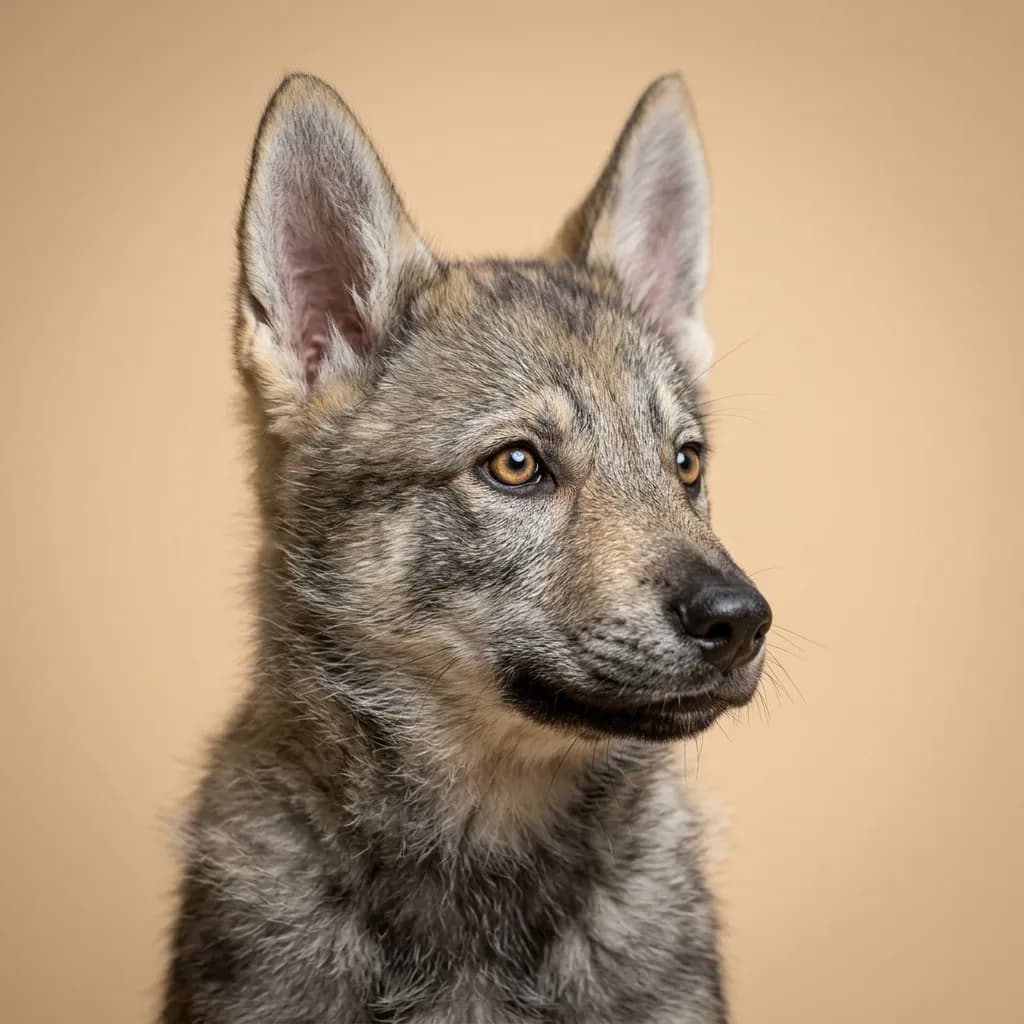
A wolfdog hybrid developed from German Shepherds and Carpathian wolves for military use — so yes, they look exactly like wolves and yes, they act like it. Highly intelligent, intensely bonded to their pack, and completely unsuitable for first-time owners or anyone without a very active lifestyle and a very secure fence. Fascinating in the right hands; genuinely dangerous in the wrong ones.
Free weekly training plan, specific to your Czechoslovakian Vlcak’s age. Exactly what to focus on this week.
Get your free training planLiving with a Czechoslovakian Vlcak
The Czechoslovakian Vlcak isn’t some Instagram-famous wolfdog lookalike. It’s the real deal, a purpose-bred working dog developed in the 1950s by crossing German Shepherds with Carpathian wolves to create a resilient, alert military and border patrol dog for Czechoslovakia. They succeeded.
What you get today is a striking, wolf-like dog that weighs between 44 and 57 pounds with a lean, athletic build and those intense amber eyes that seem to assess everything. But don’t mistake the looks for novelty. This is a dog with a job in its DNA.
Living with a Vlcak means embracing a high-octane companion who thrives on routine, structure, and mental challenges. They’re intelligent, no doubt, but that intelligence comes with independence. Trainability is a solid 3 out of 5, not because they can’t learn, but because they’ll often decide if they feel like obeying.
They need consistent, experienced handling. You can’t wing it with this breed. Their energy level is moderate to high, but it’s the mental stimulation that’ll make or break your peace.
They need jobs: advanced obedience, tracking, agility, or even controlled carting. A bored Vlcak will find its own entertainment, and you won’t like it. Grooming?
Prepare for fur. The shedding is year-round and intense, spiking twice a year. You’ll vacuum daily.
No way around it. Health-wise, they’re generally robust with a 10 to 15-year lifespan, but watch for hip and elbow dysplasia, degenerative myelopathy, and the rare but serious pituitary dwarfism. Reputable breeders screen for these, so don’t skip vet checks or skip the paperwork.
These dogs are loyal and affectionate with their people, but reserved with strangers and not naturally gentle with small kids. That 1 out of 5 for kid-friendliness isn’t arbitrary, this isn’t a forgiving, patient breed. They’re best for very experienced owners in rural or semi-rural settings, not apartments or busy households.
Here’s the thing most breed summaries won’t tell you: the Vlcak isn’t trying to dominate you. It’s trying to understand its role. When you give it clear purpose and boundaries, it becomes steady, focused, and deeply bonded.
But if you treat it like a pet instead of a working partner, you’ll end up with a brilliant dog making brilliant problems.
14 traits, at a glance.
Every breed on PuppyBase is rated across the 14 trait dimensions the American Kennel Club publishes — from trainability to drooling level. The higher the score, the better the fit for that trait.
What to expect day-to-day
Things to screen for
- Degenerative myelopathy
- Eye disorders
- Hip dysplasia
- Pituitary dwarfism
- Elbow dysplasia
See a full price breakdown — first-year costs, lifetime estimate, breeder vs. adoption.
Full price guideSimilar breeds
Browse all 200+

Common questions
How long do Czechoslovakian Vlcaks live?
Czechoslovakian Vlcaks typically live between 10 and 15 years, which is average for a dog of their size, but their health can be impacted by several inherited conditions if not properly screened for.
How much does a Czechoslovakian Vlcak puppy cost?
A Czechoslovakian Vlcak puppy usually costs between $2,000 and $5,000, with an average price around $3,500 due to their rarity and specialized breeding.
How much do Czechoslovakian Vlcaks shed?
They shed very heavily, especially during seasonal changes, and require frequent brushing during those periods to manage the large amount of loose fur from their double coat.
What colors do Czechoslovakian Vlcaks come in?
They come in yellowish-gray and silver-gray, both designed to mimic the natural coloring of wolves for camouflage and authenticity.
How big do Czechoslovakian Vlcaks get?
They stand between 23.5 and 25.5 inches tall at the shoulder and weigh between 44 and 57 pounds, making them a medium to large working breed.
Are Czechoslovakian Vlcaks smart?
They are extremely intelligent, with a strong problem-solving instinct and high mental drive, which makes them quick to learn but also prone to mischief if under-stimulated.
Are Czechoslovakian Vlcaks hypoallergenic?
No, Czechoslovakian Vlcaks are not hypoallergenic; they shed heavily and produce dander, so they are not suitable for people with allergies.
Are Czechoslovakian Vlcaks aggressive?
They are not inherently aggressive toward people, but they are intensely territorial, highly suspicious of strangers, and can be aggressive toward other dogs, especially those of the same sex.
What health problems are common in Czechoslovakian Vlcaks?
Common health issues include hip and elbow dysplasia, degenerative myelopathy, pituitary dwarfism, and various eye disorders, so responsible breeding and screening are crucial.
Do Czechoslovakian Vlcaks bark a lot?
They bark moderately, but they are more likely to howl or use vocalizations similar to wolves, especially when communicating over distance or expressing excitement.
Are Czechoslovakian Vlcaks easy to train?
They are moderately trainable but require experienced handling; their independent thinking and high mental needs mean they thrive on consistency, structure, and challenge.
Are Czechoslovakian Vlcaks good family dogs?
They are not recommended for typical families, especially those with small children, due to their intense prey drive, wariness of strangers, and need for expert handling.
Are Czechoslovakian Vlcaks good with cats?
They have a very high prey drive and will likely chase or attack cats and other small animals, even if raised with them, so they are not considered safe with feline pets.
Are Czechoslovakian Vlcaks dangerous?
They can be dangerous if improperly socialized, untrained, or kept by inexperienced owners; their strength, pack instincts, and wolf-like behavior demand serious responsibility.
Can Czechoslovakian Vlcaks live in apartments?
No, they are poorly suited for apartment living; they need large, secure outdoor space and a rural or semi-wild environment to meet their physical and mental needs.
Are Czechoslovakian Vlcaks good guard dogs?
They make excellent guard dogs due to their extreme protectiveness, natural suspicion of strangers, and strong territorial instincts, all developed from their military working background.
Not sure which breed fits your life?
Answer five questions about your home, your schedule, and your tolerance for shedding. We’ll match you to your top three breeds from over 200.