Norwegian Elkhound
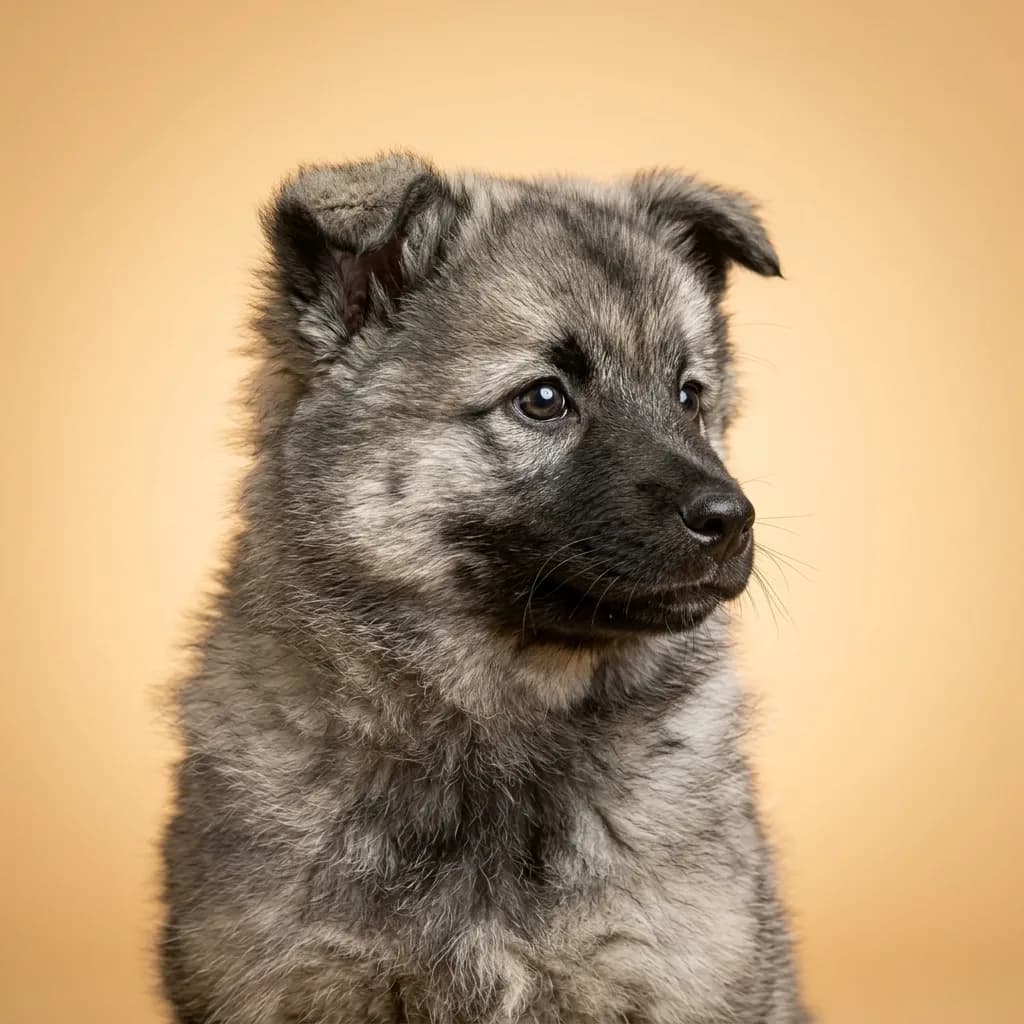
An ancient Scandinavian hunter that tracked elk, held them at bay, and waited for its human to catch up — which tells you everything about their independence and toughness. The Elkhound is friendly and sociable at home but possesses genuine hardiness and athleticism that suburban walks won't fully satisfy. Their thick double coat blows out twice a year in a way that challenges even dedicated groomers.
Free weekly training plan, specific to your Norwegian Elkhound’s age. Exactly what to focus on this week.
Get your free training planLiving with a Norwegian Elkhound
The Norwegian Elkhound isn’t just a pretty face in a thick gray coat. This spitz-type hound was built for the bone-chilling forests of Scandinavia, where it trailed moose and held them at bay until hunters arrived. That job required brains, grit, and a voice loud enough to cut through wind and pine, and today, those traits mean you’re not just adopting a dog, you’re signing up for a partner with opinions.
They’re friendly and deeply affectionate with their people, but don’t mistake that warmth for submissiveness. They’re confident to a fault, dependable in the field or on a trail, and always watching. Living with an Elkhound means embracing noise and motion.
These dogs bark, four out of five on the scale, and they bark with purpose. Squirrels, mail carriers, changes in barometric pressure, they’ll alert you to all of it. Their energy level is equally relentless.
You’ll need at least an hour of vigorous exercise daily, and that’s just maintenance. Without it, they’ll redecorate your yard or start a howling solo at 3 a.m. They thrive on hiking, trail running, or any activity that lets them use their nose and legs.
Mental stimulation is non-negotiable; a bored Elkhound will learn destructive tricks fast. Grooming is a year-round project. They shed moderately, three out of five, but that dense double coat traps loose hair like a magnet.
Brushing twice a week is the bare minimum, and during seasonal blowouts, you’ll be vacuuming daily. Still, they’re remarkably clean dogs, with minimal doggy odor. Health-wise, they’re generally tough, but you should screen for hip dysplasia and progressive retinal atrophy.
Fanconi syndrome, a kidney condition, has become more common in the breed, so regular urine checks are smart. Reputable breeders will test for these, so don’t skip the paperwork, this isn’t a breed to buy cheap. They’re adaptable to apartment living if exercised enough, but they belong in cold climates.
In hot weather, they overheat fast. Great for active families who hike or run, but not for couch lovers or those who value quiet. Kids?
They’re okay with older children, but their high energy can knock over toddlers. Here’s the real talk: Elkhounds aren’t just dogs that bark. They’re decision-makers.
They’ll choose when to obey, when to alert, and when to ignore you. Trainability is high, but only if you’re more interesting than the squirrel. You don’t own an Elkhound.
You negotiate with one.
14 traits, at a glance.
Every breed on PuppyBase is rated across the 14 trait dimensions the American Kennel Club publishes — from trainability to drooling level. The higher the score, the better the fit for that trait.
What to expect day-to-day
Things to screen for
- Sebaceous cysts
- Fanconi syndrome
- Hypothyroidism
- Hip dysplasia
- Progressive retinal atrophy
See a full price breakdown — first-year costs, lifetime estimate, breeder vs. adoption.
Full price guideSimilar breeds
Browse all 200+



Common questions
How long do Norwegian Elkhounds live?
Norwegian Elkhounds typically live between 12 and 15 years, which is a solid lifespan for a dog of their size. With proper care, many live into their mid-teens in good health.
How much does a Norwegian Elkhound puppy cost?
A Norwegian Elkhound puppy usually costs between $1,200 and $3,000, with an average price around $2,000. Reputable breeders charge more due to health testing and the breed's working background.
How much do Norwegian Elkhounds shed?
Norwegian Elkhounds shed moderately year-round, but twice a year they blow their undercoat heavily. You'll need serious brushing sessions during those periods to manage the loose fur.
What colors do Norwegian Elkhounds come in?
Norwegian Elkhounds come in a signature gray and black coat with silvery highlights, which gives them a distinctive, wolf-like appearance. This is the only standard color for the breed.
How big do Norwegian Elkhounds get?
Norwegian Elkhounds stand between 19.5 and 20.5 inches tall and weigh 48 to 55 pounds. They're medium-sized but solidly built, built for endurance in tough terrain.
Are Norwegian Elkhounds smart?
Yes, Norwegian Elkhounds are smart and independent thinkers, which made them effective hunters in Scandinavia. They learn quickly but can be stubborn if they don't see the point of a command.
Are Norwegian Elkhounds hypoallergenic?
No, Norwegian Elkhounds are not hypoallergenic. They shed moderately and have a dense double coat that traps dander, making them unsuitable for allergy sufferers.
Are Norwegian Elkhounds aggressive?
Norwegian Elkhounds are not aggressive by nature, but they are bold and confident watchdogs. They can be wary of strangers and may bark at perceived threats without proper socialization.
What health problems are common in Norwegian Elkhounds?
Common health issues include hip dysplasia, progressive retinal atrophy, Fanconi syndrome, hypothyroidism, and sebaceous cysts. Regular vet checkups and genetic screening are important for long-term health.
Do Norwegian Elkhounds bark a lot?
Yes, Norwegian Elkhounds bark frequently. They were bred to hold large game at bay by barking, so it's deeply wired into their behavior. Training helps, but you can't eliminate it.
Are Norwegian Elkhounds easy to train?
Norwegian Elkhounds are moderately easy to train. They're intelligent and respond well to consistent, positive methods, but their independence means they won't always obey on the first try.
Are Norwegian Elkhounds good family dogs?
They can be good family dogs for active households that understand dog behavior. They're affectionate with their people but only moderately tolerant of young kids and other dogs.
Are Norwegian Elkhounds good with cats?
Norwegian Elkhounds have strong prey drive and may not be reliable with cats, especially if not raised together. Early socialization helps, but small pets are best introduced with caution.
Are Norwegian Elkhounds good hunting dogs?
Yes, Norwegian Elkhounds were bred to hunt large game like elk and moose in Scandinavia. They’re tough, persistent, and will track and bark to hold prey at bay until the hunter arrives.
Can Norwegian Elkhounds live in apartments?
They can adapt to apartment living if given serious daily exercise and mental challenges. But their high energy and tendency to bark make them better suited to homes with space and outdoor access.
Are Norwegian Elkhounds good guard dogs?
They make excellent watchdogs because they're alert, bark loudly at intruders, and are naturally protective of their home. They won't attack uninvited guests, but they'll let everyone know someone's there.
Not sure which breed fits your life?
Answer five questions about your home, your schedule, and your tolerance for shedding. We’ll match you to your top three breeds from over 200.