Otterhound
A big, shaggy, boisterous scent hound bred to swim rivers hunting otters — one of the rarest breeds in Britain, with fewer than 1,000 individuals worldwide. The Otterhound's rough double coat is surprisingly water-resistant, their webbed feet make them excellent swimmers, and their nose-to-the-ground focus makes recall a genuine challenge. Friendly and affectionate but stubbornly scent-driven; best suited to rural life with room to roam.
Free weekly training plan, specific to your Otterhound’s age. Exactly what to focus on this week.
Get your free training planLiving with a Otterhound
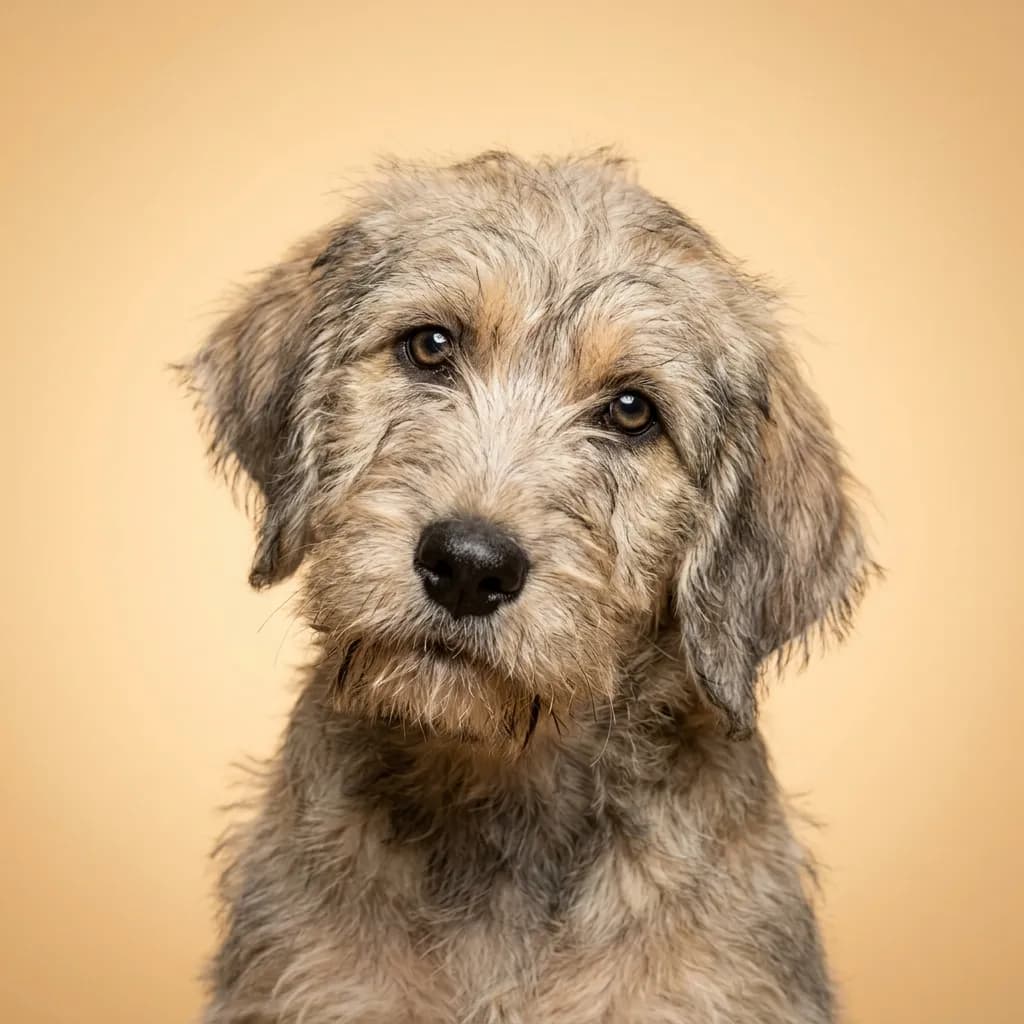
The Otterhound is a gloriously shaggy, boisterous relic from England’s riverbanks, bred to hunt otters through rugged terrain and icy water. That job required strength, stamina, and a nose that never quit, traits this breed still carries proudly, even though otter hunting ended decades ago and the breed now clings to survival with fewer than 1,000 worldwide. At 80 to 115 pounds and standing 24 to 27 inches tall, they’re big, rangy dogs with a wiry double coat, floppy ears, and a dignified scruff that looks like it belongs in a Dickens novel.
But don’t be fooled by the old-world charm. This is a dog that slobbers freely, smells like wet dog and damp earth, and will greet you like you’ve been gone for months, even if you just stepped into the next room. Living with an Otterhound means embracing noise and mess.
They bark. A lot. Their deep, resonant hound voice carries for miles, and they use it, on walks, when excited, just because.
They’re affectionate to the point of leaning, always wanting to be in the middle of the action, pressing their bulk against your leg. They’re amiable with kids but not naturally gentle, more like a big, clumsy roommate who doesn’t know his size. Energy-wise, they’re moderate (3/5), but don’t let that fool you.
They need real outdoor time, long walks, access to water, room to roam. They’re happiest on a farm or rural property where they can follow scents through fields and swim in rivers. That strong prey drive means recall is dicey at best.
If they catch a trail, they’re gone. Grooming is a project. The rough coat traps mud, burrs, and pond slime.
Brushing every few days is essential, and full wash-downs are messy, time-consuming affairs. Drool? Yes.
Expect it on the walls, the windows, your clothes. Health-wise, they’re prone to hip and elbow dysplasia, bloat (so feed smaller meals and avoid exercise right after eating), and a rare blood disorder called thrombocytopenia. Reputable breeders screen for these, but vet checks are non-negotiable.
They’re not for apartment dwellers, the fastidiously clean, or anyone wanting a quiet, obedient shadow. But if you’re an experienced hound owner who loves character over convenience and lives where a loud, soggy, affectionate beast can thrive, this might be your perfect mess. My take?
The Otterhound won’t change your life by being useful. It’ll change it by being gloriously, unapologetically itself.
14 traits, at a glance.
Every breed on PuppyBase is rated across the 14 trait dimensions the American Kennel Club publishes — from trainability to drooling level. The higher the score, the better the fit for that trait.
What to expect day-to-day
Things to screen for
- Hip dysplasia
- Epilepsy
- Bloat (GDV)
- Thrombocytopenia
- Elbow dysplasia
See a full price breakdown — first-year costs, lifetime estimate, breeder vs. adoption.
Full price guideSimilar breeds
Browse all 200+
Common questions
How long do Otterhounds live?
Otterhounds typically live between 10 and 13 years, which is average for a dog of their size.
How much does a Otterhound puppy cost?
Expect to pay between $1,500 and $4,000 for an Otterhound puppy, with most averaging around $2,500 due to the breed's rarity and specialized breeding.
How much do Otterhounds shed?
Otterhounds shed very little, making them a low-shedding breed despite their shaggy, medium-length rough coat.
What colors do Otterhounds come in?
Otterhounds come in any recognized hound color, including grizzle, sandy, red, liver, blue, and wheaten with darker points.
How big do Otterhounds get?
Otterhounds are large dogs, standing 24 to 27 inches tall and weighing between 80 and 115 pounds, with males generally larger than females.
Are Otterhounds smart?
Yes, Otterhounds are intelligent dogs with strong problem-solving instincts, especially when following a scent, though their independent nature can make them selectively obedient.
Are Otterhounds hypoallergenic?
No, Otterhounds are not hypoallergenic, despite low shedding; their coat traps allergens and they produce dander like most dogs.
Are Otterhounds aggressive?
No, Otterhounds are not aggressive; they are even-tempered and amiable, with a friendly demeanor toward people and other dogs.
What health problems are common in Otterhounds?
Common health issues include hip and elbow dysplasia, bloat, thrombocytopenia, and epilepsy, so responsible breeding and regular vet care are essential.
Do Otterhounds bark a lot?
Yes, Otterhounds are very vocal and have a deep, loud bark; they were bred to bay while tracking otters, so frequent barking is a natural trait.
Are Otterhounds easy to train?
Otterhounds are moderately easy to train; they're intelligent but stubborn when a scent catches their attention, so consistency and early training are key.
Are Otterhounds good family dogs?
Yes, Otterhounds are affectionate with families and do well in active rural homes, but their boisterous size and moderate tolerance for young children require supervision.
Are Otterhounds good with cats?
Otterhounds have a strong prey drive from their history of hunting otters, so they may not be reliable with cats or small pets, even if raised together.
Do Otterhounds like water?
Yes, Otterhounds love water; they were bred to swim in rivers, have webbed feet, and a water-resistant coat, making them natural and enthusiastic swimmers.
Can Otterhounds live in apartments?
No, Otterhounds are not suited for apartment living; they need space to roam and access to outdoor areas, especially near water, to thrive.
Do Otterhounds smell bad?
Otterhounds can develop a noticeable hound odor, especially if not bathed regularly, and their drool-prone jowls can contribute to a musky scent if not wiped down.
Not sure which breed fits your life?
Answer five questions about your home, your schedule, and your tolerance for shedding. We’ll match you to your top three breeds from over 200.